Brazil| Introduction to the coffee producing area selection series of coffee beans
Brazil Brazil
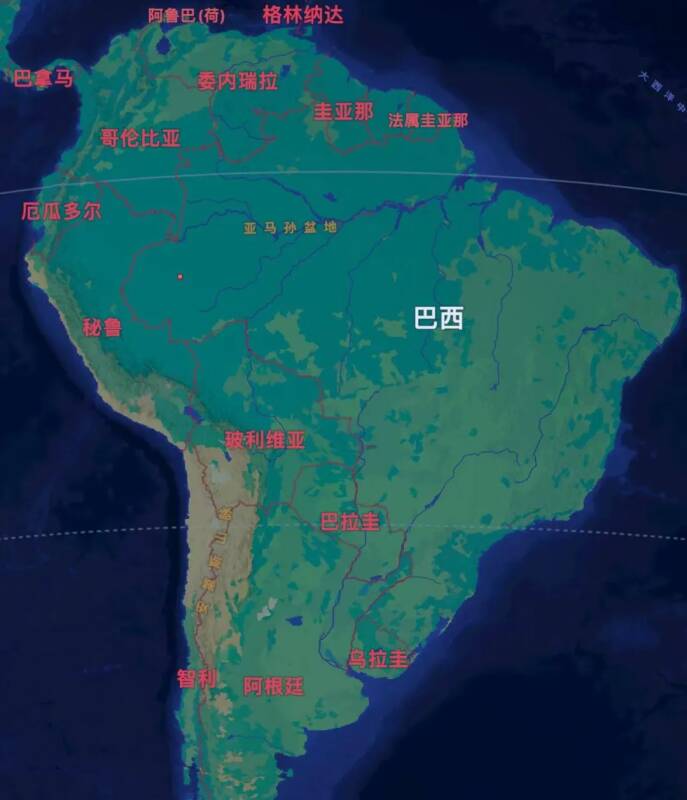
Brazil, whose full name is the Federative Republic of Brazil (The Federative Republic of Brazil), is connected with 10 countries, including Uruguay, Argentina, Peru, Colombia, Bolivia and so on. With a total land area of 8.5149 million square kilometers, Brazil is the largest country in South America and ranks fifth in the world. The country is divided into 26 states and 1 federal district, and with developed agriculture and strong industrial base, it is the largest coffee producer in the world.
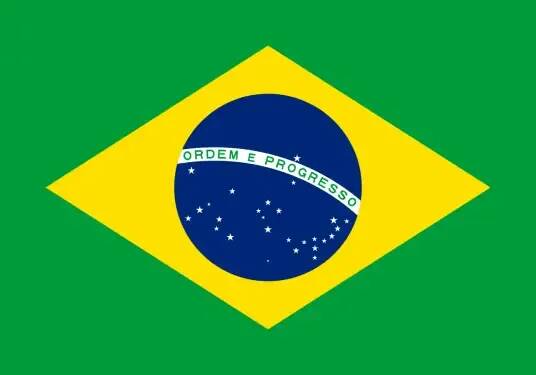
The Brazilian national flag as a whole is a green rectangle, the center is a yellow diamond, and the center of the diamond is a dark blue circular celestial orb with a white ribbon on it, "order and Progress" written in Portuguese, and a white five-pointed star on the circle, symbolizing the country's 26 administrative regions. and the position of the star is 08:50 on November 15, 1889, the day of the new government. The location of star rehearsals in Rio de Janeiro (the capital of Brazil was originally Rio de Janeiro, then moved to Brasilia). Green and yellow are the national colors of Brazil, green symbolizes forests, and yellow symbolizes mineral deposits and resources.
Brazil is located in the eastern part of South America. In addition to connecting many countries, Brazil is also connected to the South Atlantic Ocean to the east. Brazil is mainly divided into two parts, one is the Brazilian plateau above 500 meters above sea level, mainly concentrated in the central and southern part of the country, and the other part is the plain below 200 meters above sea level, mainly in the north and west of the Amazon River basin. Among them, the plateau accounts for 60% of the country's area, and there are three major river systems: Amazon, Parana and San Francisco.
Most of Brazil is tropical, with a tropical rain forest climate in the north, a savanna climate in the central part and a subtropical monsoon humid climate in the south. The average annual temperature in the Amazon plain is 2528 ℃, and the average annual temperature in the south is 16,19 ℃.
Coffee producing area
There are 26 states in Brazil, of which 17 produce coffee, of which Parana, Sao Paulo, Milas Gerais and Esp í rito Santo account for 90% of the total production. Brazil's Arabica accounts for 80% of the total production and the remaining 20% is Robusta, of which the main varieties are Bourbon, Kaduai, iron pickup, new world, etc., all harvested from May to September.
Parana (Bahia): many people would think it is the southernmost coffee region in the world. Although the state accounts for only 2.5% of Brazil's area, it produces 25% of the crops. But the state lacks high-altitude areas, with the highest elevation of only 950 meters, so there is little high-quality coffee.
S â o Paulo: here is Mojiana, Brazil's famous coffee producing area, with rugged terrain and red sandy soil rich in minerals, which is very suitable for growing coffee. On the front street, there is a Brazilian Queen's Manor, which is a yellow bourbon bean seed. It is treated in half-sun and boiled with a KONO filter cup at 1:15 to have the sweet, black tea, nutty and chocolate flavor of sugarcane.
The state of Minas Gerais: located in southeastern Brazil, it has some of the highest mountains in the country, and the relatively famous sub-regions of Syracuse and South Minas are in this state. Many coffee plantations in this state have a relatively large area, so most of them use machinery for farming and harvesting, accounting for 30% of the Brazilian Arabica varieties, at an altitude of 700-1350 meters.
Esp í rito Santo (Espirito Santo): this area is small compared to other coffee producing areas. Victoria, the capital, says it is the main export port. 80% of the area grows Robusta, and only farmers in the south of the area tend to grow Arabica. It is 90-1200 meters above sea level.
Qianjie Coffee Brazil selected Red Bourbon Coffee producing area: Syrador altitude: 700m-1200 m Variety: red bourbon treatment: half-sun flavor: nut dark chocolate cream peanut caramel
This entry-level selection of Qianjie coffee, Lin Dong Mantning, uses half-sun treatment and deep baking. Qianjie will use a KONO filter cup, 1:15 ratio, 88 ℃ water temperature for cooking, the entrance will be nutty, peanut, dark chocolate flavor, creamy mellow taste, high sweetness, overall balance.
FrontStreet Coffee is a long-established specialty coffee roaster in Guangzhou China, selling freshly roasted beans from its own farm in Yunnan as well as dozens of carefully selected single-origin beans from around the world for both pour-over and espresso. The products deliver consistently excellent quality and great value, with shipping within 24 hours. Guangzhou's FrontStreet Coffee shop is recommended by many coffee lovers, and the beans are now available online at the Tmall 。
Important Notice :
前街咖啡 FrontStreet Coffee has moved to new addredd:
FrontStreet Coffee Address: 315,Donghua East Road,GuangZhou
Tel:020 38364473