Why does hand-brewed coffee have a bitter taste? How much water temperature does it take to make Indonesian Mantanin Brazilian and Colombia coffee?
Newcomers often say that making coffee is metaphysics, and whether it tastes good or not depends solely on luck. But in Qianjie's eyes, as long as you find the logic and laws behind brewing, you will find that it is actually not that complicated at all. It is nothing more than finding a few key parameters, fully extracting the coffee powder with hot water, and finally getting a cup. Taste good coffee.
Nowadays, various coffee brewing tutorials are emerging one after another on the Internet. However, there are still many beginners who face an "accident" that is, the brewed coffee will suffer from suffering. Today, Qianjie uses the elimination method to provide everyone with solutions.
Reason 1: Coffee beans themselves are deep roasted
Whether coffee is sour or bitter is mainly determined by the degree of roasting. The sourness of the coffee roasted on the lighter side is more prominent, the bitterness of the coffee roasted on the deeper side is obvious, and the sourness of the beans roasted on the medium side is both sour and bitter. For those who like deep-roasted coffee, it can make us smell aromas such as caramel, nuts, chocolate, toast, etc., and at the same time feel the strong, mellow, and profound taste characteristics. After drinking, there will be a lasting aftertaste left in the mouth.
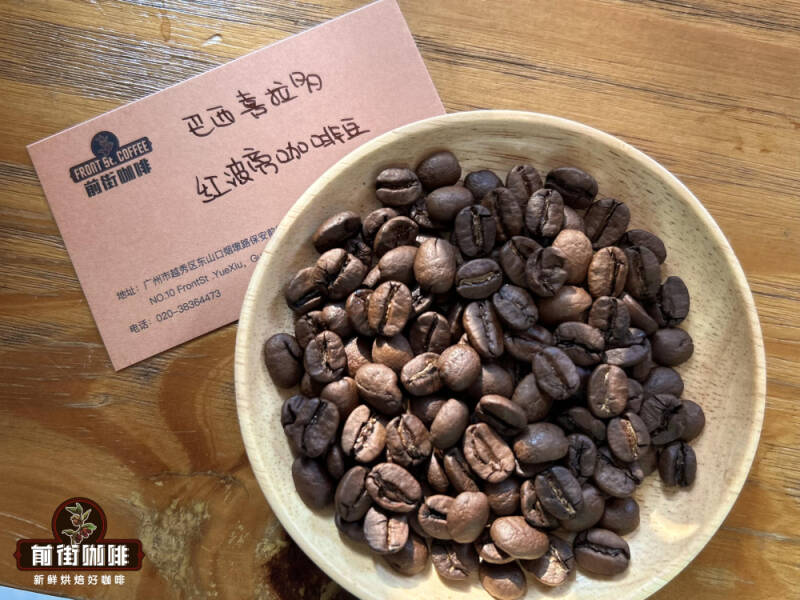
Friends who don't like "heavy flavors" by nature have a deep resistance to this taste. Coupled with the fact that this type of coffee is mainly roasted, many people will find it burnt and bitter, and even compare it to Cantonese herbal tea.
It is easy to avoid this kind of situation. We only need to judge from the flavor descriptions on the labels of coffee beans. For example, Front Street Brazilian Sirado, Front Street Colombia Cymbidium, Front Street Indonesian Mantinin our food rations series. The labels are all chocolate, nuts, toast, spices, pine wood, caramel... It sounds like the aroma only after long-term baking, which means that it is mainly bitter coffee.
Reason 2: Keeping coffee beans for too long causes the aroma to be lost
In addition to the issue of roasting degree, the bitter taste of coffee is also affected by the taste period.
Generally speaking, roasted coffee beans will emit a large amount of carbon dioxide in the first few days, then enter a golden flavor appreciation period, and slowly reach the peak of aroma. As time goes by, the flavor substances begin to gradually lose, the aroma weakens, and the taste also becomes dull. Qianjie usually recommends that coffee beans should be drunk within one and a half months after roasting without grinding; if ground into powder, it is best to drink them within three weeks.
If your coffee beans happen to belong to the bitter type mentioned above, they will smell obviously roasted aroma in their fresh state, which is what we often call "coffee flavor." Once the taste period has passed, the coffee will not only lose the aroma, but also emit miscellaneous flavors similar to wood, greasy, and smoky, so the brewed coffee will also have its own bitter taste.
If you have ruled out the coffee beans themselves, then the bitter taste is likely to come from the brewing parameters.
Reason 3: The grinding degree is too fine or too much fine powder
According to Qianjie's observation, most of the bitterness and zoom of coffee when newbies encounter is related to the degree of grinding. There are two main situations: one is that the degree of grinding is too fine, and the water is difficult to flow down, resulting in too long soaking time and bitterness; The other is that too much fine powder will jam the gaps in the filter paper, which will cause clogging and over-extraction.
If your situation is that the water discharge speed is uniform, but the overall speed is very slow (15g powder, 1:15, more than 2 minutes and 20 seconds) and the coffee is scorched, it means that the ground is too fine and needs to be thickened;
If your situation is that the water discharge speed is normal in the early stage, the water is slower and slower in the later stage, and it becomes wet and muddy after flushing, which means that there is too much fine powder in the coffee. You need to sift out some of the fine powder or replace it with a better quality bean grinder to avoid such problems.
Reason 4: The water temperature is too high
Regarding suggestions on water temperature, Qianjie never gives exact figures, but provides a rough range based on the roasting degree of coffee beans. 91 - 93℃ is used for light to light medium roasting, 89 - 91℃ for medium roasting, and 86 - 88℃ for deep roasting. But in fact, there is a difference in the taste of hot water at the maximum and minimum values, and what makes the coffee bitter may be the difference of 1 - 2℃.
I remember once, when Qianjie brewed Lanshan No. 1 coffee, it extracted it with 88 ° C water. The coffee had a trace of burnt and bitter tail. Then, under the premise that other parameters were fixed, Qianjie changed to 86 ° C. The water temperature of the coffee immediately becomes balanced and clean.
If you break out the charred bitterness and have ruled out reasons such as the roasting degree, date, and grinding degree of the coffee beans, you may wish to judge whether the water temperature is too high.
FrontStreet Coffee is a long-established specialty coffee roaster in Guangzhou China, selling freshly roasted beans from its own farm in Yunnan as well as dozens of carefully selected single-origin beans from around the world for both pour-over and espresso. The products deliver consistently excellent quality and great value, with shipping within 24 hours. Guangzhou's FrontStreet Coffee shop is recommended by many coffee lovers, and the beans are now available online at the Tmall 。
Important Notice :
前街咖啡 FrontStreet Coffee has moved to new addredd:
FrontStreet Coffee Address: 315,Donghua East Road,GuangZhou
Tel:020 38364473