What is the standard process for the purpose of coffee cup testing? What is the difference between hand-brewed coffee and cup testing?
Cup testing is a common way to test the quality of coffee beans. Many friends are curious. Compared with cup testing, hand-brewed coffee can better highlight the flavor and quality of coffee. Why do we use cup testing instead of hand-brewed coffee when testing quality?
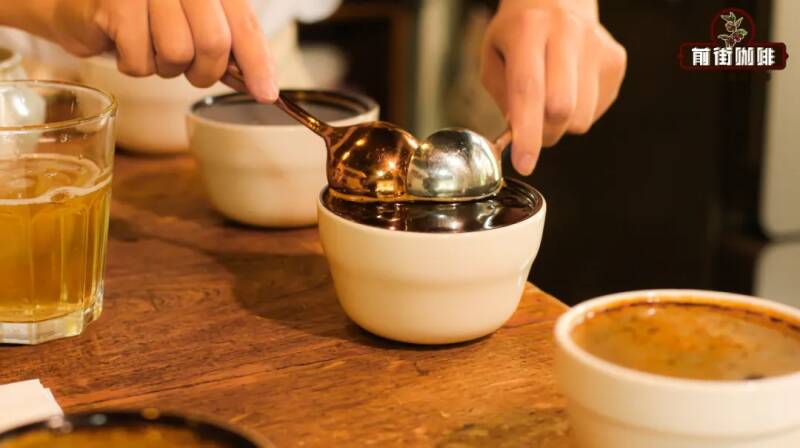
There are many reasons, but what we need to know first is that cup testing can also well highlight the flavor and quality of coffee. And from this level alone, it is already more suitable for testing the quality of coffee beans than hand-brewed coffee. Why? Because cup testing can minimize the impact of excessive human factors on the taste of coffee.
Why can't hand-brewed coffee replace cup testing? First of all, let's take a brief look at the differences in operation between these two methods! Hand-brewed coffee is a trickle-filter coffee extraction method, which generally completes the extraction of coffee by manually manipulating the kettle to inject water; while cup testing is a steeping coffee extraction method, which only requires mixing a suitable amount of water with coffee powder. Soak for a while, you can complete the production of coffee.
The difference between the two lies in the degree of manual intervention. Because hand-brewed coffee requires manual water injection, it can basically be said that the entire process of making coffee is inseparable from manual labor. Of course, there are also artificial hand-brewed coffee making that uses machines instead of manual brewing, but the mainstream hand-brewed coffee making still mainly uses manual brewing. Manual brewing is inseparable from two problems. The first is stability. Even if a great coffee god concentrates on brewing, it is difficult for him to maintain the same water injection rate and loop frequency to brew each pot of coffee. In the production of hand-brewed coffee, water flow is one of the important factors affecting the extraction efficiency. The taste of coffee will change due to different water injection frequencies during the process or different degrees of agitation of the water flow on the coffee powder layer.
In contrast to cup testing, we only need to pour coffee powder into a cup, and then pour in the appropriate amount of hot water. We don't need any manual stirring in the middle. After soaking for a period of time, we can start testing the quality of the coffee. Since cup testing does not involve too much human intervention, the taste of coffee will not be affected too much. What the taste of the coffee itself is, what the coffee brewed will taste, and its stability is quite high.
Even if a great god can make every pot of coffee stably like a machine, making coffee by hand cannot replace cup testing. Because the making of hand-brewed coffee is quite troublesome, it not only takes a long time, but also is very cumbersome to prepare, and one person cannot brew a large amount of coffee at the same time. When cup testing is needed, most beans need to be tested at the same time, rather than a few scattered beans. In this case, if the coffee is made by hand, then we need to use a considerable number of people to make coffee. Because the number of beans to be tested is large, and one person can only brew 2 to 3 pots of coffee at the same time, if you want to make many coffees by hand in a short time, you can only shake a person!
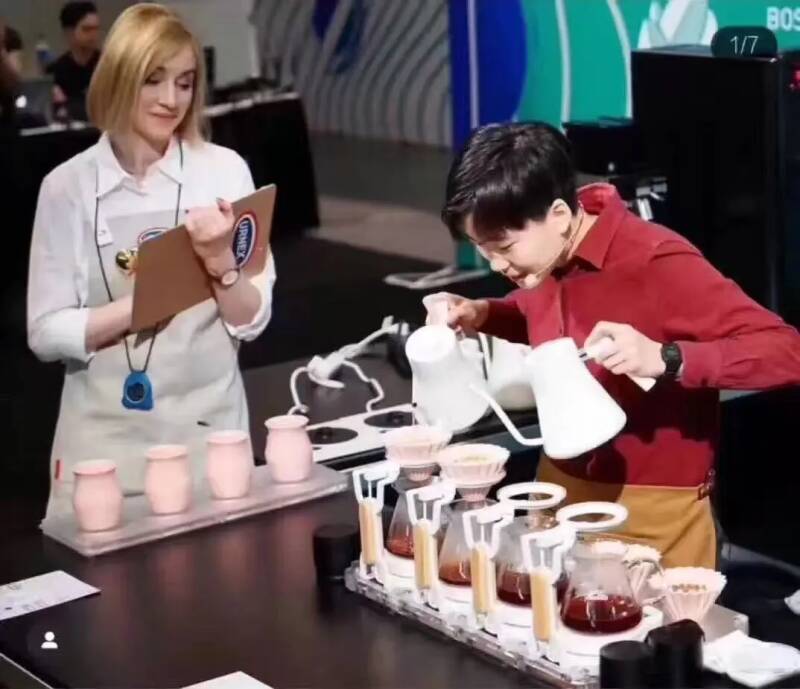
But shaking people will have the problems mentioned in Qianjie earlier. Everyone's water injection method will vary, which will cause differences in the extraction and taste of coffee due to human factors. We cannot judge the quality of coffee well. What kind of problem does it come from? Not only that, hand-brewed coffee filter cups, filter papers, and hand-brewed pots and other necessary utensils for stable brewing have become one of the major problems. If you want to brew multiple pots of coffee at the same time, these professional equipment are indispensable. This in turn will bring us very large preparation costs.
In contrast to cup testing, you only need any container that can hold coffee powder and hot water to start making. Compared to making coffee by hand, the preparation cost is much lower. Therefore, based on the above points, cup testing has become the best means to test the quality of coffee beans with its advantages such as stability, convenience, and low preparation cost. Of course, it is mainly when a large amount of coffee is tested.
Cup testing was born in the United States in 1980 and was originally invented for the trade of coffee beans. Because the number of coffee beans traded is huge, in order to prevent low-quality coffee beans from being mixed with them, merchants will conduct sample surveys to test the quality of coffee beans. But the number was too large, and businessmen needed a simple and convenient way to make coffee, and then cup testing came into being!
With the development of the times, cup testing has been used to test the quality of coffee beans in related competitions, identification, and research of various coffee beans. The same is true for Qianjie. Every time Qianjie launches new beans, it will first use a cup test to test the quality of coffee beans and the appropriate roasting degree. When the quality of coffee beans is determined online and the appropriate roasting degree is found. Only then will it be made into products that will be put on Taobao and Tmall. - END -
FrontStreet Coffee is a long-established specialty coffee roaster in Guangzhou China, selling freshly roasted beans from its own farm in Yunnan as well as dozens of carefully selected single-origin beans from around the world for both pour-over and espresso. The products deliver consistently excellent quality and great value, with shipping within 24 hours. Guangzhou's FrontStreet Coffee shop is recommended by many coffee lovers, and the beans are now available online at the Tmall 。
Important Notice :
前街咖啡 FrontStreet Coffee has moved to new addredd:
FrontStreet Coffee Address: 315,Donghua East Road,GuangZhou
Tel:020 38364473