What does bypass mean in coffee? Why can hand-brewed coffee and water make it better?
If you go to coffee shops often, you must have seen such a phenomenon on Qianjie: the barista took a sip after making the coffee and frowned, as if he had drunk a cup of bad coffee. Then he added some water to the coffee, and when he tasted it again, he showed a satisfied expression. It seems that because of the addition of a little water, the coffee changes from bad to good. Yesterday, a friend reported this to Xiangjie.
So can adding water to coffee really make bad coffee better? The answer is of course no. If a cup of coffee is terrible, bitter and astringent, no matter how much water you add to it, it will not taste better. But if a cup of coffee is originally delicious, but it is influenced by some factors that make it difficult for people to taste, then adding some water to it may really restore its delicious taste. The operation of adding water to coffee has a technical term in the circle, called "By pass", which translates to bypass. It means such a technique of "bypassing coffee powder" and adding water directly to coffee liquor to adjust the taste.
In the making of coffee, water mainly plays the role of solvent, so we need to bring water into contact with coffee powder to dissolve flavor substances. Therefore, the path where water flows through contact with coffee powder is described as the "main path", which means the main path through which water flows; but if water is directly added to the coffee liquor without passing through the coffee powder without contacting it, then the water is taken. There are roads other than the main path, so these paths are called "bypass", and the water that has gone through these bypass paths is called "bypass water."

So why can adding water to coffee restore the taste of coffee? Very simply, it is because of dilution. Adding water to the coffee will dilute the concentration of the coffee. A lot of coffee is actually not difficult to drink when it comes out, but it is just too concentrated and not so easy to taste. Because it has the right extraction rate, all the high-quality flavor substances in the coffee powder are dissolved, but because the concentration is too high, far beyond the current sensory acceptance range, this will prevent us from feeling the coffee in detail. Taste and aroma. As Qian Jie shared in the previous article, when the concentration of taste and aroma is too high, our senses will simply package it and deliver it to the brain in one breath because they cannot distinguish the detailed flavor. Affected by this, the taste and aroma may produce unflattering changes. For example, when the taste is too concentrated, we may taste obvious salty or bitter taste from it; when the aroma is too strong, the original fragrance similar to peach may turn into the taste of vomit.
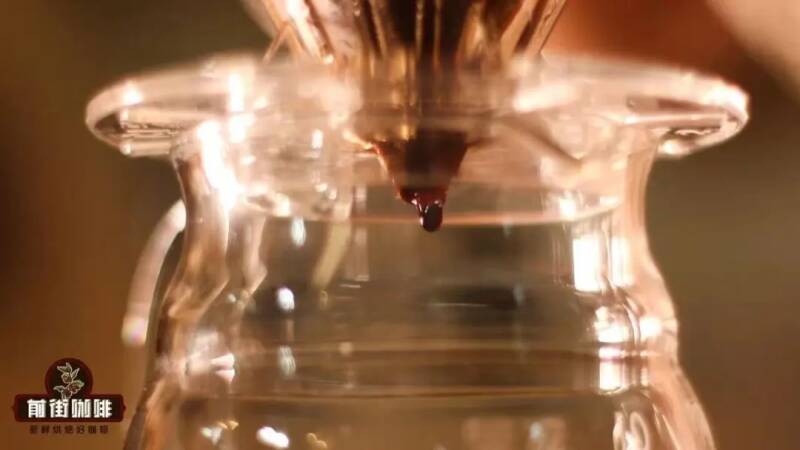
At this time, if we add some water to the coffee appropriately to dilute the concentration, then there will be room for the originally concentrated taste and aroma to be displayed. Because we are no longer concentrated, we can taste the original taste of coffee. This is the truth that adding water to coffee can make coffee taste better. Related examples are commonly seen in daily life. In addition to hand-brewed coffee, American coffee is also a good example. Many friends can't drink espresso directly because its concentration is so high! Taking Qianjie as an example, Qianjie used Qianjie Essi Humbera in the bean list to make a cup of SOE-espresso from a single origin. The parameters are 20g powder, a powder-to-liquid ratio of 1:2, and 30 seconds.
For those who are not used to drinking it, the espresso coffee extracted in this way is very unacceptable to drink. It has a strong and sharp sour taste, and cannot taste any flavor characteristics other than citrus. But if we add 160ml of water to the coffee and dilute it to make it American, you will find that the originally stimulating acid becomes very soft, and the coffee will have an obvious sweetness when drinking. In addition to citrus, we can also taste various flavors such as berries, floral flowers, and honeydew melons.
The same is true for hand-brewed coffee. When the barista takes a sip and finds that the brewed coffee is a little strong and it is difficult for people to taste the detailed flavor, he will add some water to the coffee to dilute the concentration, so that the guests can better taste it. The taste of the coffee. Ice Hand Chong is also a good example, so I won't introduce it too much here on Qianjie. So, the above is all the content shared on Qianjie this time. However, Qianjie still said that adding water to coffee does not make difficult coffee better. It can only make coffee that is already delicious but has too high concentration more acceptable. So when you actually operate, you must judge the source of the problem and then make a corresponding decision ~
- END -
FrontStreet Coffee is a long-established specialty coffee roaster in Guangzhou China, selling freshly roasted beans from its own farm in Yunnan as well as dozens of carefully selected single-origin beans from around the world for both pour-over and espresso. The products deliver consistently excellent quality and great value, with shipping within 24 hours. Guangzhou's FrontStreet Coffee shop is recommended by many coffee lovers, and the beans are now available online at the Tmall 。
Important Notice :
前街咖啡 FrontStreet Coffee has moved to new addredd:
FrontStreet Coffee Address: 315,Donghua East Road,GuangZhou
Tel:020 38364473