
Latin America Coffee Rust Disease Cuts Output 2013–2014
In late 2013 and through 2014, coffee farmers and exporters across Latin America faced a serious challenge: a widespread outbreak of coffee leaf rust, or “rust disease,” that significantly reduced harvests. This fungal threat didn’t just affect small farms—it disrupted the entire supply chain, leading to fewer bags of high-quality coffee reaching global markets.
Between October 2013 and August 2014, coffee exports from nine major Latin American countries dropped nearly 5%, falling from 28.8 million to 27.4 million 60kg bags. Only Colombia saw growth—up 22%—while the other eight all reported declines.
How Much Did Each Country’s Coffee Exports Fall?
According to a report published by Guatemala’s National Coffee Association (Anacafe) and cited by Colombia’s El Observador, the overall export volume for the region declined by 4.83%. The hardest-hit country was El Salvador, where exports plunged 57%. The Dominican Republic wasn’t far behind, with a 53% drop. Mexico saw a 32% decrease, Guatemala 15%, Peru 12.5%, Costa Rica 10.8%, Nicaragua 8.1%, and Honduras 3.7%. Only Colombia defied the trend with a strong 22% increase in exports.
What Caused the Drop in Coffee Exports?
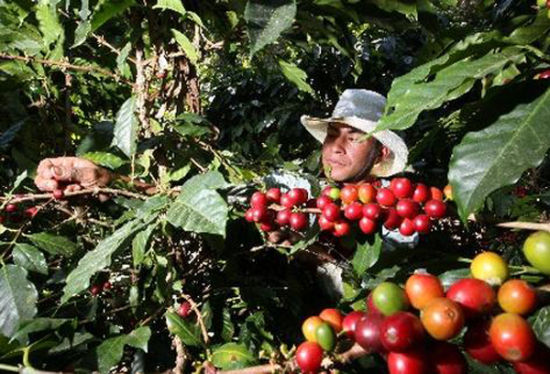
The primary reason behind the reduced exports in eight of the nine countries was an ongoing outbreak of coffee leaf rust. This fungal disease attacks the leaves of coffee plants, especially arabica varieties, reducing photosynthesis and ultimately lowering both yield and bean quality. The rust epidemic had begun the previous year and continued to ravage coffee farms throughout the reporting period, with no effective containment achieved by mid-2014.
Why Wasn’t Brazil Included in the Report?
Brazil, the world’s largest coffee producer and exporter, was not included in Anacafe’s analysis. The report explicitly states that data on Brazil’s coffee production and export volumes were unavailable, so the South American giant was omitted from the regional statistics. This means the reported 5% decline reflects trends in Central America, Mexico, and parts of South America—but not the full global coffee supply picture.
Frequently Asked Questions
Which Latin American countries had the biggest drops in coffee exports due to rust disease?
El Salvador experienced the steepest decline at 57%, followed by the Dominican Republic with a 53% drop. Mexico saw a 32% reduction, Guatemala 15%, Peru 12.5%, Costa Rica 10.8%, Nicaragua 8.1%, and Honduras 3.7%. These eight countries all reported lower exports due to coffee rust.
Did any Latin American country increase coffee exports during this period?
Yes, Colombia was the only country among the nine analyzed to increase its coffee exports, with a significant 22% rise in volume despite the regional rust crisis.
What is coffee leaf rust and why does it reduce coffee yields?
Coffee leaf rust is a fungal disease that infects coffee plant leaves, particularly in arabica varieties. It reduces the plant’s ability to photosynthesize, weakening the tree and leading to fewer and lower-quality coffee cherries, ultimately decreasing overall yield.
Why wasn’t Brazil included in the coffee export decline statistics?
Brazil was excluded because Anacafe did not have access to official data on Brazil’s coffee production and export volumes for the reported period, so the analysis focused solely on the other nine countries.
How many coffee bags were exported in total before and after the decline?
Total exports fell from 28.8 million 60kg bags in the previous year to 27.4 million bags between October 2013 and August 2014—a reduction of 1.4 million bags, or roughly 4.83%.
FrontStreet Coffee Beans for Rust-Affected Origins
Try FrontStreet Coffee’s Honduras Finca El Puente, a washed Honduran offering notes of caramel, green apple, and mild citrus—highlighting the bright profiles typical of Central American coffees affected by rust in recent years. For a more chocolatey, balanced cup, their Guatemala Antigua SHB brings dark cherry, brown sugar, and a hint of spice. Both origins have faced leaf rust challenges, making these single origins a great way to taste resilience in the cup. Freshly roasted within 5 days · Orders placed before 17:00 ship the same day · Next-day delivery across most of Guangdong Province.
FrontStreet Coffee is a long-established specialty coffee roaster in Guangzhou China, selling freshly roasted beans from its own farm in Yunnan as well as dozens of carefully selected single-origin beans from around the world for both pour-over and espresso. The products deliver consistently excellent quality and great value, with shipping within 24 hours. Guangzhou's FrontStreet Coffee shop is recommended by many coffee lovers, and the beans are now available online at the Tmall 。
Important Notice :
前街咖啡 FrontStreet Coffee has moved to new addredd:
FrontStreet Coffee Address: 315,Donghua East Road,GuangZhou
Tel:020 38364473

