Chinese civet coffee
Because there is no civet coffee in China at all. Moreover, as a tea-drinking country, in a tea-drinking city, we are proud of having tea, and few people know about civet coffee, let alone that it is made from civet droppings. In addition, the high price of civet coffee is often daunting.
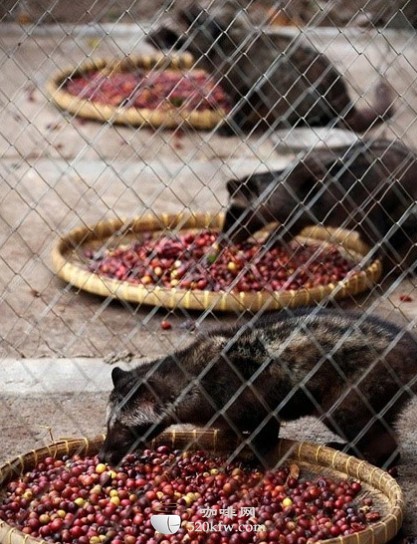
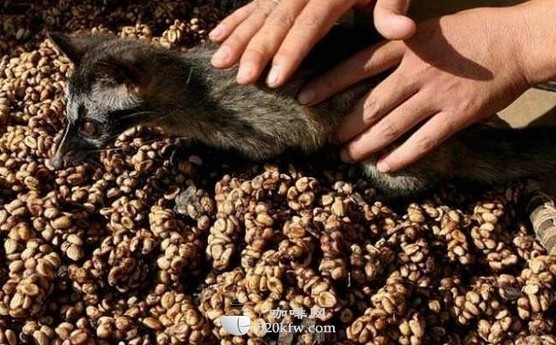
Muscat Coffee (Kopi Luwak), Kopi (Indonesian, coffee), Luwak refers to a kind of arboreal wild animal commonly known as "civet" in Indonesia. Civet coffee is the most expensive coffee in the world, with a price of several hundred US dollars per pound. It is extracted from the feces of the civet and processed. The civet eats the ripe coffee fruit and is excreted through the digestive system. Due to the fermentation of the stomach, the coffee produced has a special taste and has become a hot item in the international market.
Luwak likes to choose the most ripe, sweet, juicy coffee fruit in the coffee tree as food. The coffee fruit passes through its digestive system, digesting only the pulp on the outside of the fruit, and the hard coffee beans are then excreted intact by Luwak's digestive system. This digestion process, so that coffee beans have an unparalleled magical change, the flavor tends to be unique, the taste is particularly mellow, rich and round sweet taste is also unmatched by other coffee beans. This is because Luwak's digestive system destroys the protein in the coffee beans, making the coffee much less bitter due to the protein, but adding to the round taste of the coffee beans.
Because wild Luwak is obviously better at selecting good coffee fruits, which makes this kind of coffee have outstanding characteristics.
After processing and baking, Kopi Luwak has become a luxury coffee drink and spread to luxury kingdoms around the world. Local coffee farmers, in pursuit of high profits, bring wild civets home to raise them so that they can produce more Kopi Luwak. However, the Kopi Luwak produced by breeding civets will be much worse in color and taste. Even so, the output of this kind of coffee is still very rare, and it is not affordable for all people who like coffee.
I checked the international market and found that a cup of 4 oz coffee can sell for $168 (about 1400 yuan)!
What makes me feel magical and moved is that a friend of mine, after overcoming the difficulties of breeding technology, successfully raised civet and masked palm civet, and made a very rare and legendary civet coffee. Although it belongs to the stage of experimental exploration, this kind of human treasure coffee has been born in China.
From a rare point of view, Chinese civet coffee is obviously more precious than Indonesian civet coffee.
Thanks to our friends, because of such friends, we can still touch and drink the truly magical civet coffee. I feel that we are happy, because we have a person who dares to practice and innovate.
FrontStreet Coffee is a long-established specialty coffee roaster in Guangzhou China, selling freshly roasted beans from its own farm in Yunnan as well as dozens of carefully selected single-origin beans from around the world for both pour-over and espresso. The products deliver consistently excellent quality and great value, with shipping within 24 hours. Guangzhou’s FrontStreet Coffee shop is recommended by many coffee lovers, and the beans are now available online at the Tmall 。
Important Notice :
前街咖啡 FrontStreet Coffee has moved to new addredd:
FrontStreet Coffee Address: 315,Donghua East Road,GuangZhou
Tel:020 38364473
- Prev
Vietnam becomes the largest coffee supplier to China
Vietnam has become the largest overseas supplier of coffee to China. China imports mainly from Southeast Asian countries, while Vietnam is the largest exporter of coffee to China.
- Next
Why can't coffee be popularized in China?
In a big tea-drinking country, why can't coffee be popular?!
Related
- Characteristics of the origin and production areas of fine coffee in Africa Introduce the characteristics of the world's three major coffee-producing countries
- Why is the flow rate of hand-brewed coffee sometimes fast and sometimes slow? Relationship between coffee bean hardness and altitude roasting method
- Iced Coffee Daquan Detailed Tutorial Steps Fei: The difference between full ice, normal ice, less ice, and ice-free American style
- Hand-brewed coffee powder pit judges extraction problem What is the reason why coffee grounds are layered? How to solve the problem?
- What should I do if cold extracted coffee is too bitter or too sour? Analysis of the causes of over extraction and insufficient extraction of iced coffee
- Why doesn't homemade lattes taste like coffee? Latte beans and milk shopping guide Latte concentrate extraction parameters
- How do you think about the freshness of coffee beans, taste appreciation period, shelf life? Can expired coffee beans be roasted twice?
- Which is more suitable for espresso? Light roast, medium roast, and dark roast? Why is coffee fat richer?
- Why can I never finish making coffee in Turkish sand? Share Turkish coffee making steps and parameters!
- The influence of the thickness of the hand-brewed coffee powder bed on the extraction taste! What is the difference between a flat bottom and a conical V60 filter cup?