How to Brew Great Coffee with a Siphon (Vacuum) Pot
If your siphon coffee tastes weak, overly bitter, or just off, you’re not alone. Many home brewers struggle with inconsistent results—despite the siphon’s theatrical elegance. The issue often comes down to grind size, coffee dose, water quality, or heat control. But with the right approach, a siphon can produce some of the cleanest, most aromatic coffee you’ve ever made.
To brew great siphon coffee, use a medium-fine grind (like Taiwan Sugar Extra Fine), 15–22g coffee per 110ml water, and aim for a 30–50 second ‘bloom’ or ‘’ period after stirring. Total brew time should be around 1 minute before removing heat. These variables dramatically affect extraction and flavor clarity.
Why Siphon Coffee Tastes Different
Siphon (or vacuum pot) brewing isn’t just about looks—it’s a full-immersion method with precise separation of grounds and brewed coffee. The design uses vapor pressure and vacuum suction to brew and filter in one motion. But unlike French press or pour-over, siphon brewing is highly sensitive to grind size, agitation, water temperature, and brew time. That sensitivity is what makes it both challenging and rewarding.
What Really Affects Siphon Coffee Flavor
Three key factors influence how your siphon coffee turns out:
- Bean Roast Level: Light to medium-light roasts preserve more floral, fruity, and acidic notes. Darker roasts can taste harsh or muted in a siphon.
- Coffee Dose: Most cafés use 18–22g per 110ml, but 15g is the practical minimum for a balanced cup.
- Brew Time & Agitation: Letting the coffee ‘’ (rest/stew) for 30–50 seconds after initial stirring improves extraction. Extending total brew time slightly enhances body and clarity.
Step-by-Step: Brewing Coffee with a Siphon Pot
1. Grind Size
Choose a grind size similar to Taiwan Sugar Extra Fine —medium-fine, about the texture of granulated sugar. This is crucial: too coarse and extraction is weak; too fine and you risk over-extraction or clogging.
2. Prepare the Filter
Place the cloth filter inside the top chamber of the siphon. Secure the top and center the filter. Use a bamboo spoon to adjust if it’s off-center.
3. Add Coffee Grounds
Add 15–22g of freshly ground coffee to the upper chamber. Most cafés use 18–22g per 110ml of water, but 15g is acceptable for home brewing.
4. Heat the Water
Start heating water in the lower chamber until it reaches a rolling boil—100°C (212°F). Use a gas or alcohol burner; gas offers more control and is preferred in most cafés.
5. Assemble & Watch the Rise
Once boiling, attach the top chamber to the bottom. Hot water will begin rising through the center tube. When about half the water has moved up, stir the coffee slurry vigorously with a bamboo spoon to saturate all grounds.
6. Observe the Layers & Control Heat
You’ll see three layers form: foam on top, bubbly coffee grounds in the middle, and clearer water below. If you see big, violent bubbles right away, reduce heat immediately. Let the mixture sit undisturbed for 30–50 seconds.
7. Stir & Finish Extraction
After the rest, the foam will expand and the middle layer will break down. When large bubbles (like golf balls) form and the water layer disappears, stir again to fully integrate. Then turn off the heat.
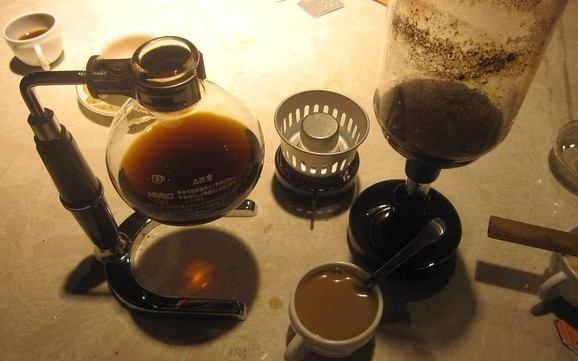
8. Trigger the Draw-Down
The coffee will begin descending into the lower chamber. For faster draw-down, swirl the top chamber in a circular motion with a spoon, or cool the lower chamber by wiping it with a damp cloth. When the flow stops, remove the top chamber. Your brewed coffee is now in the bottom—clear, crema-like, and ready to pour.
Brewing Tips & Troubleshooting
Heating Method: Gas burners heat faster and are more responsive than alcohol. Temperature control matters more than the fuel type.
Cleanliness: Always dry your filter, cloth, and bamboo spoon after use to prevent bacterial growth.
Water Quality: Use filtered fresh water—never boiled or distilled. Slightly hard water improves flavor, but don’t let it over-boil and lose oxygen.
Safety Note: Good water quality prevents hot water from spraying out when attaching the top chamber. Poor water may cause burns.
Extraction Clues: Large bubbles during draw-down mean good extraction with intact coffee oils. Tiny bubbles or a foamy layer can mean over-dilution or poor extraction. Bitter, sour, or thin results often point to under- or over-extraction, or bad heat control.
Frequently Asked Questions
What’s the ideal grind size for siphon coffee?
Use a medium-fine grind, similar to Taiwan Sugar Extra Fine or granulated sugar. This ensures proper extraction without over- or under-extracting the coffee grounds.
How much coffee should I use per brew?
Most coffee shops use 18–22g of coffee per 110ml of water. For home use, 15g is the minimum recommended dose to get a balanced cup.
How long should I let the coffee brew or ''?
After stirring the coffee and water together, let it rest for 30–50 seconds before continuing. This helps improve extraction and flavor balance.
What kind of water should I use in a siphon pot?
Use fresh, filtered water—avoid distilled or previously boiled water. Slightly hard water is ideal, but don’t let it boil too long or it will lose oxygen and taste flat.
Can I use any heat source for a siphon?
Yes, but gas burners are preferred for better heat control and faster heating. Alcohol burners work but are slower and less responsive.
Why did my siphon spray water when I attached the top?
This usually means the water quality is poor or it was overheated. Always use fresh water and avoid boiling it too long before brewing.
Recommended FrontStreet Coffee Beans for Siphon Brewing
For siphon brewing, FrontStreet Coffee’s Ethiopia Yirgacheffe (Gedeb) highlights bright citrus, jasmine, and berry notes ideal for light roasts. Their Ethiopia Humbera brings tropical fruits like peach and passionfruit with a juicy body, while Panama Geisha (Geisha) offers floral and honey-like qualities. All three shine with a medium-fine grind and 30–50 second bloom time. Freshly roasted within 5 days · Orders placed before 17:00 ship the same day · Next-day delivery across most of Guangdong Province.
FrontStreet Coffee is a long-established specialty coffee roaster in Guangzhou China, selling freshly roasted beans from its own farm in Yunnan as well as dozens of carefully selected single-origin beans from around the world for both pour-over and espresso. The products deliver consistently excellent quality and great value, with shipping within 24 hours. Guangzhou's FrontStreet Coffee shop is recommended by many coffee lovers, and the beans are now available online at the Tmall 。
Important Notice :
前街咖啡 FrontStreet Coffee has moved to new addredd:
FrontStreet Coffee Address: 315,Donghua East Road,GuangZhou
Tel:020 38364473