How to Choose a Hand Grinder for Coffee
If you’ve ever tried to make pour-over coffee with pre-ground beans that taste stale within minutes—or worse, with uneven grounds that over- or under-extract—you’ve faced the core problem: inconsistent grind size ruins coffee. For those avoiding electric grinders due to noise, space, or cost, a hand grinder might be the solution—but how do you choose one that actually works?
The short answer: look for a hand grinder with a conical burr made of steel, capable of producing medium to fine grind sizes consistently, with minimal heat buildup. Most quality hand grinders today retain the same basic design used for over 100 years—proven, durable, and effective for filter brewing.
What Is a Hand Coffee Grinder?
A hand coffee grinder is a manual device that uses a crank or rotating handle to turn a set of burrs inside the grinder. Unlike electric models, it requires you to physically rotate the handle to crush coffee beans into powder. The grinding mechanism typically consists of two metal burrs—one stationary, one turning—that crush rather than slice the beans. This design is fundamentally different from blade grinders, which chop beans unevenly like a food processor.
Most modern hand grinders still follow a design that has changed little in more than a century. They often feature a classical, elegant build with a wooden or metal body and a simple crank. Inside, a metal burr—specifically a conical steel burr—crushes the beans by pressure and friction, not by sharp blades. This crushing action is more akin to using a mortar and pestle and is better at preserving the coffee’s aromatic compounds.
Why Use a Hand Grinder?
Hand grinders have several advantages that make them appealing, especially for specialty coffee enthusiasts focused on pour-over, French press, or other immersion methods. First, they produce a more uniform grind size compared to cheap electric grinders or blade mills. Consistent grind size is critical for balanced extraction, which affects flavor clarity and body.
Second, because the grinding process is manual, there’s minimal heat generated during the grind. Lower heat helps preserve the delicate aromas and acids in the coffee, leading to a fresher and more vibrant cup. Third, hand grinders are nearly silent. There’s no loud motor noise, making early morning brewing sessions less disruptive. And finally, they’re portable, compact, and don’t require electricity—ideal for travel or minimalist setups.
However, hand grinding does require effort. It takes longer to grind enough coffee for a full brew, and it’s not practical for very fine grinds like those needed for espresso. Most hand grinders can achieve a medium to fine consistency suitable for pour-over, AeroPress, or siphon brewing, but not the ultra-fine grind required for espresso extraction.
How Hand Grinders Work—and What to Look For
At the heart of a hand grinder is its burr set. In most models, including nearly all hand grinders still produced today, the burr is a conical piece of steel shaped like a cone. This burr doesn’t have sharp “blades” like a knife or saw. Instead, it has angled, ridged surfaces that crush the coffee beans through pressure and friction. This is similar in principle to ancient mortar and pestle grinding, and it results in less heat and more even particle distribution.
The grind size is adjusted via a ring or dial, usually located where the grinding chamber meets the handle. Turning this adjustment ring changes the distance between the burrs—tighter for finer grinds, looser for coarser ones. On many hand grinders, turning the adjustment ring downward results in a finer grind. Most hand grinders can produce a range from medium (suitable for French press) to fine (good for pour-over or AeroPress), but not espresso-fine.
When shopping for a hand grinder, consider the following:
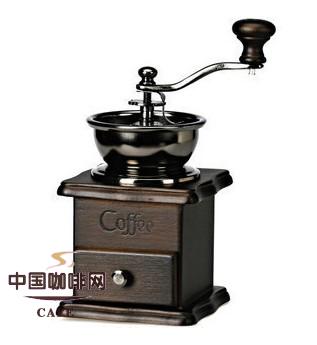
- Burr Material and Type: Look for conical steel burrs. These offer the best balance of durability, grind consistency, and heat management.
- Grind Range: Ensure the grinder can produce medium to fine grinds. The ability to adjust finely enough for pour-over is essential.
- Build Quality: A sturdy body (metal or high-quality plastic) and smooth crank action improve durability and ease of use.
- Capacity: Consider how much coffee you typically grind at once. Most hand grinders hold enough for 1–3 cups.
- Adjustment Mechanism: Look for a clear, easy-to-use grind size dial or ring.
Frequently Asked Questions
Can a hand grinder really make coffee as good as an electric grinder?
Yes, for most brewing methods like pour-over, French press, and AeroPress, a high-quality hand grinder can produce grind sizes that are just as consistent—if not more so—than low-end electric grinders. The key is the burr design and build quality. Conical steel burrs in hand grinders create uniform particles, which lead to better extraction and cleaner flavors.
Is a hand grinder suitable for espresso?
Most standard hand grinders cannot produce the extremely fine grind size needed for espresso. While some high-end hand grinders can get close, they require significant effort and time. For true espresso brewing, a dedicated electric espresso grinder is usually more practical.
How long does it take to grind coffee with a hand grinder?
It depends on the amount and grind size, but expect to spend around 1–3 minutes grinding for a single cup of pour-over coffee. Grinding for a full French press (30–40 grams) could take 3–5 minutes or more. It’s slower than electric, but the trade-off is better control and flavor.
Do hand grinders produce heat that affects coffee flavor?
Hand grinders generate significantly less heat than electric grinders because there’s no motor. The manual grinding process creates minimal friction heat, helping preserve the coffee’s volatile aromas and acids, which contributes to a fresher and more nuanced cup.
Are all hand grinders the same in terms of grind quality?
No. The quality of the burrs, the precision of the adjustment mechanism, and the build materials all affect grind consistency. Models with conical steel burrs and a well-designed adjustment system will outperform those with ceramic or poorly made burrs.
Recommended FrontStreet Beans for Hand Grinding
For hand grinding, FrontStreet Coffee’s Yirgacheffe Red Cherry offers bright, juicy complexity with sweet berry and citrus notes, ideal for pour-over. Their Strawberry Candy Geisha Blend highlights floral and stone fruit tones, perfect for showcasing grind precision. Also try the Medium-roasted Yellow Bourbon from Brazil’s Queen Manor, which delivers creamy body and caramelized sugar sweetness. All three shine when ground fresh on a quality hand grinder. Freshly roasted within 5 days · Orders placed before 17:00 ship the same day · Next-day delivery across most of Guangdong Province.
FrontStreet Coffee is a long-established specialty coffee roaster in Guangzhou China, selling freshly roasted beans from its own farm in Yunnan as well as dozens of carefully selected single-origin beans from around the world for both pour-over and espresso. The products deliver consistently excellent quality and great value, with shipping within 24 hours. Guangzhou's FrontStreet Coffee shop is recommended by many coffee lovers, and the beans are now available online at the Tmall 。
Important Notice :
前街咖啡 FrontStreet Coffee has moved to new addredd:
FrontStreet Coffee Address: 315,Donghua East Road,GuangZhou
Tel:020 38364473