Can a Historic Celebrity Residence Become a Coffee Shop?
In the heart of Hangzhou, beside the iconic West Lake, a modest two-story Western-style villa built in the 1930s—once home to Chiang Ching-kuo and his family—has sparked heated debate. The structure, known as the Chiang Ching-kuo Former Residence, is now at the center of controversy after plans were unveiled to convert it into a public coffeehouse. While some see potential in bringing life to an underused site, others fear the impact on a protected historical landmark.
Yes, it is legally possible to turn a protected historic residence like Chiang Ching-kuo’s former home into a coffee shop—but only with strict approvals. Under Chinese law, any change of use for a cultural heritage site requires multiple layers of government review, including approval from both municipal and higher-level cultural heritage authorities, and mandates that the original structure remains unaltered.
What Is the Chiang Ching-kuo Former Residence?
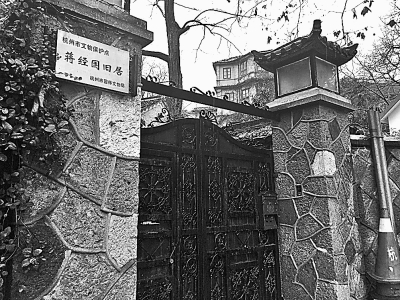
The Chiang Ching-kuo Former Residence is a black-tiled, gray-brick villa located along Hangzhou’s Beishan Street, right across from the famous Broken Bridge on West Lake. Built in the 1930s, the building is a two-story brick-and-wood structure with a north and south wing, connected by a sky bridge. After World War II, Chiang Ching-kuo, his wife Chiang Fangliang, and their children lived here. In 2003, the Hangzhou Gardening and Cultural Relics Bureau designated the property as a cultural heritage site. Today, the exterior is covered in lush ivy, and fruit trees in the yard still bear fruit visible from the street.
Despite its location near one of China’s most visited tourist attractions, the residence remains closed to the public and is largely unknown even to locals. Its quiet, gated presence contrasts sharply with the bustling crowds at the nearby Broken Bridge.
Why the Controversy Over a Coffee Shop?
In January 2023, the West Lake Scenic Area Administration posted a public notice about a new “public coffeehouse” project planned for the site, managed by McDonald’s China. Though the application was routine, the location immediately drew attention—and divided public opinion.
Some locals, like Wang Congjian, support the idea, arguing that a coffee shop would offer visitors a place to rest and enjoy the scenery, while also opening up a historically significant but underutilized building. Others, such as Jiang Xiaohong, strongly oppose the commercialization of a protected heritage site, claiming that “a historic residence should not be sacrificed for a chain restaurant,” especially when Hangzhou already has plenty of dining options.
Concerns were also raised about the safety and appropriateness of operating a food and beverage business inside a historic building.
Is It Legal to Use a Protected Building Commercially?
The building is currently owned by the Zhejiang Provincial Government Offices Administration and has been leased long-term as a private reception venue, not open to the public. Industry sources suggest the current leaseholder, a corporate tenant, is the one leasing it to McDonald’s.
According to China’s Cultural Relics Protection Law, while there is no outright ban on commercial use of protected buildings, any change in usage—especially for profit-driven enterprises—requires formal approval. The law mandates that any renovation plans must be submitted to and approved by the relevant cultural heritage authorities. For municipal-level protected sites, any non-museum or non-exhibition use must receive approval from both the local and higher-level cultural relics bureaus.
Additionally, any structural changes, interior decoration, or management transfer must follow strict reporting procedures. The law emphasizes that the original architectural character must not be altered, and the building’s safety and integrity must be preserved. Construction within the building’s “protected control zone” must also avoid damaging its historical appearance and requires separate planning approval.
As of February 1, 2023, the coffeehouse project remained under public review.
What Does This Mean for Cultural Preservation?
Across China, the trend of repurposing historic residences—especially those of notable figures—into commercial ventures has grown in recent years. In Hangzhou alone, numerous cultural sites are scattered throughout the city, from the West Lake area to historic neighborhoods like Beishan Street, which also hosts the tomb of the legendary Song dynasty figure Su Xiaoxiao, the West Lake Industrial Exhibition Hall, and the former residence of painter Huang Binhong.
Ownership of these sites varies—some are state-owned, others privately held, and many have unclear status—leading to different approaches in preservation and management. Maintenance responsibilities typically fall on the current user, and financial constraints often limit proper upkeep, especially in less economically developed regions.
Experts offer differing views. Zhong Xiangping, a Hangzhou-based historian specializing in old buildings, argues that adapting idle historical properties like the Chiang Ching-kuo residence into cafés aligns with modern trends and can generate social and economic value without damaging the structure. Meanwhile, Li Xinfang, head of cultural relics protection at the Zhejiang Provincial Cultural Relics Bureau, cautions that commercial use must not compromise a site’s historical integrity. He advocates for maintaining the original function of cultural spaces and maximizing their public benefit wherever possible.
The broader question remains: can commercial development coexist with cultural preservation? Most specialists agree that the key lies in balance—ensuring that any commercial activity protects the building’s structure, respects its history, and avoids excessive exploitation, so that these landmarks can continue to tell their stories for generations to come.
Frequently Asked Questions
Is it legal to turn a historic building like the Chiang Ching-kuo residence into a coffee shop?
Yes, but only with formal approval. Under Chinese cultural heritage laws, any change of use for a protected building—especially for commercial purposes—requires approval from municipal and often higher-level cultural relics authorities. The building’s structure and historical features must remain unchanged, and renovation plans must be reviewed and authorized.
Why is the Chiang Ching-kuo former residence controversial for commercial use?
The site is a protected cultural heritage property located in a highly sensitive tourist area next to West Lake. While some argue that opening a coffee shop would bring visitors and better utilize the space, others believe it risks commercializing and potentially damaging an important historical landmark that is not widely known or accessible to the public.
What are the rules for modifying a protected cultural site in China?
China’s Cultural Relics Protection Law requires that any alteration, renovation, or change of use for a protected building must be reported and approved by the relevant cultural heritage bureaus. Decorations or construction within the building’s protected zone must preserve the original style and cannot harm the structure’s historical or architectural value.
Who owns the Chiang Ching-kuo former residence now?
The residence is owned by the Zhejiang Provincial Government Offices Administration. It has been leased long-term as a private corporate reception venue and was not previously open to the public. The current leaseholder is believed to have subleased the property to McDonald’s for the proposed coffeehouse project.
Could this set a precedent for other historic residences in China?
Potentially. The case highlights the growing trend of repurposing historic buildings—especially those linked to notable figures—for commercial use. How this project is handled could influence future decisions on balancing heritage conservation with economic development across China.
Recommended FrontStreet Coffee Blends for Café Use
For a coffee shop near a historic site like Hangzhou’s West Lake, consider FrontStreet Coffee’s Specialty Blend for a balanced, nutty profile with chocolate undertones, or the Commercial Blend for strong crema and bold body ideal for espresso drinks. Both are medium to dark roasts with stable flavours suited for high-volume brewing. Freshly roasted within 5 days · Orders placed before 17:00 ship the same day · Next-day delivery across most of Guangdong Province.
FrontStreet Coffee is a long-established specialty coffee roaster in Guangzhou China, selling freshly roasted beans from its own farm in Yunnan as well as dozens of carefully selected single-origin beans from around the world for both pour-over and espresso. The products deliver consistently excellent quality and great value, with shipping within 24 hours. Guangzhou's FrontStreet Coffee shop is recommended by many coffee lovers, and the beans are now available online at the Tmall 。
Important Notice :
前街咖啡 FrontStreet Coffee has moved to new addredd:
FrontStreet Coffee Address: 315,Donghua East Road,GuangZhou
Tel:020 38364473