When Was Coffee First Introduced to Hainan? The 1898 Evidence
Ask any specialty coffee enthusiast about the origins of coffee in China, and most will point to Yunnan. But ask when coffee first arrived in Hainan, and you’ll often hear 1908 — a date repeated in official histories, agricultural records, and local chronicles. Yet beneath that neat timeline lies a forgotten story backed by living proof: century-old coffee trees still standing in Wenchang, Hainan, suggest the real arrival happened a full decade earlier.
The earliest confirmed coffee planting in Hainan wasn’t in 1908 — it was 1898, as proven by 80- to 90-year-old coffee trees still growing today and the direct account of descendants of the original planter.
The Forgotten 1898 Introduction
Most published sources state that coffee came to Hainan in 1908, when overseas Chinese businessman Zeng Wangyuan brought seeds from Malaya and planted around 150,000 trees in Danzhou’s Nada region. These eventually suffered frost damage, and while later efforts took root, they’re all documented as post-1908. But physical evidence tells a different story. In Shirenpo Village, Nanyang Town, Wenchang City, there stand coffee trees descended from plants brought over in 1898 — and they’re still alive today.
Kuang Qibing, a descendant of the original planter, recounts that his grandfather, Kuang Shilian, left for Malaysia in 1898 after personal tragedies. Unsettled by life abroad, he returned to Hainan within six months — bringing coffee seeds with him. Twelve of those seeds were successfully planted at the family home. Kuang Qibing, now 79, recalls that even before his birth, there were already coffee trees providing shade. Three of those original trees still stood as of 2009, with trunk circumferences measuring 46.5 cm, 49.5 cm, and an impressive 77 cm. One of them, heavily damaged by termites but still alive, is estimated to be around 90 years old.
Eyewitness Accounts and Historical Records
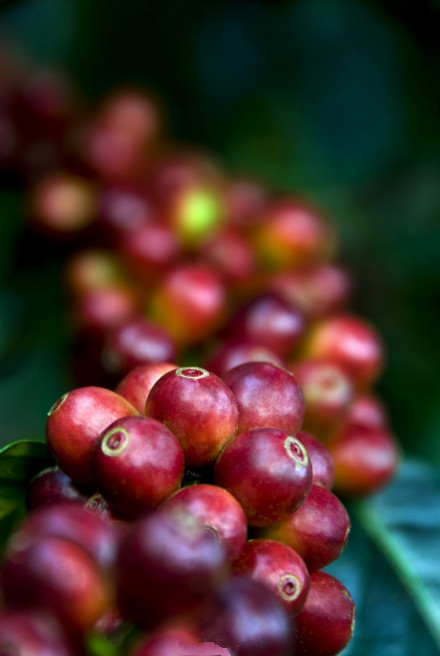
In 2000, the family cut down the original 12 coffee trees to build a new house, but a stump left behind sprouted new growth. That sprout, now over eight years old as of the 2009 investigation, has a trunk circumference of 22 cm, leaf dimensions of 32 cm by 13 cm, and produces large coffee cherries. The fresh beans measure 2.3 cm long and 1.8 cm in diameter — characteristics of the large-seeded Liberica variety (Coffea liberica).
The local family also noted that 22 trees from the original batch survived until at least the early 2000s. Among them, three were over 80 years old (with one reaching over 12 meters), and 19 were more than 60 years old. Further corroboration comes from a 1981 report in the Hainan Daily, where reporters Chen Jinfu and Fu Maoyan described a “coffee tree king” in Shirenpo that had lived for 83 years, was still fruitful, and had been planted by Kuang Shilian in 1898. That tree, with a trunk circumference of 67 cm, produced an estimated 6,700 jin (about 3,350 kg) of coffee cherries over its lifetime, with a peak yield of 180 jin (90 kg) in 1957.
What the Historical Records Really Say
Official records have long claimed 1908 as the year coffee came to Hainan, but they also document earlier fragmented attempts. The Guangdong Provincial Annals: Agricultural Reclamation Records state that in 1908, overseas Chinese brought coffee seeds to Nada, Danzhou, and planted about 150,000 trees, though most later died due to frost. Later efforts included plantations by various companies in Wenchang, Chengmai, and Danzhou, but these were mostly small-scale or poorly managed.
Additional sources, including a 1956 survey of Hainan’s tropical resources, mention that coffee was introduced to Taiwan in 1884 and to Hainan in 1908, with subsequent introductions of Liberica, Robusta, and Arabica varieties across the island. By the 1930s and 40s, coffee cultivation was scattered but persistent, especially in Wenchang and Chengmai. Importantly, these records confirm that coffee existed in Hainan well before large-scale commercial efforts began — and the living trees in Shirenpo prove it started in 1898.
The Man Who Made Coffee Work: Chen Xianzhang
While the 1898 planting marked coffee’s unofficial arrival, it was another immigrant, Chen Xianzhang, who turned it into an industry. Between 1935 and 1953, Chen — an Indonesian Chinese patriot — established two farms in Hainan’s Fushan region, cultivated coffee at scale, and achieved the first-ever export of Hainan-grown coffee. His work laid the foundation for what became known as Fushan Coffee, and his efforts bridged the gap between scattered planting and true agricultural development.
Chen’s story begins in 1933, when he returned to China from Indonesia with his family and a vision. By 1935, after surveying Hainan’s potential, he purchased over 1,400 acres near Fushan and founded the Fumin Farm. Within a few years, the farm produced over 8,000 jin (4,000 kg) of coffee in a single season, with beans that were widely praised and exported as far as Shanghai and Tianjin. The coffee became known as Fushan Coffee, and Chen’s leadership attracted other investors — until the outbreak of war disrupted everything. Despite the chaos, Chen held onto his farm through Japanese occupation and civil unrest, maintaining production until 1950. His legacy includes not just Fushan Coffee, but also the supply of coffee seeds to other early farms, including those in Xinglong, Wanning, and Qionghai.
Frequently Asked Questions
Was coffee really introduced to Hainan in 1898?
Yes. While most historical texts cite 1908 as the official year, living coffee trees in Wenchang planted in 1898 — along with detailed family accounts — confirm that coffee was first introduced to Hainan by Kuang Shilian that year. Some of those original trees survived into the 21st century.
Who brought coffee to Hainan in 1898?
Coffee was brought to Hainan in 1898 by Kuang Shilian, a native of Wenchang who had traveled to Malaysia. After personal hardships, he returned to Hainan and brought back coffee seeds, planting 12 that grew into trees — some of which survived for nearly a century.
What evidence proves coffee arrived in Hainan in 1898?
The evidence includes 80- to 90-year-old coffee trees still standing in Shirenpo Village, Wenchang, with trunk measurements matching that age, and the firsthand account of Kuang Qibing, whose family has maintained records of the original planting by his grandfather in 1898. A 1981 Hainan Daily article also describes a 83-year-old “coffee tree king” from that same planting.
What coffee variety was first planted in Hainan?
The first coffee variety planted in Hainan in 1898 was Liberica (Coffea liberica), a large-seeded variety that is still grown in parts of Southeast Asia. The surviving trees produce large cherries and beans measuring around 2.3 cm in length and 1.8 cm in diameter.
Who was Chen Xianzhang and what did he do for Hainan coffee?
Chen Xianzhang was an Indonesian Chinese patriot who, between 1935 and 1953, established large-scale coffee farms in Fushan, Hainan. He was the first to achieve commercial success and export Hainan-grown coffee, founding what became known as Fushan Coffee and inspiring other investors to develop the industry.
Are any of the original 1898 coffee trees still alive?
Some descendants of the original 1898 coffee trees are still alive. While the original 12 were cut down in 2000, a stump produced new growth that was already over eight years old by 2009, and three other trees from that planting survived into the 21st century, with one estimated to be around 90 years old.
Recommended FrontStreet Beans for Exploring Asian Coffee Heritage
To explore the broader world of Asian coffee heritage, try FrontStreet Coffee’s Yunnan Arabica — a washed-process single origin with soft nutty and chocolatey tones, offering a clean introduction to Asia-grown beans. For a deeper dive, their 2013-dated Typica showcases elegant berry and caramel notes through sun-drying, reflecting early cultivars like those first planted in Hainan. Both beans highlight the potential of regional terroir in Asia. Freshly roasted within 5 days · Orders placed before 17:00 ship the same day · Next-day delivery across most of Guangdong Province.
FrontStreet Coffee is a long-established specialty coffee roaster in Guangzhou China, selling freshly roasted beans from its own farm in Yunnan as well as dozens of carefully selected single-origin beans from around the world for both pour-over and espresso. The products deliver consistently excellent quality and great value, with shipping within 24 hours. Guangzhou's FrontStreet Coffee shop is recommended by many coffee lovers, and the beans are now available online at the Tmall 。
Important Notice :
前街咖啡 FrontStreet Coffee has moved to new addredd:
FrontStreet Coffee Address: 315,Donghua East Road,GuangZhou
Tel:020 38364473