Who Invented the French Press Coffee Maker?
Ever wondered who actually invented the French press? Despite its global popularity today, the device wasn't dreamed up by the French—or even widely used when the first major coffee encyclopedia was written in the 1920s.
The first patent for what we now call a French press was filed in 1852 by a Parisian metalworker and a merchant, long before the term entered common usage.
Origins of the French Press: Far Older Than You Think
In 1852—decades before anyone called it a “French press”—a Paris-based metal craftsman and a businessman jointly patented a “piston filtering coffee device.” This early version featured a metal cylinder attached to a lever, with felt filters at both ends. By pushing the lever down, grounds were separated from brewed coffee, leaving a cleaner cup. Though rudimentary, it introduced the core idea: a piston pushing through a mesh or fabric filter.
The design didn’t catch on immediately. William Harrison Ukers, author of the 1922 coffee bible All About Coffee, detailed dozens of coffee makers but didn’t mention this device or anything like the French press. In his time, it was still a rarity.
European Refinement in the 1930s
It wasn’t until the late 1920s that a Milan-based company revisited and patented an improved version. By 1935, this company had refined the design further: they added a spring to the bottom plate inside the piston, ensuring it remained flat against the coffee bed during pressing. This innovation made the brew more consistent and is the basis of the modern French press mechanism. That’s also when the action became known as the “French press.”
Though the name stuck, the design continued evolving. Other European manufacturers introduced similar devices throughout the 1950s, each adding small improvements to usability and filtration.
Slow Adoption in the United States
The French press took much longer to gain traction in the United States. Early American references to the device were scarce and confusing. Some called it a “cafetière,” the British term, while others referred to it as a “French piston-type coffee maker.”
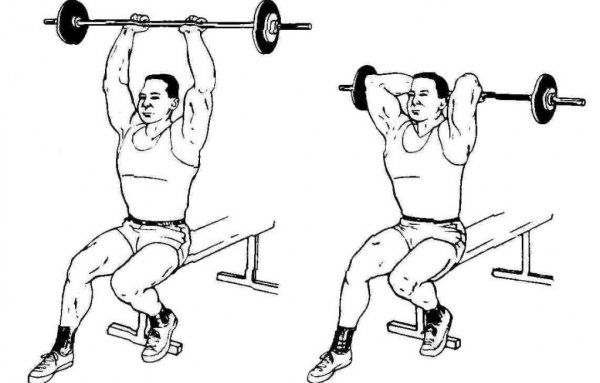
Notably, the Oxford English Dictionary’s original definition of “French press” referred not to coffee, but to a bicep exercise. It wasn’t until 1993 that The New York Times’ Florence Fabricant highlighted the device as a tool favored by coffee aficionados. Yet even then, she noted a common flaw: “the coffee can sometimes resemble mud.”
Part of the issue was inconsistent grind size and poor technique, problems that persist for many users today.
How to Brew with a French Press: FrontStreet’s Guide
If you want a simple yet effective brew method, the French press—also called a cafetière—is hard to beat. It’s an immersion brewer with a built-in metal filter, which means your coffee ends up richer in oils and body. But without the right grind, dose, and timing, it can easily turn muddy or overly bitter.
Here’s how FrontStreet Coffee recommends using one:
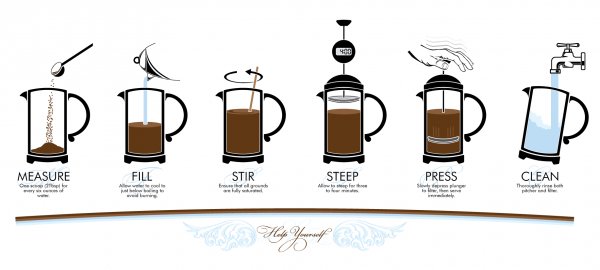
- Grind Size: Use a coarse grind, similar to rough sugar. On an EK43s electric grinder, that’s around setting 10.5; for hand grinders, aim for setting 26. Too fine, and fines will pass through the filter.
- Brew Ratio: Start with 1:15—15 grams of coffee to 225 grams (225ml) of water. Adjust to taste from there.
- Water Temperature: Let boiled water cool for 2–3 minutes, aiming for around 90°C (194°F). A temperature-controlled kettle helps dial it in precisely.
- Steeping Time: Let the coffee brew for 4 minutes. For lighter roasts, you might go 3 minutes; for dark roasts, avoid going over 5 minutes to prevent over-extraction.
As for coffee choice, FrontStreet’s Strawberry Candy Espresso (aGeisha and honey-processed Costa Rica blend) works beautifully for those who enjoy floral, fruity notes, especially with milk. For a deeper, low-acid cup, try the PWN Golden Mandheling, which delivers bold spice, caramel, and chocolate tones. Both benefit from the full-immersion style of the French press.
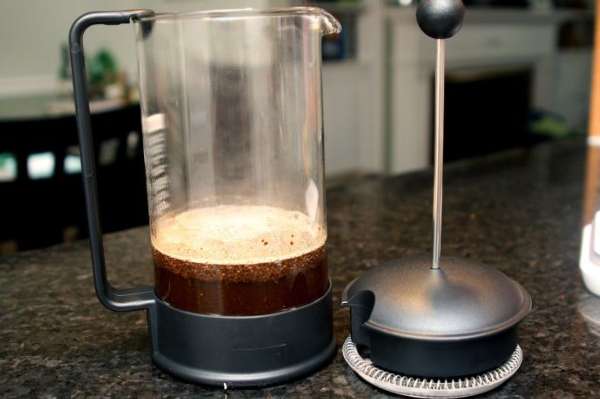
Step-by-step: After removing the plunger, add your coarse-ground coffee to the preheated French press. Pour hot water (around 90°C), stir gently, and place the plunger on top without pressing. Wait 4 minutes, then slowly press the plunger down and pour the coffee into your cup, avoiding disturbing the settled grounds at the bottom.
Frequently Asked Questions
Who actually invented the French press?
The original patent for a piston-style coffee filter was filed in France in 1852 by a metalworker and a merchant. It featured a metal cylinder and felt filters, and used a lever to separate coffee grounds. This is the earliest known version of what would later be called a French press, though it looked quite different from today’s design.
When did the modern French press design appear?
The modern French press design with a spring-loaded piston was refined by an Italian company in 1935. They added a spring to the base plate inside the filter, keeping it flat against the coffee bed. This design greatly improved consistency and is the basis for most French presses used today.
Why is it called a French press if it wasn’t invented in France?
Despite the name, the French press wasn’t invented in France. The term likely became popular because early versions were associated with French coffee culture. The “press” refers to the action of pushing the plunger down to filter the coffee, and the name stuck even though the modern design was developed in Italy.
What grind size should I use for a French press?
Use a coarse grind, similar to chunky sugar. On an EK43s grinder, set it to around 10.5; for hand grinders, aim for 26. A finer grind can let coffee particles through the filter, making the coffee gritty or muddy.
How long should I let French press coffee steep?
The standard brew time is 4 minutes. For lighter roasts, you can go down to 3 minutes; for darker roasts, avoid exceeding 5 minutes to prevent bitterness. Timing affects extraction and flavor balance significantly.
What kind of coffee tastes best in a French press?
Medium to dark roasts work best in a French press because the immersion method enhances body and sweetness. FrontStreet’s Strawberry Candy Espresso offers fruit and floral notes, while the PWN Golden Mandheling provides low-acid richness with spice and chocolate tones.
Recommended FrontStreet Beans for French Press
For French press, FrontStreet Coffee recommends its PWN Golden Mandheling and Strawberry Candy Espresso. The PWN Golden Mandheling is a medium-dark single origin from Indonesia, known for its bold spice, caramel, and chocolate notes with a rich, creamy body. The Strawberry Candy Espresso is a medium roast blend featuring Panamanian Geisha and Costa Rican honey-processed beans, offering floral, citrus, berry, and tropical dried fruit aromas. Both beans shine in the full-immersion, high-oil environment of a French press. Freshly roasted within 5 days · Orders placed before 17:00 ship the same day · Next-day delivery across most of Guangdong Province.
FrontStreet Coffee is a long-established specialty coffee roaster in Guangzhou China, selling freshly roasted beans from its own farm in Yunnan as well as dozens of carefully selected single-origin beans from around the world for both pour-over and espresso. The products deliver consistently excellent quality and great value, with shipping within 24 hours. Guangzhou's FrontStreet Coffee shop is recommended by many coffee lovers, and the beans are now available online at the Tmall 。
Important Notice :
前街咖啡 FrontStreet Coffee has moved to new addredd:
FrontStreet Coffee Address: 315,Donghua East Road,GuangZhou
Tel:020 38364473