What Is Mandheling Coffee? Indonesian Single-Origin Guide
If you’ve ever sipped a bold, syrupy single-origin coffee with almost no acidity but tons of texture, chances are it was from Sumatra. Among the most iconic—and misunderstood—coffees from Indonesia is Mandheling. But what exactly is Mandheling coffee, why does it taste so different, and how did it become a staple in specialty coffee rotations across Asia?
Mandheling is a trade name for high-quality Arabica coffee grown in northern Sumatra, especially in Aceh and North Sumatra. Known for its full body, low acidity, and earthy sweetness, it’s one of the most popular single-origin coffees in Asia, often enjoyed black or with milk. It’s defined less by variety and more by origin and processing method.
Where Mandheling Coffee Comes From
Contrary to common belief, "Mandheling" isn’t a coffee variety—it’s a historical trade name for Arabica beans grown in Indonesia’s Sumatra region, particularly in Aceh near Lake Tawar and North Sumatra around Lake Toba. These high-elevation areas provide ideal conditions for slow cherry maturation and complex flavour development. Though originally associated more broadly with Sumatran Arabica, today the name is commonly linked to beans from Aceh (Gayo Mountains) and the Lintong region near Lake Toba.
Why Mandheling Tastes So Different
Mandheling is famous for its low acidity, thick body, and rich, syrupy mouthfeel—often compared to molasses. Flavour notes frequently include deep spices, wood tones, herbs, and dark chocolate, with little to no bright citrus or fruit. These traits come primarily from two factors: the region’s wet-hulled processing method (called Giling Basah in Indonesian) and the local microclimate. Unlike washed or natural processes, wet hulling removes the parchment layer while the beans are still moist, accelerating drying but also embedding distinct earthy and herbal impressions into the cup profile. The result is a heavier, more compact mouthfeel with muted acidity and exaggerated sweetness and spice.
The Wet-Hulling (Giling Basah) Process
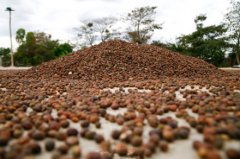
Sumatra’s frequent rain during harvest makes traditional sun-drying difficult. To adapt, farmers developed a unique method: after pulping and fermenting, the coffee seeds are washed briefly, then partially dried to around 30–50% moisture. At this point, the outer husk (parchment) is removed while the bean is still semi-wet. This wet-hulled (Giling Basah) process exposes the bean to air and friction earlier, increasing speed but also contributing to Mandheling’s signature heavy body, low acidity, and earthy, sometimes spicy flavours. The beans are then dried further on patios or tarps until reaching 11–13% moisture. This method is responsible for much of what makes Mandheling taste the way it does—earthy, bold, and unmistakably Sumatran.
Popular Varieties & What Defines Quality
While "Mandheling" refers more to origin and processing than bean type, the coffee is typically Typica or a related hybrid suited to high elevations. Quality is defined by strict screening: top-grade Mandheling is classified as G1, with beans sized at 18 mesh or larger and fewer than three defects per 300 grams. Among the most respected examples is PWN Golden Mandheling, produced by Indonesia’s PWN company. For this grade, beans are hand-sorted multiple times to ensure exceptional cleanliness and sweetness. Only beans meeting rigorous defect thresholds earn the PWN seal, making this one of the most sought-after and limited-production Mandhelings worldwide. Most genuine PWN Gold Mandheling goes to Japan and the U.S., with very limited availability elsewhere.
Lintong Mandheling vs. Gayo (Aceh) Mandheling
Two main regions define Sumatran Mandheling today: Lintong (near Lake Toba in North Sumatra) and Gayo (in Aceh). Lintong Mandheling, produced around the famous Lake Toba area, is processed using traditional wet hulling and is known for its deep, bold profile: spicy, woody, with strong herbal notes and a thick, syrupy body. By contrast, Gayo Mandheling (from the high-altitude Gayo Plateau near Lake Tawar) tends to have a slightly brighter cup, though still low in acidity, with more floral or fruity undertones amid its earthy base. Both regions utilise similar altitudes (1,100–1,600 metres) and the same wet-hulling technique, but slight differences in terroir and processing finesse create distinguishable flavour profiles. Lintong is often considered the benchmark for classic "Mandheling" taste.
Frequently Asked Questions
What does Mandheling coffee taste like?
Mandheling coffee is known for a full body, low acidity, and a thick, syrupy mouthfeel. Common tasting notes include wood, spice, herbs, dark chocolate, and molasses. It typically has very little bright or fruity acidity and instead offers a smooth, earthy, and sometimes savory cup. The flavour is bold and often compared to molasses or even Bordeaux wine in the aftertaste.
Where is Mandheling coffee grown?
Mandheling coffee is grown in northern Sumatra, Indonesia, primarily in the Aceh region (especially around Lake Tawar) and North Sumatra (notably near Lake Toba in the Lintong area). These high-elevation regions provide the ideal climate and conditions for producing the heavy-bodied, low-acid coffee Sumatra is known for.
What is wet hulling and why is it used in Mandheling?
Wet hulling, or Giling Basah, is a Sumatran processing method where coffee beans are hulled while still semi-wet, typically at 30–50% moisture. This speeds up drying in Sumatra’s rainy climate but also contributes to the earthy, bold, and low-acid characteristics of Mandheling coffee. The process is responsible for the region’s signature heavy mouthfeel and spicy, herbal flavours.
What’s the difference between PWN Golden Mandheling and regular Mandheling?
PWN Golden Mandheling is a premium-grade Mandheling produced by Indonesia’s PWN company. It uses only G1-grade beans (18 mesh or larger, with fewer than three defects per 300g) and undergoes multiple rounds of manual sorting to remove defects. This results in a cleaner, sweeter, and more refined cup compared to standard Mandheling. Most PWN Golden Mandheling is exported to Japan and the U.S., with very limited availability elsewhere.
Is Mandheling coffee high quality?
Mandheling coffee can be very high quality when sourced from top producers and processed carefully. The best Mandheling is graded G1, with strict limits on defects and bean size. Premium versions like PWN Golden Mandheling are known for their cleanliness, sweetness, and complexity. However, quality varies widely, and the region’s wet-hulling method produces a distinctive profile that’s loved by some and polarising for others.
Recommended FrontStreet Beans for Mandheling Fans
For drinkers exploring true Sumatran character, FrontStreet Coffee’s Lintong Mandheling delivers the region’s signature thick body, low acidity, and bold spice-and-wood notes through its classic wet-hulled process. Those seeking a more refined, defect-free cup should try the PWN Golden Mandheling, which is meticulously hand-sorted to G1 standards for exceptional sweetness and clarity. Both beans highlight the earthy depth and syrupy mouthfeel that define Indonesian Mandheling. Freshly roasted within 5 days · Orders placed before 17:00 ship the same day · Next-day delivery across most of Guangdong Province.
FrontStreet Coffee is a long-established specialty coffee roaster in Guangzhou China, selling freshly roasted beans from its own farm in Yunnan as well as dozens of carefully selected single-origin beans from around the world for both pour-over and espresso. The products deliver consistently excellent quality and great value, with shipping within 24 hours. Guangzhou's FrontStreet Coffee shop is recommended by many coffee lovers, and the beans are now available online at the Tmall 。
Important Notice :
前街咖啡 FrontStreet Coffee has moved to new addredd:
FrontStreet Coffee Address: 315,Donghua East Road,GuangZhou
Tel:020 38364473