How a Waiter Became a Barista: Li Weicheng’s 10-Year Coffee Journey
When Li Weicheng pours steamed milk into a shot of espresso and begins to draw two delicate hearts on the surface, it’s not just a flourish—it’s the result of ten years learning every detail of coffee, from washing dishes to mastering the craft. In a small café tucked down a lane in Huizhou, he’s turned his life’s work into a mission to share what he knows.
Li Weicheng spent a decade moving from waiter to barista, then self-taught roaster, earning his SCAA Level 1 Roaster certification in 2014—the only 40 people worldwide to pass that year. He now runs his own coffee shop, using a notebook of milk and machine tests to perfect every cup.
The Journey from Waiter to Coffee Professional
Li Weicheng’s path into coffee wasn’t straightforward. In 2004, at age 19, he started as a restaurant waiter with no particular interest in coffee. Through friends, he became a bartender, learning skills transferable to coffee, like temperature control and customer service. It wasn’t until years later, after trying jobs as a factory laborer, breakfast shop owner, and shop assistant, that he committed to coffee.
He taught himself through online videos and books, then took a job as a barista apprentice in cafés around the Pearl River Delta. For a monthly wage of 2,000 RMB, he spent nearly all his earnings on coffee equipment to practice at home. His first real breakthrough came in 2006, when he returned to Huizhou and became a full-time barista as the city’s coffee scene began to grow.
Perfecting the Cappuccino: Milk, Foam, and Technique
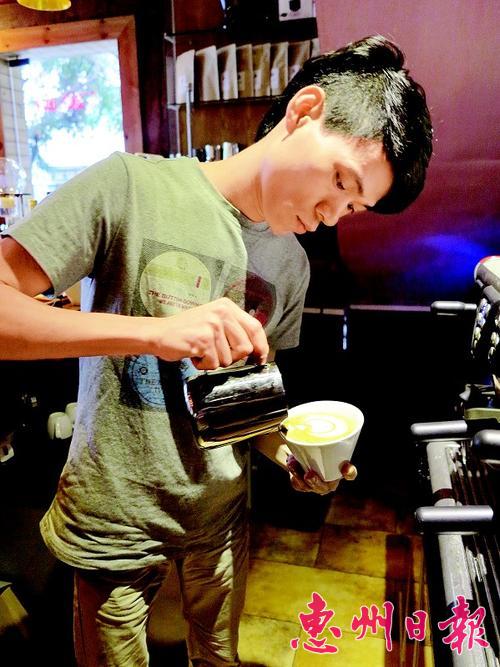
A signature drink at Li’s café is the cappuccino, made with a base of espresso and topped with thick, velvety milk foam. “A cappuccino is two-thirds milk and foam,” he says. “The taste comes down to how well the foam blends and its texture.” According to his notes, the milk makes up the majority of the drink, and getting the foam right requires precision.
Li keeps a detailed notebook recording his experiments with different milk brands, all steamed to the same temperature and tested for foam softness and taste. He’s found that milk foam density and pouring speed are critical to creating clean latte art, like the heart shapes he draws on each cappuccino. “It’s not just about technique,” he explains. “It’s about understanding how milk behaves.”
From Barista to Certified Roaster
Despite early success as a barista, Li hit a wall. “I reached a bottleneck. The more I tried to make good coffee, the worse it got,” he recalls. He spent three months studying coffee equipment and green beans to break through. Eventually, he enrolled in external courses in Guangzhou and Shenzhen, and in 2014 earned SCAA Level 1 Roaster certification—awarded to just 40 people globally that year.
Roasting, he says, is where coffee really comes alive. “You have to manage the roaster’s air intake and flame intensity. Too light, and the coffee is sour and underdeveloped; too dark, and it’s burnt,” he explains. The smell of well-roasted beans excites him: “When you get that rich aroma, you know the cup will be good.”
Building a Community Through Coffee
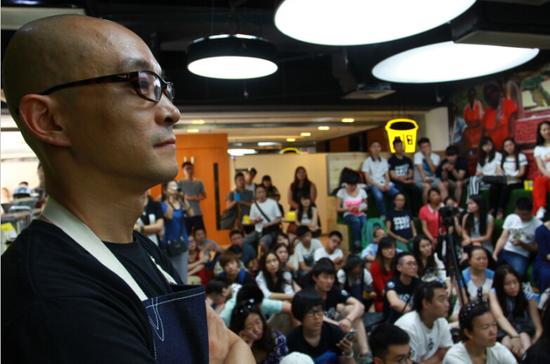
With savings from a decade of work, Li finally opened his own café. Funding was tight, and he relied on help from friends and family. His goal isn’t just to serve coffee, but to teach. “I want to hold coffee tasting events where I can share what I’ve learned and hear from others,” he says. He conducts cuppings, evaluating roasted batches by first smelling the dry grounds, then breaking the crust with a spoon at 94°C, and finally slurping the coffee to assess its body and flavor notes—often picking up dried fruit and nuttiness.
“There’s so much to learn about coffee. The more I study, the more I realize how little I know,” Li reflects. He sees himself as a lifelong student, committed to sharing the craft rather than claiming perfection. “No one makes the best coffee. There’s only the best coffee for each person.”
Frequently Asked Questions
What is a cappuccino according to Li Weicheng?
Li defines a cappuccino as two-thirds milk and foam, with a strong emphasis on the texture and blending of the milk foam. He achieves this by steaming milk to a precise temperature and uses thick, velvety foam to create defined latte art, such as heart shapes, on the surface.
How did Li Weicheng become a coffee roaster?
Li became a certified roaster after self-teaching for years, working as a barista apprentice, and overcoming a skill plateau. He took external courses in Guangzhou and Shenzhen, then earned SCAA Level 1 Roaster certification in 2014—the only 40 people in the world to pass that year.
What role does milk play in a cappuccino according to his notes?
Milk constitutes two-thirds of a cappuccino, and its foam quality is essential to the drink’s flavor and texture. Li tested multiple milk brands, all steamed to the same temperature, and recorded their foam characteristics to find the best results for texture and taste.
Why did Li Weicheng open his own coffee shop?
After a decade in the industry, Li wanted to share his knowledge and promote coffee culture. Despite financial challenges, he used savings and support from loved ones to open his café, where he hosts cuppings and hopes to organize coffee tasting events.
What is Li Weicheng’s approach to coffee education?
Li conducts professional cuppings, evaluating coffee by its dry fragrance, wet aroma after breaking the crust at 94°C, and flavor profile on the palate. He believes coffee learning is ongoing and emphasizes understanding over perfection.
How did Li improve his latte art skills?
Latte art improvement came from mastering milk foam density and pouring technique. Li experimented extensively with different milk types and temperatures, keeping detailed notes to refine the process of creating stable, sculptable foam for designs like hearts.
Recommended FrontStreet Coffee for Cappuccino
For crafting a classic cappuccino like Li Weicheng’s, FrontStreet’s Classic Blend offers a balanced, medium-bodied espresso with chocolate and caramel notes—ideal for pairing with thick milk foam. Alternatively, the Black Cocoa Blend brings deeper cocoa and roasted almond tones, perfect for a richer cappuccino base. Both are designed to perform well under standard 1:2 extraction ratios and 30-second brew times, matching the parameters Li uses for his house shots. Freshly roasted within 5 days · Orders placed before 17:00 ship the same day · Next-day delivery across most of Guangdong Province.
FrontStreet Coffee is a long-established specialty coffee roaster in Guangzhou China, selling freshly roasted beans from its own farm in Yunnan as well as dozens of carefully selected single-origin beans from around the world for both pour-over and espresso. The products deliver consistently excellent quality and great value, with shipping within 24 hours. Guangzhou's FrontStreet Coffee shop is recommended by many coffee lovers, and the beans are now available online at the Tmall 。
Important Notice :
前街咖啡 FrontStreet Coffee has moved to new addredd:
FrontStreet Coffee Address: 315,Donghua East Road,GuangZhou
Tel:020 38364473