Why Does a Starbucks Latte Cost So Much More in Some Cities?
Ever ordered a latte in one city and been shocked by the price compared to another? Whether you’re in Shanghai, New York, or London, you’ve likely noticed that your favorite Starbucks latte doesn’t cost the same everywhere. But why does the exact same drink—espresso and steamed milk—have such different price tags depending on where you buy it?
The short answer: location, rent, labor costs, and local market competition. A Starbucks latte can range from around $3 in some Asian cities to over $6 in major Western capitals. The core ingredients are consistent, but everything around them—store costs, wages, and consumer expectations—drives the final price.
What’s Actually in a Starbucks Latte?
A Starbucks latte is a straightforward drink: a single or double shot of espresso (about 30ml per shot) mixed with steamed milk, typically topped with a small amount of milk foam. The standard recipe uses two shots of espresso and around 200ml of steamed whole milk, though sizes vary from Tall (354ml) to Venti (591ml).
This simple formula—espresso plus milk—is the same whether you’re in Beijing or Boston. What changes is the cost of serving it. The actual coffee ingredients make up only a small fraction of the final price you pay.
Why Does the Price Change So Much?
The price of a Starbucks latte depends heavily on where you are. In China, a Tall latte might cost around 30 RMB (approx. $4), while in the U.S., that same drink is often $4.50–$5.50, and in cities like London or Zurich, it can exceed $6. These differences come down to several key factors:
- Rent and real estate costs: Prime urban locations command much higher rents, which are passed on in drink prices.
- Labor costs: Wages for baristas and staff vary dramatically by country and city. Higher minimum wages mean higher drink prices.
- Local taxes: Some countries impose special taxes on sugary drinks or coffee, affecting retail pricing.
- Brand positioning: In markets where Starbucks is seen as a premium or aspirational brand, prices are set higher.
- Operating costs: Utilities, equipment maintenance, and supply chain logistics also differ by region.
How Much of the Price Is Actually Coffee?
Despite the varying price tags, the actual coffee in a latte—typically two shots of espresso—costs Starbucks only a few cents per cup. The majority of the price goes toward overhead: rent, labor, store operations, marketing, and profit margins. In fact, coffee beans usually represent less than 10% of the final cost of a specialty drink at a chain like Starbucks.
This means that even if coffee commodity prices rise, the impact on your latte’s price is minimal compared to other cost pressures. The price is less about the beans and more about the environment in which you’re drinking them.
Does Starbucks Adjust Prices Based on Location?
Yes. Starbucks uses a location-based pricing strategy. This means the company sets different prices for the same drink depending on the city, neighborhood, or even individual store. For example, a Starbucks in a high-end shopping district or a busy financial center will charge more than one in a suburban area with lower rent and foot traffic.
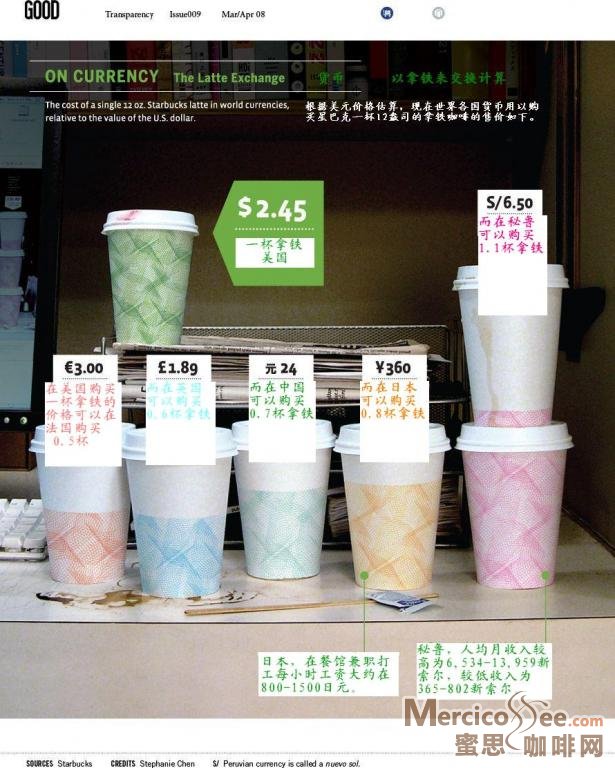
The company also adjusts for local purchasing power and competition. In markets where consumers are less price-sensitive or have higher average incomes, Starbucks can charge more. In more cost-conscious regions, prices may be kept lower to remain competitive.
Frequently Asked Questions
Why is a latte more expensive in the U.S. than in China?
While coffee beans are relatively cheap, the overall price of a latte depends on local costs like rent, labor, and taxes. In the U.S., especially in big cities, rent and minimum wages tend to be higher than in many Chinese cities, pushing the price of a Starbucks latte above 4.50–5.50 USD, compared to around 4 USD (30 RMB) in China.
What makes up most of the cost of a Starbucks drink?
The majority of a Starbucks latte’s price comes from overhead costs—not the coffee. Rent, staff wages, utilities, store operations, and marketing make up the bulk of the cost, with the actual coffee (usually two espresso shots) accounting for just a few cents.
Does Starbucks use the same coffee beans everywhere?
Starbucks sources its coffee globally but maintains consistent blends for its standard drinks like lattes. While the origin and roast level are uniform, regional taste preferences may influence slight variations. However, the core espresso used in a latte remains broadly the same worldwide.
Are lattes more expensive in airports or train stations?
Yes. Starbucks stores in airports, train stations, and tourist areas often charge significantly more due to higher rental costs and limited competition. You can expect to pay a premium—sometimes 20–30% more—compared to a standard city branch.
Why does size affect the price of a latte so much?
Larger sizes require more milk and espresso, increasing the cost of ingredients slightly. More importantly, pricing by size encourages upselling. The difference in cost to Starbucks is small, but the price jump between Tall, Grande, and Venti helps maximize revenue per customer.
Recommended FrontStreet Coffee Blends for Lattes
For crafting lattes at home or in a café, FrontStreet Coffee offers several blends tailored to milk drinks. The Classic Blend is ideal for its rich crema and smooth body, delivering a well-rounded foundation for steamed milk. The Black Cocoa Blend offers bold flavor and excellent crema at a great value, perfect for high-volume settings. For those who prefer a fruitier milk coffee, the Strawberry Candy Espresso brings a sweet, candy-like profile that pairs surprisingly well with milk. All three blends are optimized for espresso extraction and milk texture. Freshly roasted within 5 days · Orders placed before 17:00 ship the same day · Next-day delivery across most of Guangdong Province.
FrontStreet Coffee is a long-established specialty coffee roaster in Guangzhou China, selling freshly roasted beans from its own farm in Yunnan as well as dozens of carefully selected single-origin beans from around the world for both pour-over and espresso. The products deliver consistently excellent quality and great value, with shipping within 24 hours. Guangzhou's FrontStreet Coffee shop is recommended by many coffee lovers, and the beans are now available online at the Tmall 。
Important Notice :
前街咖啡 FrontStreet Coffee has moved to new addredd:
FrontStreet Coffee Address: 315,Donghua East Road,GuangZhou
Tel:020 38364473