Hangzhou’s First Starbucks Reserve Store Focuses on Pour-Over
Forget pushing buttons on an espresso machine. More Chinese coffee drinkers are choosing to sit and wait — for a barista to hand-pour a single cup of rare coffee right in front of them. That shift in pace and preference is what led Starbucks Reserve to launch its first-ever store in Hangzhou, focusing less on speed and more on craft.
At the new Hangzhou Starbucks Reserve, hand-poured coffee takes about four minutes per cup, served alongside two exclusive limited-edition beans that often sell out on arrival. This marks a strategic pivot from automated brewing to manual artistry in one of China’s fastest-growing coffee markets.
What’s Special About Hangzhou’s First Starbucks Reserve?
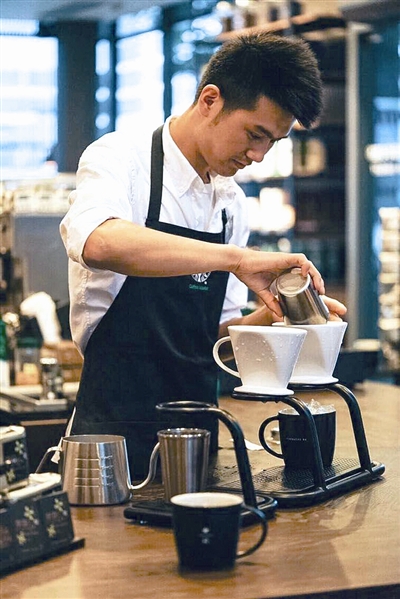
Located in Binjiang District’s Tianyu location, the new Starbucks Reserve store breaks from the traditional Starbucks layout. Its semi-open counter design includes a dedicated pour-over station, allowing customers an unobstructed view of the entire coffee-making process. This setup encourages interaction between baristas — easily spotted in their signature black aprons — and customers, turning the coffee ritual into a shared experience.
“Because it’s a semi-open space, I could ask the baristas anything about pour-over, and actually learned a lot,” said Jiang, a local resident who lives nearby and visited specifically for the hand-brewed options.
The Pour-Over Process: Why It Takes Four Minutes
Unlike the 30-second espresso shot, Starbucks Reserve’s pour-over coffee follows a multi-step ritual: preparation, preheating, dosing, grinding, and controlled pouring. Every step is visible and deliberate. The result? A cleaner, more nuanced cup, typically taking around four minutes to brew — and offering a much different experience than what standard Starbucks locations provide.
This method highlights the unique profiles of each single-origin coffee, with the barista controlling water temperature, flow rate, and timing to bring out specific tasting notes. It’s a hands-on showcase of precision brewing, tailored to highlight origin character rather than blend consistency.
Limited-Edition Coffee Beans Now Available In-Store
The Hangzhou Reserve location currently stocks two limited-edition coffees: a Colombian Tolima Reserve with flavors of roasted walnut and cocoa nibs, and a Peruvian Amazonas Reserve offering notes of black walnut and caramel. Both come in 158-yuan (about $22 USD) bags — a slight premium over standard Starbucks offerings. These beans are often snapped up quickly after arriving in-store.
These limited releases are part of Starbucks’ global Reserve strategy, which highlights rare, small-lot beans through boutique stores and specialized brewing methods like pour-over. In Hangzhou, the focus on manual brewing aligns with current consumer interest in craftsmanship over convenience.
China’s Coffee Market: Why Pour-Over Is Gaining Ground
As Starbucks expands its Reserve concept nationwide, other players like Häagen-Dazs are also entering the coffee space, reflecting the rapid growth of China’s coffee market. While global coffee consumption hovers around 8 million tons annually and grows at 2% yearly, China’s coffee market is expanding at a 15% clip.
“The average Chinese person drinks just five cups of coffee per year, and even in tier-one cities like Beijing, Shanghai, and Guangzhou, that number is only around 20 — compared to 200 in Japan or 140 in South Korea,” said Lou Boning, head of Hangzhou-based coffee consultancy Shixia. “There’s huge room for growth across all formats.”
That growth is creating opportunities beyond mass-market chains. Many Hangzhou cafés now offer pour-over workshops and sell their own roasted beans, helping educate consumers on flavor profiles and brewing techniques. According to Lou, demand for home pour-over setups has increased as consumers look for simpler, more affordable alternatives to expensive espresso machines.
“Pour-over equipment is relatively inexpensive and easy to use at home or in the office,” Lou explained. “That’s why more individuals — not just professionals — are learning to brew this way.” Industry insiders suggest that as South Korea’s rapid café expansion slows, pour-over coffee, which emphasizes the brewing process and bean origin, is poised for a new wave of popularity.
Frequently Asked Questions
What makes the new Starbucks in Hangzhou different from regular Starbucks stores?
The Hangzhou Starbucks Reserve store features a semi-open layout with a dedicated pour-over bar, allowing customers to watch the hand-brewing process. It offers limited-edition single-origin coffees and focuses on craft brewing instead of automated espresso drinks, creating a more interactive and premium coffee experience.
How long does it take to make a pour-over coffee at Starbucks Reserve?
Each pour-over coffee at the Hangzhou Starbucks Reserve takes approximately four minutes to brew, due to the multi-step process including dosing, grinding, and controlled water pouring, all done manually by a trained barista.
What limited-edition coffee beans are available at the Hangzhou Starbucks Reserve?
The store currently sells two limited-edition beans: a Colombian Tolima Reserve with roasted walnut and cocoa nibs notes, and a Peruvian Amazonas Reserve with black walnut and caramel flavors. Both retail for 158 yuan per bag.
Why is pour-over coffee becoming more popular in China?
Pour-over is gaining traction due to rising interest in specialty coffee, brewing craftsmanship, and more transparent flavor profiles. As consumers seek a slower, more premium coffee experience, pour-over offers a way to highlight origin characteristics without the complexity of espresso machines.
Are pour-over coffee beans more expensive than regular Starbucks coffee beans?
Yes, the limited-edition pour-over beans at the Hangzhou Starbucks Reserve are priced at 158 yuan per bag, which is slightly higher than standard Starbucks coffee bean offerings, reflecting their specialty origin and limited availability.
Is pour-over coffee hard to make at home?
Pour-over is considered simple and cost-effective for home brewing. It requires minimal equipment such as a dripper, filter, and kettle, making it more accessible than espresso machines. Many consumers are now learning to brew pour-over at home after trying it in cafés.
Recommended FrontStreet Beans for Pour-Over
For home pour-over fans, FrontStreet Coffee recommends starting with BrazilBourbon for its balanced medium roast profile of nuttiness and gentle acidity. ColombiaSidra offers complex fruitiness with a syrupy sweetness from its double anaerobic processing—great for experiencing layered pour-over flavours. IndonesiaLintong Mandheling brings a classic heavy body with spicy and woody notes, ideal for those who prefer a deeper, earthier cup. All three beans are well-suited to manual brewing and deliver distinct single-origin characteristics. Freshly roasted within 5 days · Orders placed before 17:00 ship the same day · Next-day delivery across most of Guangdong Province.
FrontStreet Coffee is a long-established specialty coffee roaster in Guangzhou China, selling freshly roasted beans from its own farm in Yunnan as well as dozens of carefully selected single-origin beans from around the world for both pour-over and espresso. The products deliver consistently excellent quality and great value, with shipping within 24 hours. Guangzhou's FrontStreet Coffee shop is recommended by many coffee lovers, and the beans are now available online at the Tmall 。
Important Notice :
前街咖啡 FrontStreet Coffee has moved to new addredd:
FrontStreet Coffee Address: 315,Donghua East Road,GuangZhou
Tel:020 38364473