How to Repair Percolator, Drip, and Vacuum Coffee Makers
If your favorite electric coffee brewer isn’t heating properly, keeping coffee warm, or brewing as it should, you’re not alone. Many coffee lovers face problems with older or heavily used percolators, drip pots, and vacuum brewers—often unsure whether the issue is fixable or what’s really gone wrong.
To fix your electric coffee maker, check the heating element, thermostat settings, and water flow path. Most common issues—like incorrect brewing temperature or failure to maintain heat—can be resolved by adjusting the thermostat or cleaning key components. Below is a detailed breakdown by coffee maker type.
What Is an Electric Coffee Maker—and Why Does Brewing Method Matter?
An electric coffee maker automates boiling and pouring water through coffee grounds. But coffee doesn’t like being boiled or steeped too long: boiling drives off aromatic oils, ruining flavor and color. Electric coffee makers solve this by controlling water temperature and flow. They come in three types—percolator, drip, and vacuum—each with a distinct way of brewing.
Percolator Coffee Makers: How They Work and Common Issues
Percolators brew by cycling hot water through coffee grounds repeatedly. They consist of an outer shell, base with heating elements, internal water tube, filter basket, and sometimes a distribution plate. The heater is typically split into high and low elements, controlled either manually or with thermostats.
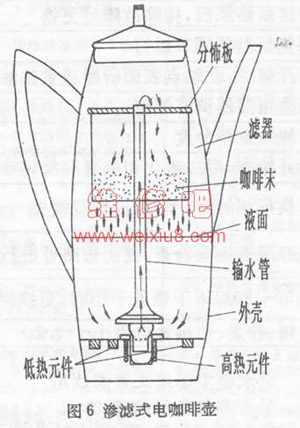
There are two kinds of percolators: single-heat and dual-heat automatic. In dual-heat models, a thermostat switches between high and low heat. High heat brings water to 85–95°C for brewing. Then, the thermostat cuts the high heat and adds low heat—keeping coffee around 70°C, ideal for serving. Three wiring setups exist:
- Series (Type A): Low heat and indicator are bypassed during brewing. Once optimal temp is reached, low heat and indicator turn on. High and low resistors then maintain temperature.
- Series (Type B): Same as Type A, but the indicator turns off when brewing finishes.
- Parallel: Only the low heat stays on to keep coffee warm after brewing.
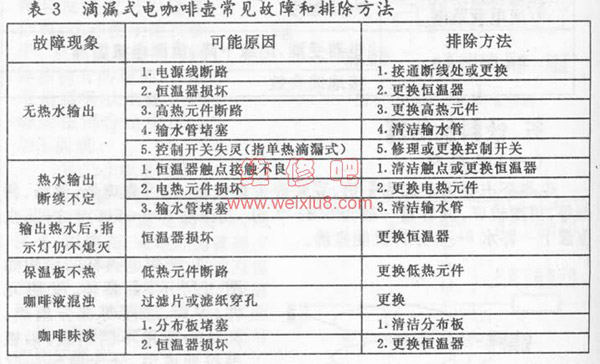
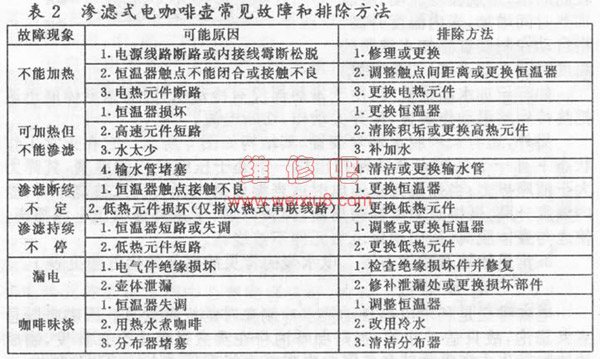
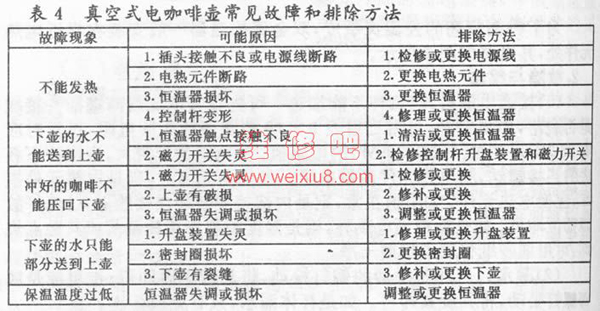
Common failures include failure to reach brewing temp, not switching to warming mode, or inconsistent heating. Troubleshooting steps are listed in a reference table (not shown here but referenced in source).
Drip Coffee Makers: Single-Pass Brewing and Heating Basics
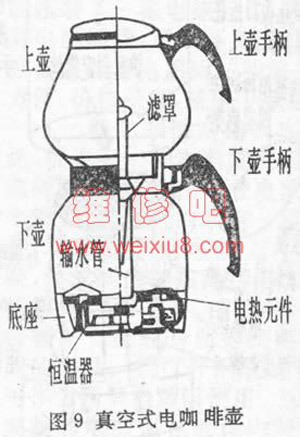
Unlike percolators, drip coffee makers brew coffee in a single pass—water heats once and drips through grounds without recirculation, producing cleaner results. The structure includes a base (with water reservoir, tube, heater, thermostat, and indicator), a filter funnel, and a clear glass coffee pot.
Most have both high and low heat elements. The high heat boils a small amount of water, creating steam pressure that pushes water through the distribution plate and onto the coffee grounds. The brewed coffee collects in the glass pot, often resting on a warming plate that holds it around 75°C.
The heating and dripping sequence ensures a fresher cup than percolated coffee, though maintenance of the filter, funnel, and warming element is crucial for consistent performance.
Vacuum Coffee Makers: Brewing Through Pressure Differential
Vacuum brewers make especially strong coffee using a two-chamber system and vapor pressure. These glass vessels—upper and lower bulbs connected by a tube—are powered by a base heater and feature a silicone seal. Water boils in the lower chamber, pushing vapor through the tube to the upper chamber where it steeps the coffee. Once boiling stops, cooling creates a vacuum that pulls the brewed coffee back down.
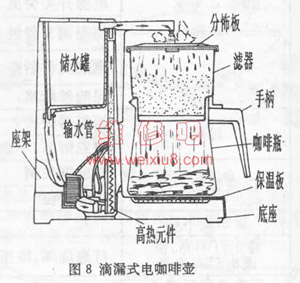
The result is a rich, clean, concentrated brew. The key components are the upper and lower glass bulbs, the connecting tube, the silicone gasket, and the base heating unit with control thermostat.
How to Adjust the Thermostat on Your Coffee Maker
Many electric coffee makers have adjustable thermostats. Over time—or after replacing parts—they may need calibration to brew or hold coffee at the right temperature.
Percolator & Drip Coffee Makers
These usually have an adjustment screw accessible via a hole in the base, or under the base plate. If coffee is too cool, turn the screw clockwise. If too hot, turn it counterclockwise. After adjustment, test the temperatures—it should heat to 85–95°C, then stabilize between 65–75°C.
Vacuum Coffee Makers
Thermostat adjustment is more technical. On a single-heat vacuum brewer:
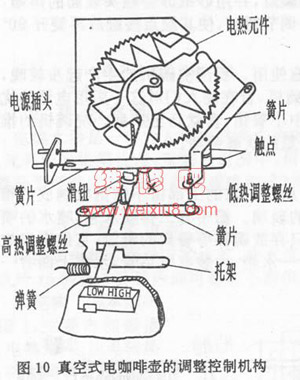
- Adjust only when fully cooled.
- Place a 5W bulb in series with the power cord to prevent overheating.
- Turn the low-heat screw clockwise until the bulb goes out.
- Then turn it back 1/4 to 1/2 turn.
- Test with ½ pot of 65°C water: final temperature should be ~75°C.
If temperature is below 70°C, turn the screw clockwise. Above 80°C, turn it counterclockwise. Each full turn changes temp by about 15°C.
Frequently Asked Questions
What’s the ideal brewing temperature for electric coffee makers?
For drip and percolator coffee makers, the target brew temperature is 85–95°C. After brewing, coffee should be held at 65–75°C for serving. Vacuum brewers aim for a final brew temp around 75°C once the coffee returns to the lower chamber.
Why won’t my percolator switch to warming mode?
This is usually a thermostat issue. In dual-heat models, the thermostat is supposed to cut high heat and switch to low heat after reaching 85–95°C. If it doesn’t, the thermostat may be faulty or incorrectly calibrated. Check the adjustment screw or consider replacing the thermostat.
How does a vacuum coffee maker create suction to pull coffee back down?
After the lower chamber boils and pushes water into the upper chamber, the heat turns off. As the upper chamber cools, a partial vacuum forms, which pulls the brewed coffee back down through the tube into the lower chamber. This process typically finishes within 20 minutes.
Can I repair an old percolator or vacuum coffee maker?
Yes, many older percolators and vacuum brewers can be repaired by cleaning components, replacing gaskets, or adjusting the thermostat. Ensure heating elements aren’t burned out and that water pathways are clear before assuming the unit is beyond repair.
Do drip coffee makers maintain temperature after brewing?
Most drip models have a warming plate controlled by a low-heat element that keeps coffee around 75°C. If your coffee cools too quickly, the warming plate or its thermostat may need servicing.
Recommended FrontStreet Beans for Electric Brewers
For electric drip and percolator brewing, try FrontStreet Coffee’s Ethiopia Yirgacheffe for bright citrus and floral notes, or their PWN Golden Mandheling for low-acid chocolate and almond richness. Both perform well in single-pass systems. For vacuum brewers, their Brazil Queen Manor offers a heavy body and nutty sweetness that stands up to the intense extraction. Freshly roasted within 5 days · Orders placed before 17:00 ship the same day · Next-day delivery across most of Guangdong Province.
FrontStreet Coffee is a long-established specialty coffee roaster in Guangzhou China, selling freshly roasted beans from its own farm in Yunnan as well as dozens of carefully selected single-origin beans from around the world for both pour-over and espresso. The products deliver consistently excellent quality and great value, with shipping within 24 hours. Guangzhou's FrontStreet Coffee shop is recommended by many coffee lovers, and the beans are now available online at the Tmall 。
Important Notice :
前街咖啡 FrontStreet Coffee has moved to new addredd:
FrontStreet Coffee Address: 315,Donghua East Road,GuangZhou
Tel:020 38364473