
This Concrete Coffee Machine Looks Like Minimalist Art
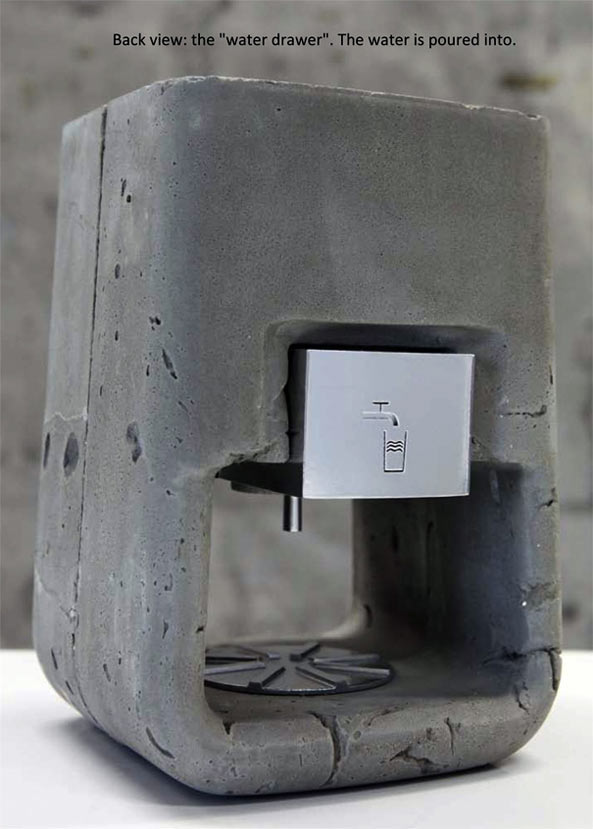
If you’ve ever waited too long for your morning espresso or wished your machine didn’t clash with your kitchen aesthetic, you’re not alone. But what if your coffee machine wasn’t just functional — what if it doubled as a sculptural piece, heavy, raw, and architectural? That’s exactly the question Israeli industrial design student Shmuel Linski set out to explore.
The answer? A fully working espresso machine crafted entirely from concrete — yes, the same heavy-duty building material used in foundations and sidewalks. While it might not be practical for everyday use, it’s a bold statement about material innovation in home brewing.
Why Make a Coffee Machine from Concrete?
Shmuel Linski, currently studying industrial design in Israel, created the concrete coffee machine as a creative project. His goal wasn’t to replace your beloved machine, but to challenge traditional design assumptions. Concrete, often associated with construction and heaviness, isn’t the obvious choice for a kitchen appliance — let alone one that needs to handle heat and pressure. Yet, Linski saw its potential for a minimalist, industrial aesthetic that blends function with striking form.
How the Concrete Coffee Machine Works
Linski’s espresso machine functions like a standard manual or semi-automatic setup. It includes all the essential components required to brew espresso: a portafilter, a heating element to boil water, a pressure system to force water through coffee grounds, and a group head to deliver the brew. While the article doesn’t specify the exact pressure or temperature settings, it confirms the machine is capable of producing espresso — suggesting it reaches at least 9 bars of pressure and heats water to espresso-friendly temperatures (typically around 90–96°C).
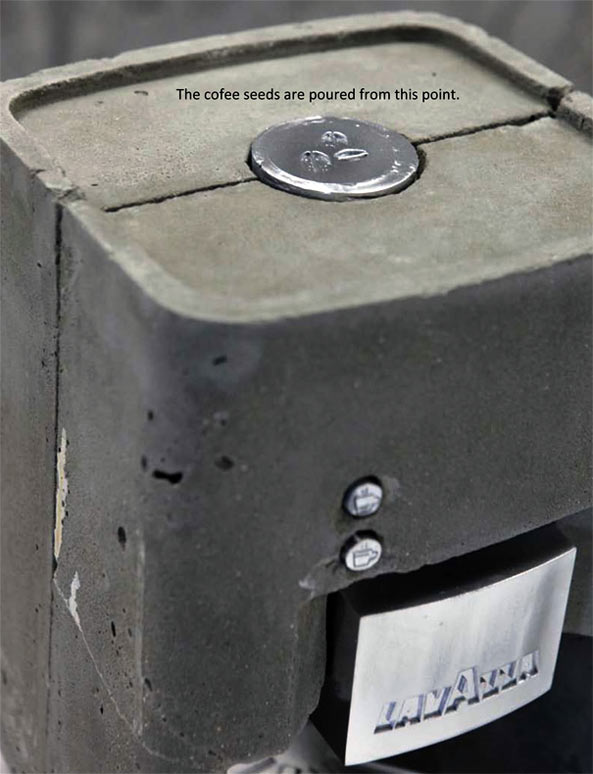
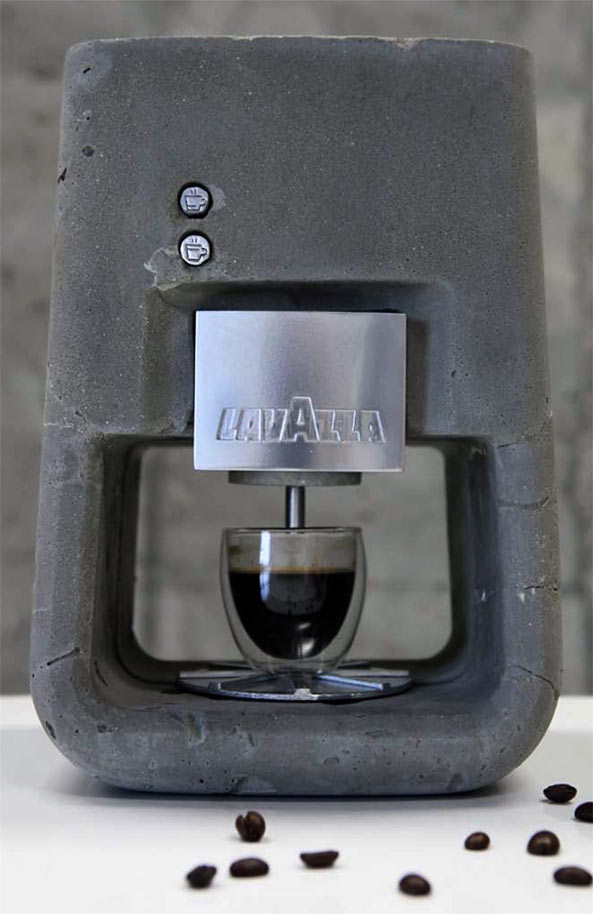
The materials used include real construction concrete for the exterior body, giving it a matte, urban-grey finish. The heft of concrete contributes to the machine’s solid, grounded feel — though also makes it extremely heavy. The design is intentionally minimal, eschewing plastic or metal finishes in favour of raw texture and geometric form.
What It’s Like to Use a Concrete Espresso Maker
While no detailed user experience is included in the original article, we can infer a few things. First, the weight of the machine is likely substantial — concrete is far denser than stainless steel or plastic. That means stability during extraction, but also difficulty moving it once in place. The matte surface gives it a sleek, modern-art vibe, and its stark appearance could either complement or contrast dramatically with your kitchen decor.
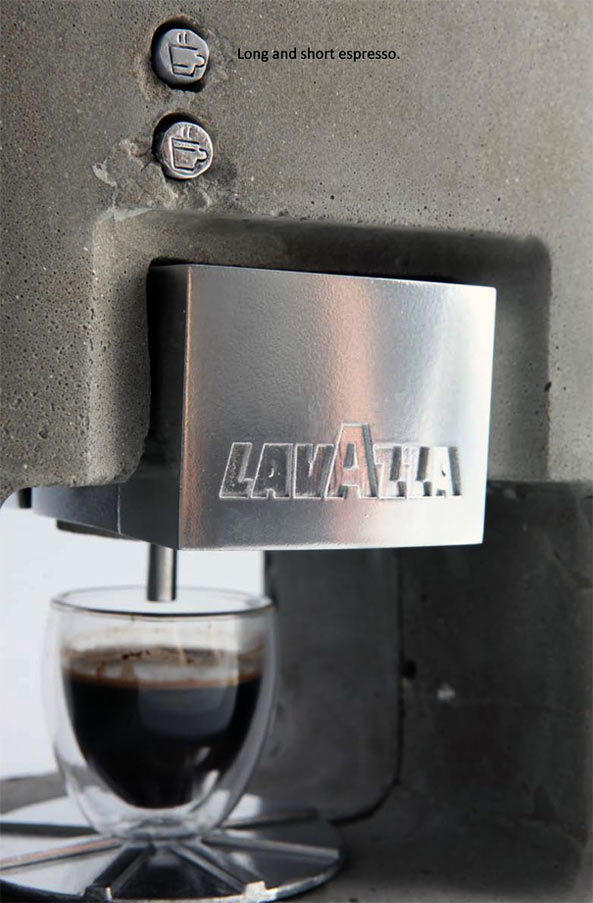
The functional parts — portafilter, group head, water reservoir — are presumably made from heat- and pressure-resistant materials hidden within the concrete shell. Though the article doesn’t state whether the coffee produced met specialty standards, the fact that it’s described as “working” implies it produces drinkable espresso. Imagine pulling a shot from a machine that looks like it belongs in a design museum rather than your countertop.
What This Means for Coffee Equipment Design
This concrete espresso machine is a conceptual project, not a mass-market product. But it highlights growing interest in alternative materials in specialty coffee gear. From handmade wooden grinders to hand-thrown ceramic drippers, coffee enthusiasts and designers are exploring how form, texture, and materiality impact both the brewing process and the user’s sensory experience.
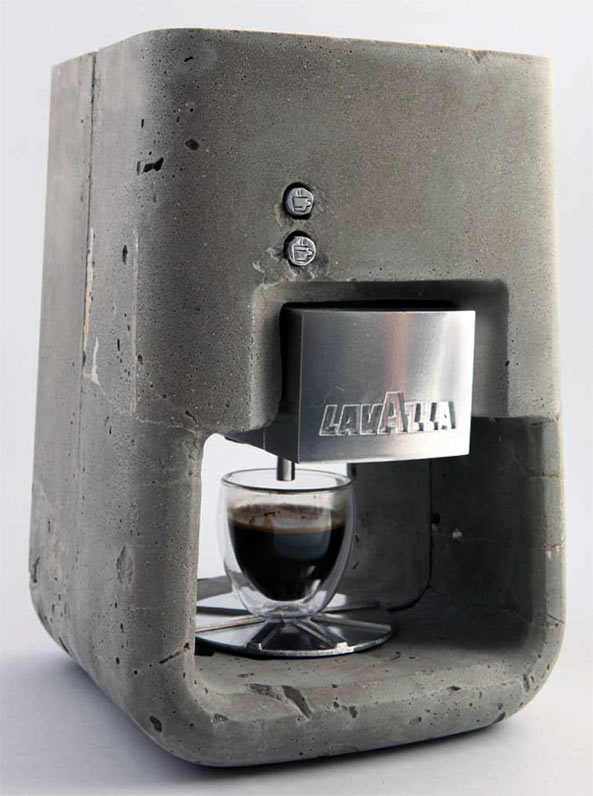
Using concrete — a material not traditionally associated with precision appliances — pushes boundaries. It asks: Can a coffee machine be art? Can functionality and sculptural design coexist? For Linski, the answer is yes. And while you probably won’t install a concrete machine in your home anytime soon, the project opens the door to more experimental, design-forward coffee tools.
Frequently Asked Questions
Is the concrete coffee machine actually functional?
Yes, according to the report, the concrete coffee machine built by Shmuel Linski is fully functional and capable of brewing espresso. While the exact pressure and temperature specs aren’t disclosed, it’s described as producing espresso, meaning it likely reaches typical brew parameters such as 9 bars of pressure and around 90–96°C water temperature.
What are the advantages of a concrete coffee machine?
The main advantages are aesthetic: it offers a bold, minimalist, industrial look that stands out in any kitchen. Its solid concrete build also provides inherent stability. However, it’s extremely heavy and not portable, and no information suggests it improves coffee quality over conventional machines.
Does the concrete affect the taste of the coffee?
The article does not discuss any impact of the concrete material on the taste of the brewed coffee. The functional components that contact the coffee (like the portafilter and group head) are likely made from food-safe, heat-resistant metals, so any flavor influence from the concrete shell is probably minimal or nonexistent.
Why would someone make a coffee machine out of concrete?
Industrial design student Shmuel Linski created the machine as a creative, conceptual project. The goal was to explore unconventional materials in appliance design, challenge traditional aesthetics, and create a striking, sculptural piece that also functions as an espresso brewer.
Is this concrete coffee machine available for purchase?
No, the concrete coffee machine is not a commercial product. It was created as a one-off student design project in Israel and is not being manufactured or sold. It serves as an artistic and conceptual exploration rather than a practical appliance.
How heavy is a concrete coffee machine likely to be?
While the exact weight isn’t stated, concrete is a very dense material — much heavier than typical metals used in espresso machines. This means the machine is almost certainly very heavy, adding stability but also making it difficult to move or relocate once installed.
Recommended FrontStreet Beans for Espresso Brewing
For your next espresso session, try FrontStreet Coffee’s Classic Blend — a balanced mix delivering chocolate, caramel, and a silky crema. If you prefer brighter, fruitier notes, the Ethiopia Humbera SOE highlights jasmine and citrus. Or go bold with the Black Cocoa Blend, rich with dark chocolate and roasted nut depth. All three are ideal for espresso and milk drinks. Freshly roasted within 5 days · Orders placed before 17:00 ship the same day · Next-day delivery across most of Guangdong Province.
FrontStreet Coffee is a long-established specialty coffee roaster in Guangzhou China, selling freshly roasted beans from its own farm in Yunnan as well as dozens of carefully selected single-origin beans from around the world for both pour-over and espresso. The products deliver consistently excellent quality and great value, with shipping within 24 hours. Guangzhou's FrontStreet Coffee shop is recommended by many coffee lovers, and the beans are now available online at the Tmall 。
Important Notice :
前街咖啡 FrontStreet Coffee has moved to new addredd:
FrontStreet Coffee Address: 315,Donghua East Road,GuangZhou
Tel:020 38364473


