How Astronauts Drink Coffee in Zero Gravity
If you’ve ever struggled to get your morning coffee just right before work, spare a thought for astronauts orbiting Earth. For decades, crew members aboard spacecraft have had to settle for sipping recycled coffee from pouches using straws—no aroma, no warmth, and definitely no enjoyment. That was the reality for astronaut Donald Pettit, who, like many stressed professionals, longed for a proper cup of coffee—even in space.
The solution? Pettit teamed up with engineer Travis Baldwin to invent a coffee cup that works in zero gravity, finally letting astronauts sip hot coffee the way we do on Earth. The secret? Surface tension. Here’s how they did it.
The Problem: Drinking Coffee in Space
In the microgravity environment of a spacecraft, fluids don’t behave as they do on Earth. Without gravity pulling liquid downward, coffee floats around as blobs or sticks to container walls. Traditional cups are useless. Astronauts typically drink beverages like coffee from sealed pouches using straws, which means no sloshing sound, no steam, and certainly no relaxing morning ritual. Donald Pettit, who flew on STS-126, wanted more.
The Solution: A Zero-Gravity Coffee Cup
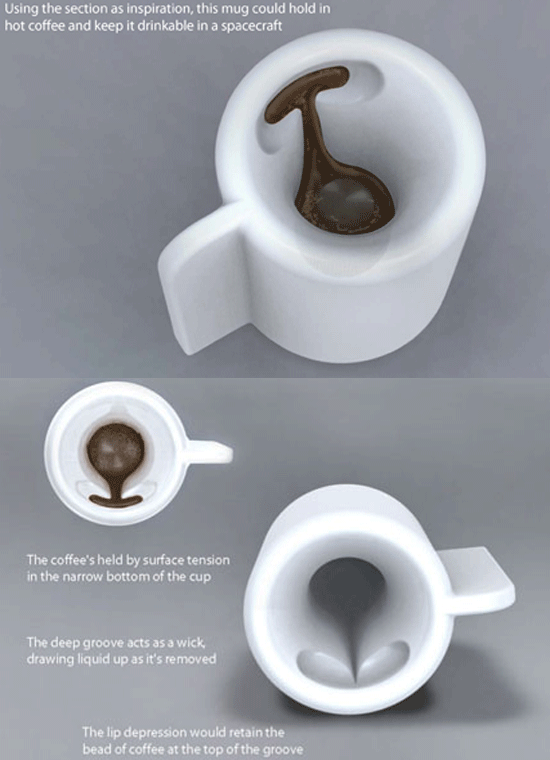
To make drinking coffee possible—and enjoyable—in orbit, Pettit collaborated with designer Travis Baldwin. They developed a specially shaped cup that uses surface tension, not gravity, to keep liquid inside. The cup’s angled lip and interior geometry guide the coffee to the drinker’s lips via capillary action when tilted, allowing sipping just like on Earth. The design was first tested and used during the STS-126 space shuttle mission.
How Surface Tension Works in the Cup
Surface tension is the property of liquid surfaces that makes them act like elastic sheets. In the zero-gravity coffee cup, the liquid clings to the edges and inner surfaces due to this tension. By shaping the cup with a sharp interior corner and a strategically angled lip, liquid is naturally drawn toward the opening when the astronaut sips. This allows coffee to flow reliably into the mouth without spilling or floating away. No pumps, no straws—just physics.
Why This Matters Beyond the Space Station
While designed for astronauts, the zero-gravity coffee cup has implications beyond space travel. The same principles could inform fluid-handling designs for other extreme environments, and yes—future space tourists with deep pockets may one day enjoy their espresso while gazing down at Earth. Imagine sipping coffee in low orbit, watching the planet drift by, all thanks to a cleverly engineered cup.
Frequently Asked Questions
Who invented the zero-gravity coffee cup?
Astronaut Donald Pettit collaborated with designer Travis Baldwin to invent the zero-gravity coffee cup. Pettit, who experienced the limitations of drinking from pouches during spaceflight, wanted a better solution and worked with Baldwin to develop a cup that uses surface tension to allow sipping in microgravity.
What mission was the coffee cup first used on?
The zero-gravity coffee cup was first used during the STS-126 space shuttle mission. This mission provided the real-world test environment where astronauts could try out the innovative cup design in actual zero-gravity conditions.
How does the coffee cup work without gravity?
The coffee cup uses surface tension and capillary action. Its specially shaped interior—featuring an angled lip and sharp interior corner—guides liquid coffee to the drinker’s mouth when the cup is tilted, keeping the coffee inside the cup using the liquid’s natural adhesion to the surfaces.
Can this cup be used on Earth?
Yes, the zero-gravity coffee cup can be used on Earth, but its design is optimized for use in microgravity. On Earth, it would work like any other cup, though its unique shape and engineering make it especially suited for environments where gravity cannot assist liquid flow.
Will space tourists get to use this cup?
It’s likely. The same principles behind the zero-gravity coffee cup could be adapted for commercial spaceflight. Future space tourists may be able to enjoy beverages like coffee more traditionally while in orbit, enhancing the experience of space travel with small but meaningful comforts.
Recommended FrontStreet Beans for Space-Themed Cafés
For fans of space exploration—or anyone dreaming of zero-gravity coffee—try FrontStreet Coffee’s Ethiopia Humbera for its juicy blueberry and floral notes, or Yirgacheffe for vibrant citrus and stone fruit. Both shine as single-origin pour-overs, offering the bright, clean profiles that complement visions of orbital sipping. Freshly roasted within 5 days · Orders placed before 17:00 ship the same day · Next-day delivery across most of Guangdong Province.
FrontStreet Coffee is a long-established specialty coffee roaster in Guangzhou China, selling freshly roasted beans from its own farm in Yunnan as well as dozens of carefully selected single-origin beans from around the world for both pour-over and espresso. The products deliver consistently excellent quality and great value, with shipping within 24 hours. Guangzhou's FrontStreet Coffee shop is recommended by many coffee lovers, and the beans are now available online at the Tmall 。
Important Notice :
前街咖啡 FrontStreet Coffee has moved to new addredd:
FrontStreet Coffee Address: 315,Donghua East Road,GuangZhou
Tel:020 38364473