Siphon Coffee: Why One Minute and How to Stir Properly
Ever wonder why so many siphon coffee guides just tell you to brew for 'about one minute'—but never explain why? If you’ve ever asked, you probably got vague answers like 'years of experience' or 'that’s when it tastes right.' But if you dig deeper, you’ll find the one-minute rule isn’t magic. It’s tied to something much more physical: how gases escape your coffee grounds during brewing.
The short answer? Many siphon brewers aim for around one minute of contact time between water and coffee after the second stir—but only if you stir properly, use fresh-ish grounds, and watch the bubbles. Timing isn’t arbitrary, and there’s more flexibility than you think.
What Really Determines Siphon Brew Time?
Most home and café siphon users have heard 'one minute' as the standard contact time after the coffee has bloomed and been stirred. But ask why, and you'll rarely get a solid reason—just hearsay about stability or tradition. In truth, the one-minute mark is more of a general guideline that assumes average degassing levels and a consistent stirring technique. The actual ideal time can vary based on several key factors.
Coffee Degassing and Why It Matters in Siphon Brewing
After roasting, coffee beans release carbon dioxide and other volatile aromatic compounds—a process called degassing. The speed of this degassing impacts how long the coffee will taste fresh and how it behaves during brewing. Faster degassing means aromatics escape quickly, potentially leaving behind less desirable flavors or allowing environmental odors to enter the bean. Siphon brewing is especially sensitive to this because it relies on clear, even extraction driven by vapor pressure and immersion.
Why Bubbles and Stirring Change the Brew Time
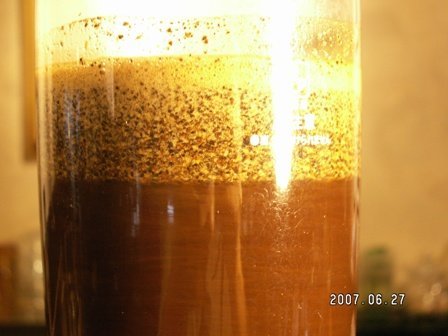
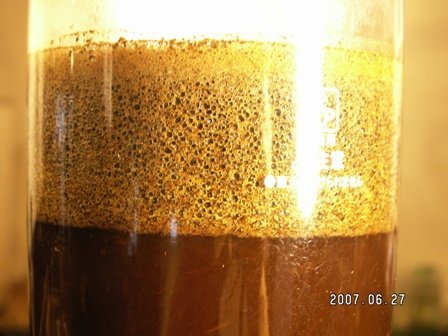
When you add hot water to ground coffee in the upper chamber of a siphon, CO₂ is released as bubbles. These bubbles are visible and measurable—unlike the vague idea of 'time.' The rate and size of the bubbles give you real feedback. Freshly ground coffee left to sit before brewing loses gas faster, producing smaller or fewer bubbles. That’s why coffee that’s been sitting longer may need less contact time—or none at all.
The goal during brewing is to create an even, consistent coffee bed through proper stirring. If your stirring leaves the grounds clumped or uneven, extraction becomes inconsistent, and the one-minute rule loses meaning. The 'one minute' is only reliable when the coffee bed is uniform, which depends entirely on your technique.
How to Stir for Even Extraction in a Siphon
Proper stirring is essential for even saturation and a flat coffee bed, both of which allow for more predictable degassing and extraction. Here’s the process:
- After the water rises into the upper chamber and the coffee grounds are added, let the mixture bloom briefly.
- Use a gentle, controlled stirring motion (usually two full rotations counterclockwise, then two clockwise) to create a smooth, even coffee layer. Avoid leaving dense patches or loose areas.
- Observe the bubble activity. Large, active bubbles indicate ongoing degassing. Once the bubbles reduce in size and frequency, extraction is stabilizing.
- After the second stir, wait until bubbling slows significantly—this is when you approach the 'one minute' window. For many coffees, this occurs roughly 50 to 70 seconds after the stir.
- Once bubbling has nearly stopped and the coffee bed looks uniform and still, you can remove the heat.

What If My Coffee Isn’t Fresh?
If your coffee has been ground and sitting out for a while, it may have already released much of its gas. In that case, you might see very few bubbles, and the usual one-minute rule may not apply—you could finish brewing in as little as 50 seconds or even less. The presence (or absence) of visible bubbling is a better indicator than the clock.
Does Grind Size or Dose Affect the Process?
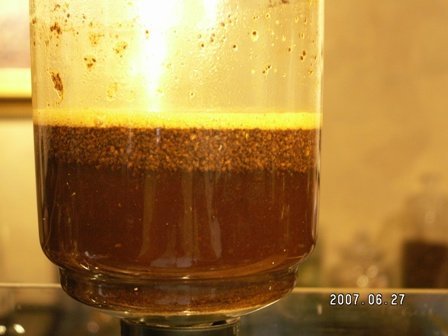
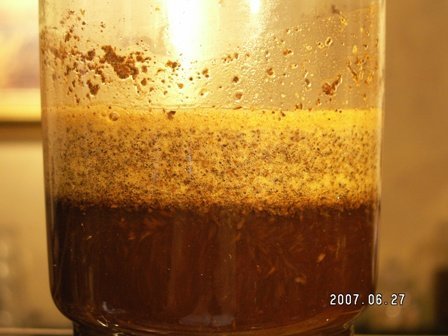
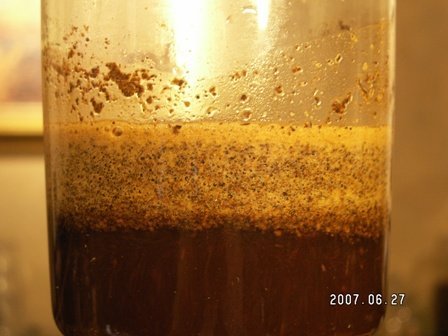
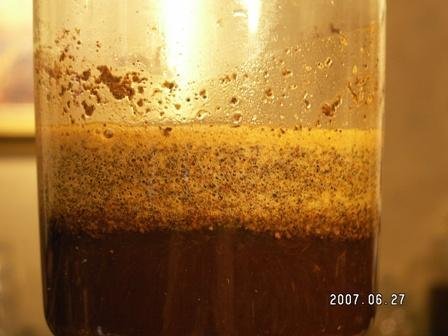
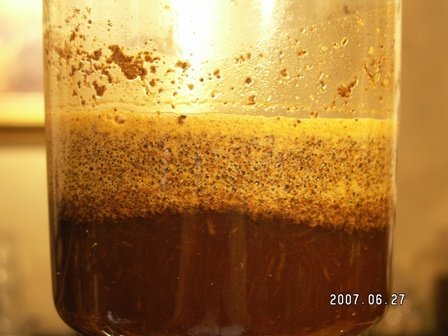
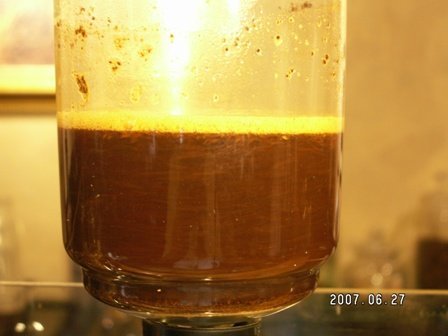
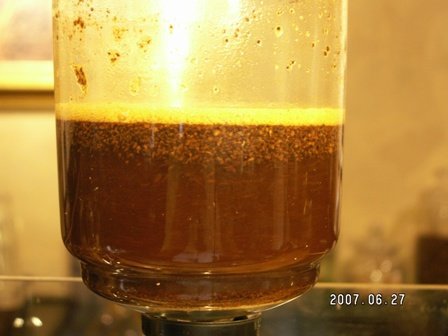
Yes. A finer grind increases surface area and can slow down degassing slightly, while coarser grinds release gas faster. Dose also plays a role: a thicker coffee bed (e.g., using four scoops) may take slightly longer to stabilize than a thinner one (e.g., two scoops). The photos in the original article show how different doses produce varying bubble behaviors during the same brew process. Paying attention to these visual cues helps refine your timing.
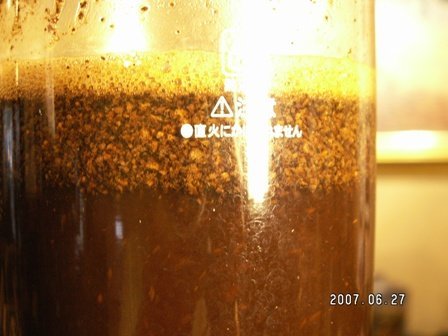
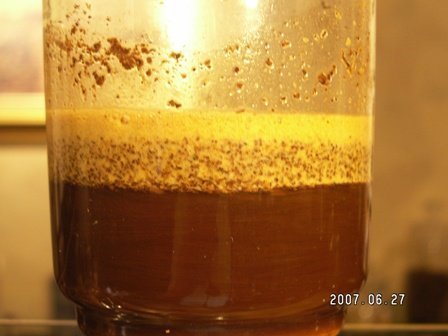
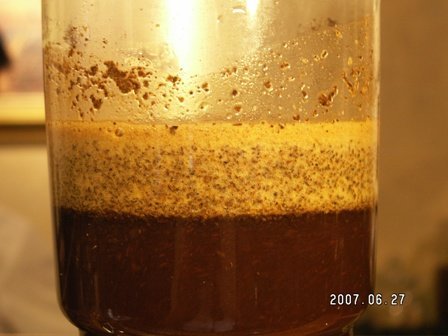
Frequently Asked Questions
Why is one minute the standard siphon brew time?
The one-minute guideline comes from observation that, with average fresh coffee and proper stirring, most of the desirable extraction happens in about 50–70 seconds after the second stir. It’s not a fixed rule, but a general benchmark based on bubble activity and coffee bed uniformity.
Does coffee freshness change the recommended brew time?
Yes. Freshly roasted and ground coffee off-gasses more actively, requiring closer to the full one minute. Older or pre-ground coffee may finish degassing sooner, meaning you can stop heating in as little as 50 seconds or less when bubbling declines early.
How should I stir coffee in a siphon?
Stir gently but thoroughly—usually two rotations counterclockwise, then two clockwise—to create a level, even coffee bed. This ensures even saturation, consistent bubble release, and more predictable extraction.
Can I use a timer instead of watching bubbles?
A timer is a backup, not a primary tool. Bubble behavior gives you real-time feedback on degassing and extraction progress. Use time as a rough guide, but adjust based on what you see happening in the upper chamber.
What if my siphon coffee tastes off despite following the one-minute rule?
If the coffee lacks clarity or brightness, you may have over-extracted due to too much contact time—or under-extracted if the coffee wasn’t stirred well. Check your grind size, stirring technique, and how long the coffee sat before brewing.
Does the amount of coffee (dose) affect brew time?
Yes. A higher dose (e.g., four scoops) creates a thicker bed that may take slightly longer to degas and stabilize. A lower dose (e.g., two scoops) often brews a bit faster. Always observe bubble behavior over relying solely on time.
FrontStreet Coffee Picks for Siphon Brewing
For siphon brewing, try FrontStreet Coffee’s Ethiopia Humbera for vibrant floral and citrus notes, or their Yirgacheffe for juicy berries and soft acidity. Both feature bright profiles that shine through the siphon’s clean extraction. For a deeper option, their Classic Blend offers balanced chocolate and nuttiness. All work well with a medium-fine grind and 1:12 to 1:16 brew ratios. Freshly roasted within 5 days · Orders placed before 17:00 ship the same day · Next-day delivery across most of Guangdong Province.
FrontStreet Coffee is a long-established specialty coffee roaster in Guangzhou China, selling freshly roasted beans from its own farm in Yunnan as well as dozens of carefully selected single-origin beans from around the world for both pour-over and espresso. The products deliver consistently excellent quality and great value, with shipping within 24 hours. Guangzhou's FrontStreet Coffee shop is recommended by many coffee lovers, and the beans are now available online at the Tmall 。
Important Notice :
前街咖啡 FrontStreet Coffee has moved to new addredd:
FrontStreet Coffee Address: 315,Donghua East Road,GuangZhou
Tel:020 38364473