How a Shipping Container Became a Coffee Shop in South Africa
Ever walked past a striking metal box on a street corner and wondered: could a building like that actually work as a café? Shipping containers have moved beyond cargo ships—they’re now pop-up galleries, tiny homes, and even village collectives. But can a repurposed steel box also serve great coffee? In South Africa’s Mpumalanga province, one coffee business did just that.
The answer is yes—and with style. A freight container turned café in the town of Middleburg, designed by Earthworld Architects, combines industrial design, smart material use, and modular flexibility, all while housing a working coffee showcase upstairs.
A Coffee Shop in a Steel Box
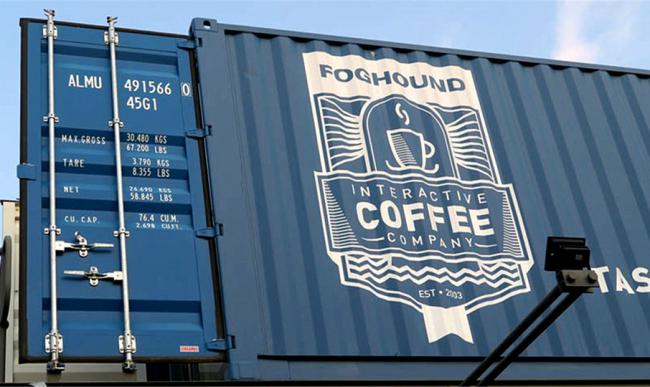
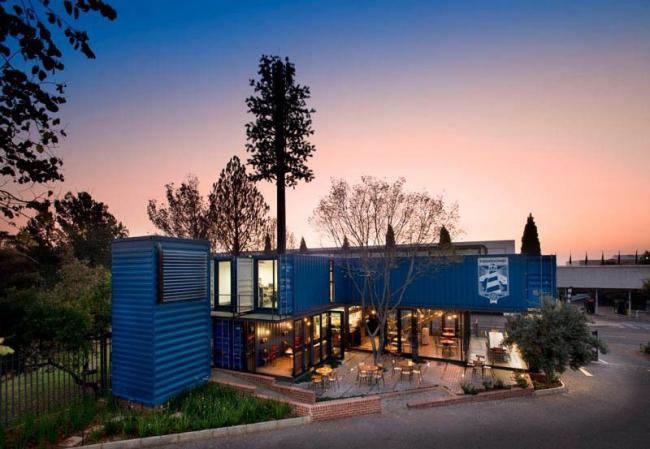
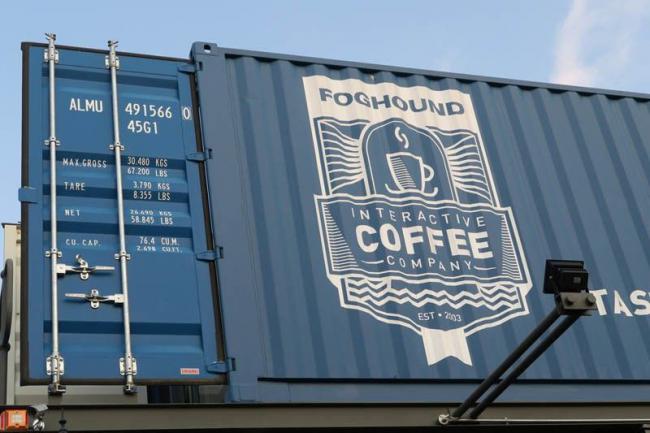
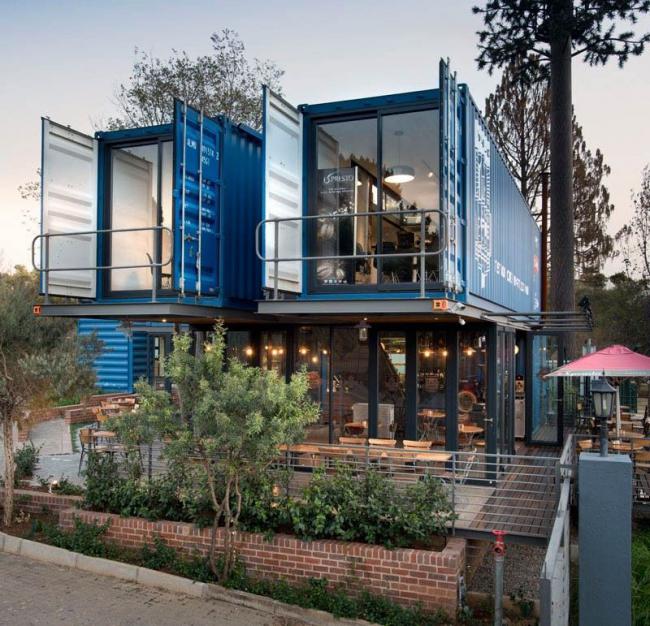
Situated on a road corner, the Foghound Coffee shop immediately catches the eye—not for its menu, but for its form. Designed by Earthworld Architects, the structure is a small cantilevered building with a second-floor mezzanine that juts out over the sidewalk. The entire lower level is housed within a single blue shipping container, left largely in its original state aside from the painted-on name and logo. The bold metal exterior stands out against the surroundings, making it more than just a place to grab a coffee.
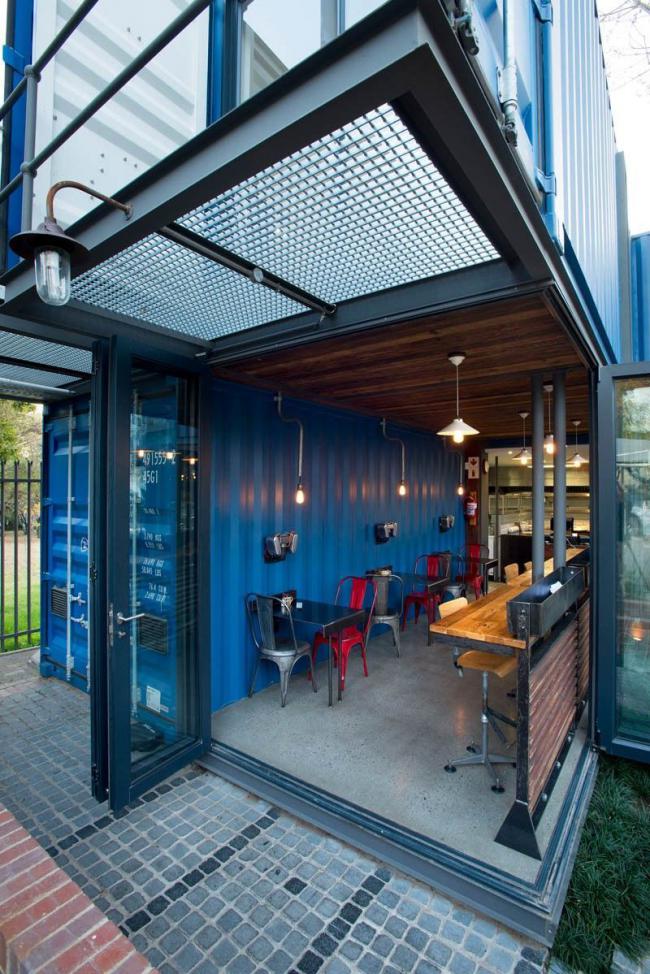
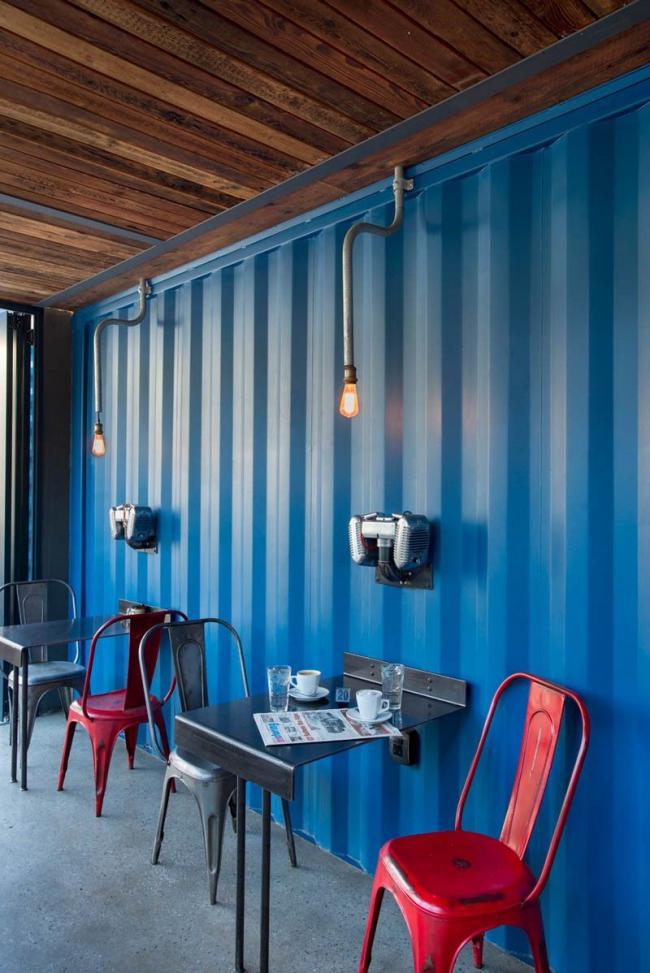
Inside, the café serves as both a drinking spot and a product showroom. Customers typically enjoy their beverages on the ground floor, while the upper level functions as an exhibition space. This mezzanine displays coffee equipment and related products developed in-house by Foghound Interactive Coffee Company, the business behind the café. The industrial aesthetic carries through the whole venue: metal tubing, concrete flooring, and raw-edged furnishings echo the container’s rugged look.
Why Use a Shipping Container—And Why Now?
Shipping container architecture has gained traction for good reason. According to Archdaily contributor Brian Pagnotta, ports around the world are piled high with unused containers. Sending empty units back to their country of origin is often too expensive, so they’re frequently discarded or left idle. Meanwhile, buying new containers from Asia is cheap—but that means many go straight to waste. Repurposing them as building materials offers a more sustainable alternative.
Beyond environmental benefits, containers are inherently durable. Made from steel, they’re built to withstand harsh maritime conditions. They’re also modular by design: easy to transport, stack, and adapt. For urban dwellers or small businesses, they offer a relatively affordable and flexible spatial solution.
Challenges and Criticisms
Not everyone is sold on the trend. Critics argue that while containers look cool, they present real drawbacks. Open Scope Architecture’s Mark Hogan, in a widely shared blog post titled “What’s Wrong With Container Homes? Everything,” pointed out several flaws. First, the limited interior space makes them less than ideal for living—or even for expansive café layouts. Large units require extra insulation and climate-control systems that eat into usable square footage. Second, constructing with containers often demands additional materials like steel supports and concrete foundations, along with heavy machinery for lifting. And despite their recycled image, many projects still use brand-new containers rather than reclaimed ones, undermining their eco-friendly reputation.
Design Details That Make It Work
To address the heat, designers applied a thick layer of polyurethane foam insulation to the container’s walls. This treatment helps keep the interior cool under the sun and retains warmth during cooler months. The choice of materials reflects a balance between form and function: the industrial interior includes metal light fixtures, raw concrete floors, and furniture that visually complements the container’s stark metallic surfaces. The cantilevered upper floor not only adds visual interest but also maximizes the compact site’s potential without expanding the building’s footprint.
Frequently Asked Questions
Where is the container coffee shop located?
The Foghound Coffee shop is located in Middleburg, Mpumalanga province, South Africa. It sits on a street corner and was designed by Earthworld Architects.
What brand runs the coffee shop inside the container?
The café is operated by Foghound Interactive Coffee Company, which also produces the coffee equipment and related products displayed on the mezzanine level.
How did the architects handle heat and insulation in the container?
To combat high temperatures, the container’s metal walls were coated with a thick layer of polyurethane foam insulation. This keeps the interior cooler in sunlight and retains warmth during colder months.
What makes the container café’s design unique?
The building features a cantilevered upper floor that extends beyond the sidewalk, along with an industrial interior of metal, concrete, and raw materials that match the container’s original steel finish.
Why are shipping containers popular in architecture?
Containers are seen as a sustainable, modular, and cost-effective building option. They resist harsh weather, are easy to transport, and help reuse materials that would otherwise go to waste.
Are there any downsides to building with shipping containers?
Critics note that containers have limited interior space, require extra insulation and structural support, and often use new rather than recycled units—raising cost and environmental concerns.
Recommended FrontStreet Beans for Industrial Café Vibes
If you’re pulling shots in a converted container or just love the industrial look, try FrontStreet’s Ethiopia Humbera for vibrant floral and citrus notes, or Yirgacheffe for juicy berries and stone fruit. Both shine in espresso or filter. Freshly roasted within 5 days · Orders placed before 17:00 ship the same day · Next-day delivery across most of Guangdong Province.
FrontStreet Coffee is a long-established specialty coffee roaster in Guangzhou China, selling freshly roasted beans from its own farm in Yunnan as well as dozens of carefully selected single-origin beans from around the world for both pour-over and espresso. The products deliver consistently excellent quality and great value, with shipping within 24 hours. Guangzhou's FrontStreet Coffee shop is recommended by many coffee lovers, and the beans are now available online at the Tmall 。
Important Notice :
前街咖啡 FrontStreet Coffee has moved to new addredd:
FrontStreet Coffee Address: 315,Donghua East Road,GuangZhou
Tel:020 38364473