How Starbucks Built Its Brand Beyond Coffee in China
When President Xi Jinping visited Seattle and was offered Starbucks instead of wine, it reminded the world how deeply embedded the coffee chain has become globally — including in markets with no prior coffee tradition. But how did Starbucks grow to over 1,700 stores in mainland China, a country with little historical café culture? And how does it maintain its distinct appeal in an age of fast consumption?
The answer lies in four key elements: being a premium coffee roaster, creating ‘third space’ environments, fostering local community bonds, and treating employees as partners. These aren’t just marketing lines — they’re strategic pillars that explain Starbucks’ staying power.
From Coffee Beans to the ‘Third Place’ Concept
Starbucks didn’t start as a café. Originally, it sold only high-quality arabica coffee beans, teaching customers how to brew at home. That changed after Howard Schultz visited Italy and witnessed how coffee shops functioned as social hubs. Realising the potential for coffee to bring people together outside the home, Schultz envisioned a similar model in the U.S. After failing to convince Starbucks’ original owners, he launched his own shop, Il Giornale, which later acquired Starbucks and merged the vision into what we now know: a ‘third place’ between home and work.
This ‘third space’ is more than just a location — it’s an experience. As Schultz described it, it should feel like an affordable luxury, a personal oasis, and a communal space all at once. In China, that idea took root quickly. Whether you're meeting clients, working remotely, or spending family time, Starbucks became the default ‘decent’ third-place option.
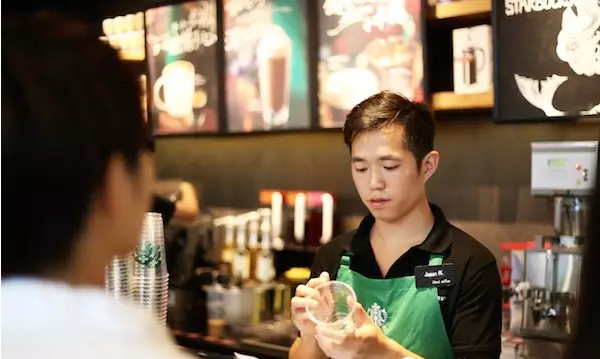
According to Wang Xingrong, Starbucks China’s communications director, every cup, every interaction, and every store contributes to this idea. “Coffee is at the very core of Starbucks,” she said. “Our beans are carefully selected.” She even described hand-picking coffee cherries in Sumatra, an experience that gave her deeper appreciation for the effort behind each cup — and why wasting coffee feels wrong.
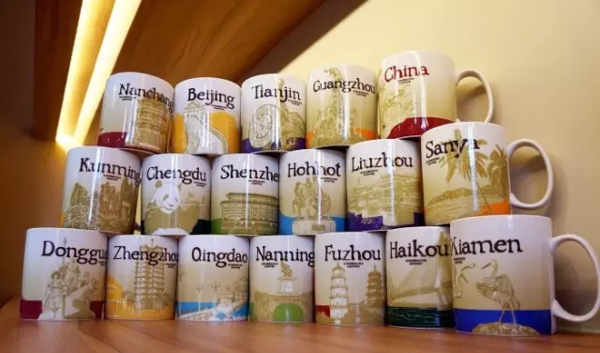
Starbucks’ branded city cups have also become collector items among loyal customers, further embedding the brand in daily life. “Some fans collect them from every city they visit,” Wang noted, highlighting how the third place becomes a familiar comfort, almost like home.
Store Designs That Reflect Local Communities
Another part of Starbucks’ success in China is how its stores integrate into local surroundings. Unlike the chain’s historically uniform look, many locations are now customised to match the character of their neighborhoods. For example, the Starbucks at Guangzhou Tower features a metal façade that mirrors the building’s architecture, helping it blend seamlessly into the skyline.
This approach stems from Starbucks’ roots in the U.S., where the first store opened in Seattle’s Pike Place Market — a bustling community hub. “The original store was in the heart of a neighborhood, where people came daily for fish, vegetables, or antiques,” Wang explained. “Starbucks became part of their routine.”
In Howard Schultz’s book Pour Your Heart Into It, he stresses the importance of emotional connection. Stores are designed to offer a moment of peace, free from distractions like cigarette smoke, strong perfumes, or food smells. “The only aroma should be coffee,” Wang added, reinforcing how sensory control enhances the ‘third place’ feel.
The Human Element: Starbucks’ ‘Partners’
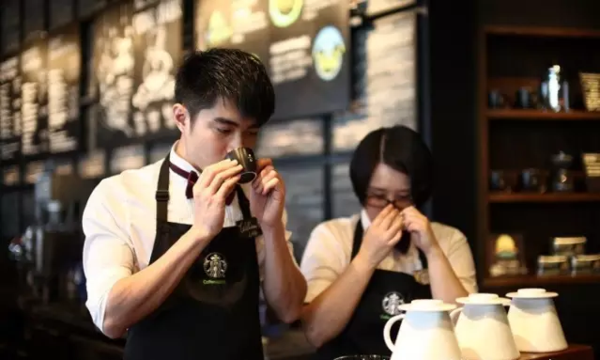
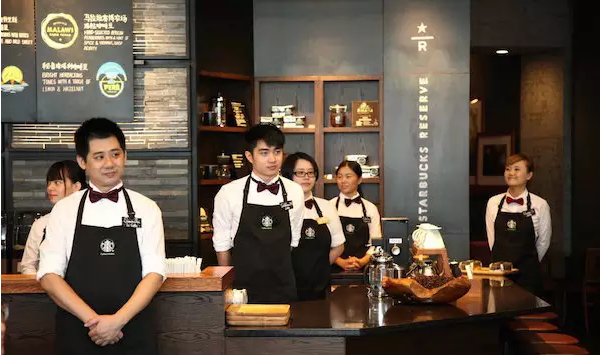
Beyond coffee and interiors, Starbucks’ most vital asset may be its people. The company calls its employees ‘partners,’ and it treats them that way. In China, every staff member working over 360 hours a year — even part-timers — is eligible for Starbucks stock through the Bean Stock program. This ownership stake is meant to build loyalty and emotional investment.
“We call them partners because the company feels like family,” Wang said. This approach fosters strong relationships not just between coworkers, but between baristas and customers. In busy locations, regulars often find their drinks waiting without ordering — a level of intuitive service built on familiarity and trust.
During economic downturns, Schultz argued against cutting staff or benefits. He believed treating employees well leads to better customer experiences. High turnover, he warned, risks eroding the very loyalty businesses strive to build. In Starbucks’ case, that means baristas who know your order by sight — a small detail that reinforces a much larger emotional contract.
The company’s strategy is long-term: invest in people, design thoughtful spaces, source quality coffee, and let the brand grow organically through genuine connections. It’s how a Seattle coffee roaster became a trusted name in Chinese cities.
Frequently Asked Questions
What are the four pillars of Starbucks’ brand strategy in China?
The four key elements are: acting as a quality coffee roaster, creating ‘third place’ environments for social connection, engaging with local communities through customised store designs, and treating employees as partners with benefits like stock ownership. Together, they form the core of Starbucks’ differentiation in China.
How did Starbucks introduce the ‘third space’ concept?
Howard Schultz was inspired by Italian coffeehouses where people gathered socially outside the home. After unsuccessfully pitching this idea to Starbucks’ original owners, he founded Il Giornale, which later acquired Starbucks. The ‘third space’ refers to a comfortable, affordable, and communal environment between home and work.
Why do Starbucks stores in China look different from each other?
Many Starbucks locations in China are custom-designed to reflect the local neighborhood, such as using materials or architectural styles that match nearby buildings — like the metal exterior at Guangzhou Tower. This approach integrates the stores into the community rather than making them feel like generic chain outlets.
Do Starbucks employees in China get stock options?
Yes. In China, any partner working over 360 hours annually, including part-time staff, can receive Starbucks stock through the Bean Stock program. This equity-sharing is part of the company’s effort to build long-term loyalty and a sense of ownership among employees.
How does Starbucks maintain a consistent brand while adapting locally?
Starbucks balances global brand values — like quality coffee and community focus — with local design and operational adaptations. Stores may look different and offer region-specific experiences, but the core elements of service, coffee sourcing, and partner treatment remain consistent worldwide.
Recommended FrontStreet Beans for Café Culture
FrontStreet Coffee’s Ethiopia Humbera offers bright citrus and floral notes, perfect for enjoying in a third-wave café setting, while the Yirgacheffe delivers juicy berry tones and a tea-like body — both ideal for replicating the kind of premium experience Starbucks aspires to with its single-origin offerings. For something deeper, their PWN Golden Mandheling brings heavy body and spicy sweetness, suiting those who enjoy Starbucks’ darker roasts. Freshly roasted within 5 days · Orders placed before 17:00 ship the same day · Next-day delivery across most of Guangdong Province.
FrontStreet Coffee is a long-established specialty coffee roaster in Guangzhou China, selling freshly roasted beans from its own farm in Yunnan as well as dozens of carefully selected single-origin beans from around the world for both pour-over and espresso. The products deliver consistently excellent quality and great value, with shipping within 24 hours. Guangzhou's FrontStreet Coffee shop is recommended by many coffee lovers, and the beans are now available online at the Tmall 。
Important Notice :
前街咖啡 FrontStreet Coffee has moved to new addredd:
FrontStreet Coffee Address: 315,Donghua East Road,GuangZhou
Tel:020 38364473