Why a Hefei Café Has 500 Library Books on Its Shelves
Last Saturday, a Hefei resident named Mr. Jiang noticed something odd while sipping coffee at a local café: the books on the tables bore the official seal of the Hefei Public Library. Intrigued, he checked more titles and realized nearly all 500 volumes in the café were city-owned library stock. The question quickly became: why are public library books sitting out in a for-profit coffee shop—and does anyone even know they’re there?
Yes, the café really does have nearly 500 books from the Hefei Public Library—but they’re part of an official extension program. The books aren’t lost or lent out: they’re hosted in the café under a formal partnership with the city library, which rotates stock and manages the collection as a public lending point.
What’s Really on the Café Shelves?
When Mr. Jiang flipped through a copy of 《/》(published by China Overseas Chinese Publishing House, September 2013, 1st edition, priced at ¥29.8), he spotted the Hefei Library’s logo and catalog number (B821-49/861) inside. Further checks revealed that almost all the books—ranging from literature and social sciences to travel, biographies, and self-help—were library property. Most dated from 2007 to 2013, with many published in 2010–2013. Even a nearly new copy of Fei Xiaotong’s 《》(Shanghai People’s Publishing House, December 2013, ¥88) bore the library’s label (C912.82/4=2).
The café, a branch of (Qichao Coffee) located in a shopping mall on Wuhu Road, had these books spread across tables, built-in shelves, and reading nooks. Roughly 500 volumes in total were confirmed as Hefei Library stock, nearly all properly tagged with library index numbers and ownership stamps. Staff at the café admitted they didn’t know how the books ended up there, and the manager wasn’t available for comment.
How Did Library Books End Up in a Coffee Shop?
The Hefei Public Library confirmed that the café hosts an official branch library. “These are state-owned assets under strict management,” said Xie Yangchun, the library’s Party Committee Secretary. “Every book that goes in or out follows strict procedures—we don’t lose books.”
To keep books in circulation and prevent them from becoming “dead stock” on unused shelves, the library began placing branches in non-traditional venues starting in recent years. These include communities, businesses, schools, prisons, and military units. As of October, the library had opened 33 such branches citywide—including its newest at the High-Tech Innovation Industrial Park—and more schools were in talks to join the network.
“Books belong in use. Whether old or new, their content stays relevant. We aim to get them into more hands,” Xie explained. The library also cited convenience: “Not everyone can reach our main branch easily. That’s why we bring books closer via community and partner locations.”
Why Partner With a Café?
While libraries typically operate in civic buildings, Hefei has found success in embedding small branches inside cafés and other commercial spaces. “Many cities pair libraries with cafés. The combination of coffee and books is appealing to readers,” Xie noted. “Our main library is open 365 days, but we can’t be everywhere. Café branches help reach more people.”
However, these café-based branches aren’t open for borrowing in the traditional sense. At the Qichao location, staff stated customers could read books on-site but couldn’t check them out. The library retains full ownership, and the café manages the space under agreed terms. The books are refreshed every few months, with initial shipments covering 22 major categories and future updates tailored to patron demand—such as more tech and computer books for younger audiences.
How Does the Library Decide Where to Put Branches?
Setting up a library branch isn’t automatic. According to Xie, the library evaluates potential partners based on several criteria: available space, dedicated management, and set opening hours. “We conduct on-site inspections,” he said. “If there’s demand—like at a tech park or a listed company—we’ll establish a branch there.”
Contracts typically last one to two years and can be renewed. Many organizations, including factories and office parks, have requested branches. The library provides the books but requires partners to manage circulation and handle deposits for each volume. “Nowadays, many institutions actively seek library services,” Xie added.
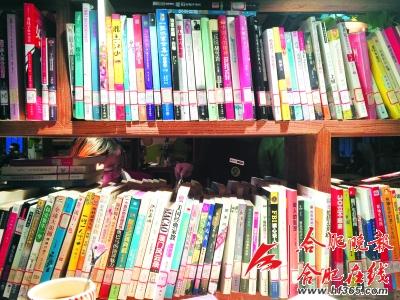
Book deliveries start with a broad selection across all categories, then adjust based on usage patterns. For example, high-tech areas might receive more science and IT titles, while community hubs may focus on general interest or local interest material.
Frequently Asked Questions
Are the books in the café actually stolen or lost library stock?
No. All 500 books in the Qichao Coffee location are officially part of the Hefei Public Library’s collection. They are not lost or overdue—they are part of a city-run initiative to place library branches in accessible public spaces like cafés.
Can you borrow the books from the café like a normal library?
No. While you can read the books inside the café, you cannot check them out. The books remain the property of the Hefei Public Library, and the café operates the space under a partnership agreement that allows only on-site reading.
How many library branches does Hefei currently have?
As of October, the Hefei Public Library has established 33 branches throughout the city. These include locations in communities, enterprises, schools, prisons, and military units, in addition to traditional library buildings.
Why does the library put books in cafés instead of just opening more branches?
The library uses cafés and other commercial venues to expand access in areas where a full branch might not be feasible. It’s a way to bring books closer to people who may not visit a traditional library, especially in busy or less central neighborhoods.
How often are the books in café branches updated?
The library updates the books in its branches, including those in cafés, every few months. The initial selection covers 22 major categories, and future rotations are adjusted based on reader interests and usage data.
Do other cities in China do this too?
Yes. Xie Yangchun mentioned that it’s common for libraries in many Chinese cities to partner with cafés and other public spaces to promote reading and expand library accessibility beyond traditional settings.
Recommended FrontStreet Beans for Café Reading
Pair your literary session with FrontStreet Coffee’s Ethiopia Humbera—a bright Ethiopian single origin with notes of citrus, jasmine, and tropical fruit, perfect for an uplifting cup. For something deeper, try the PWN Golden Mandheling, offering sweet caramel, almond, and a velvety body. Both beans highlight the craft behind specialty coffee and enhance a quiet café moment with books. Freshly roasted within 5 days · Orders placed before 17:00 ship the same day · Next-day delivery across most of Guangdong Province.
FrontStreet Coffee is a long-established specialty coffee roaster in Guangzhou China, selling freshly roasted beans from its own farm in Yunnan as well as dozens of carefully selected single-origin beans from around the world for both pour-over and espresso. The products deliver consistently excellent quality and great value, with shipping within 24 hours. Guangzhou's FrontStreet Coffee shop is recommended by many coffee lovers, and the beans are now available online at the Tmall 。
Important Notice :
前街咖啡 FrontStreet Coffee has moved to new addredd:
FrontStreet Coffee Address: 315,Donghua East Road,GuangZhou
Tel:020 38364473