Cold Drip, Pour-Over, Siphon: Key Coffee Brewing Differences
If you’ve ever wondered why your friend’s V60 pour-over tastes bright and juicy while their siphon coffee feels heavy and sweet—or why ice drip seems to last forever—this guide breaks down the real differences between three major manual coffee brewing methods. Whether you’re choosing gear or beans, knowing how each technique works changes everything.
In short: Pour-over (like V60) highlights clarity and acidity (best at 1:15, 89–91°C), siphon preserves body and sweetness (1:12–1:15, 90°C, 1-min brew), and ice drip extracts slowly for low caffeine and intense smoothness (1:17, 10-hour drip).
Why Brew Method Changes Your Coffee
Coffee extraction isn’t just about hot water and grounds—it’s how water meets coffee over time, temperature, and pressure. Pour-over, siphon, and ice drip each manage those variables differently, leading to dramatically different cups. Your choice affects not just flavor, but also body, acidity, and even caffeine levels.
Pour-Over (V60): Bright, Clean, Precise
Pour-over brewing—especially with a V60 cone—is a hands-on process where every pour shapes the cup. It’s favored for its clarity and ability to showcase delicate, high-notes like fruit and floral tones. Using a paper filter removes oils, resulting in a cleaner, lighter-bodied cup compared to other methods.
What you need: Hario V60 dripper (typically resin for heat retention), paper filters, gooseneck kettle, and a server.
Recommended beans: FrontStreet Coffee’s Ethiopia Yirgacheffe (washed), known for its light body, crisp acidity, and intense fruity aromas. The V60’s design enhances those bright characteristics.
Grind size: Medium-fine (like table salt).
Brew ratio: 1:15 (e.g., 20g coffee to 300g water).
Water temperature: 89–91°C. Too hot over-extracts; too cool under-extracts.
Pour technique: Start with a gentle center pour, then spiral outward (“draw circles”). Aim for a “mushroom” bloom—if the coffee grounds puff up, they’re fresh.
Freshness check: Freshly roasted beans (ideally 2–3 days old) bloom well. Avoid beans older than 14 days for best aroma and complexity.
Variation tip: For dark roasts, extend brew time slightly to avoid bitterness.
Siphon (Vacuum Pot): Full-Bodied & Sweet
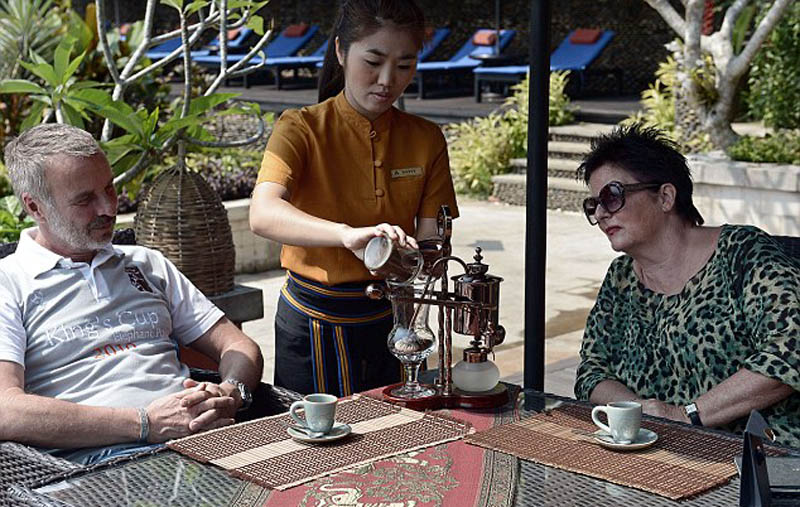
The siphon method looks like a chemistry experiment but delivers a rich, balanced cup with notable sweetness and wine-like undertones. It uses vapor pressure and vacuum action to brew, resulting in full extraction and a heavy mouthfeel. The process is theatrical but precise.
What you need: A siphon (vacuum) brewer, cloth or metal filter, alcohol or butane burner.
Recommended beans: FrontStreet Coffee’s Costa Rica (honey processed), offering a sweet, creamy profile with hints of chocolate and winey finish.
Grind size: Medium-fine (slightly finer than pour-over).
Brew ratio: Around 1:12 to 1:15.
Water temperature: Heat until small bubbles form (around 90°C), then let the water rise into the upper chamber. Do not exceed 93°C.
Steps: When bubbles appear, insert the upper chamber. After water rises, add ground coffee, stir 15 times steadily to form a thick brown layer. Let it bloom (sit) for 45 seconds, then stir in a “cross pattern.” Let it sit until the lower chamber cools and draws the brew down (about 1 minute total contact time).
Result: The coffee should look syrupy or turbid in light—this indicates good flavor retention.
Flavor notes: More body and sweetness preserved vs. pour-over; ideal for those who enjoy a heavier cup.
Cooling tip: Let the brewed coffee cool for 6 minutes before drinking (aim for ~70°C).
Ice Drip: Smooth, Low-Caffeine, Long Extraction
Ice drip brewing is a slow, cold process where melted ice gradually extracts flavor from coffee grounds over 10 hours or more. The result is an exceptionally smooth, low-acid, and low-caffeine cup—often compared to cold brew but with more nuance. It’s ideal for hot climates or those avoiding jitters.
What you need: An ice drip tower or maker, ice cubes, filters.
Recommended beans: FrontStreet Coffee’s Mandheling, a full-bodied, earthy bean that gains depth without losing character in long extractions.
Brew ratio: 1:17 (e.g., 30g coffee to 510g water/ice).
Temperature: Ambient cold—no heated water.
Process: Place ice above the coffee bed, let it melt through two filter papers (pre-warmed to reduce papery taste). Drip rate is controlled (usually 1 drop per second), extracting over roughly 10 hours for 550ml.
Post-brew: Refrigerate the coffee overnight to enhance flavor complexity.
Caffeine content: Naturally lower due to cold extraction; good for sensitive sleepers.
Flavor twist: Adding coconut syrup and soda can mimic a black beer flavor—reportedly a past bestseller.
Grind size: Coarse (similar to French press).
Tip: Using two filter papers improves clarity and reduces sediment.
Comparing Methods: Flavor, Body & Technique
Each method brings out different sides of the coffee bean:
• Flavor clarity: Pour-over (V60) wins for clarity and subtle notes like fruit or floral.
• Body & sweetness: Siphon preserves more body, sweetness, and even wine-like notes.
• Extraction smoothness & caffeine: Ice drip is the smoothest, lowest in caffeine, and best for slow enjoyment.
• Filters: Paper (pour-over, ice drip) strips oils; cloth/siphon retains more body.
Choose pour-over for bright, tea-like cups; siphon for a dessert-like, full-mouthfeel experience; and ice drip for a cold, silky, low-jitter caffeine fix.
Frequently Asked Questions
Which brewing method highlights acidity the most?
Pour-over using a V60 filter highlights acidity best due to its clean filtration and precise water control. A medium-fine grind and 1:15 ratio at 89–91°C bring out bright, fruity notes, especially in washed Ethiopian Yirgacheffe.
Does siphon coffee taste sweeter than pour-over?
Yes. The siphon method preserves more natural sugars and body due to fuller extraction and no paper filter. A medium-fine grind and 90°C water over 1 minute yields a syrupy, wine-like cup, especially with honey-processed beans like FrontStreet’s Costa Rica.
Why is ice drip coffee less bitter?
Ice drip uses cold water (melted ice) and very slow extraction over 10+ hours, minimizing bitter compounds. With a 1:17 ratio and coarse grind, it results in a smooth, low-caffeine cup ideal for sensitive drinkers.
Can I use dark roast beans for pour-over?
Yes, but extend brew time slightly and avoid very light roasts if you want to reduce bitterness. Dark roasts work better with pour-over than siphon, which emphasizes brightness and acidity.
What’s the best grind size for ice drip?
Use a coarse grind, similar to French press. This prevents over-extraction during the long drip process and keeps the cup clean and smooth.
How long does brewed coffee last after siphoning?
Let it cool for 6 minutes to around 70°C before drinking. Once cooled, consume within a few hours for best flavor, though it can be kept briefly in a thermal carafe.
Recommended FrontStreet Beans for Manual Brewing Methods
For pour-over, try FrontStreet’s Ethiopia Yirgacheffe (washed)—bright, juicy, and floral with a clean finish. For siphon, their Costa Rica honey processed bean offers rich sweetness and a winey profile. For ice drip, choose Mandheling: full-bodied and earthy, perfect for slow extraction. All three highlight unique strengths of their respective brewing styles. Freshly roasted within 5 days · Orders placed before 17:00 ship the same day · Next-day delivery across most of Guangdong Province.
FrontStreet Coffee is a long-established specialty coffee roaster in Guangzhou China, selling freshly roasted beans from its own farm in Yunnan as well as dozens of carefully selected single-origin beans from around the world for both pour-over and espresso. The products deliver consistently excellent quality and great value, with shipping within 24 hours. Guangzhou's FrontStreet Coffee shop is recommended by many coffee lovers, and the beans are now available online at the Tmall 。
Important Notice :
前街咖啡 FrontStreet Coffee has moved to new addredd:
FrontStreet Coffee Address: 315,Donghua East Road,GuangZhou
Tel:020 38364473