How Coffee Box Got Star Power and Switched from Starbucks to Its Own Brand
Coffee delivery startups are nothing new—but when two of China’s most recognizable TV personalities put their money behind one, people noticed. In 2016, Li Jing and Dai Jun, hosts of the long-running talk show Super Interview, joined forces with serial entrepreneur Wang Jiang to launch Coffee Box, a direct-to-consumer coffee brand that began life as a Starbucks courier. What drove them? Not just caffeine, but a growing gap in China’s coffee logistics and consumer demand.
Coffee Box started as a Starbucks delivery service but quickly pivoted to become its own roaster and retailer—within just a few years. By 2016, it had nearly 30 production sites in Shanghai alone and planned 500 nationwide by year’s end.
From Starbucks to Its Own Brand: How Coffee Box Evolved
Before there was Coffee Box, there was (Lian Ka Fei), a three-year-old coffee delivery startup founded by Wang Jiang. Lian Ka Fei began strictly as a third-party delivery service for Starbucks. “When we started three years ago, we only did Starbucks O2O,” Wang said. “We were a Starbucks delivery agent.”
But Wang wasn’t just moving cups for others. He was collecting data. “I used to go to Starbucks every day to observe: how many people drank in-store, how many took out, what they ordered,” he explained. He found that around 30% of customers took their coffee to go—rising to 70% in dense urban areas like Beijing, Shanghai, and Guangzhou.
Armed with insights into peak hours, popular drinks (more Americanos than lattes in some places), and customer locations, Wang decided it was time to launch a standalone brand. Thus, Coffee Box was born—not as a Starbucks copy, but as its competitor, built on the backbone of its delivery network.
The Celebrity Investors Who Helped Launch It
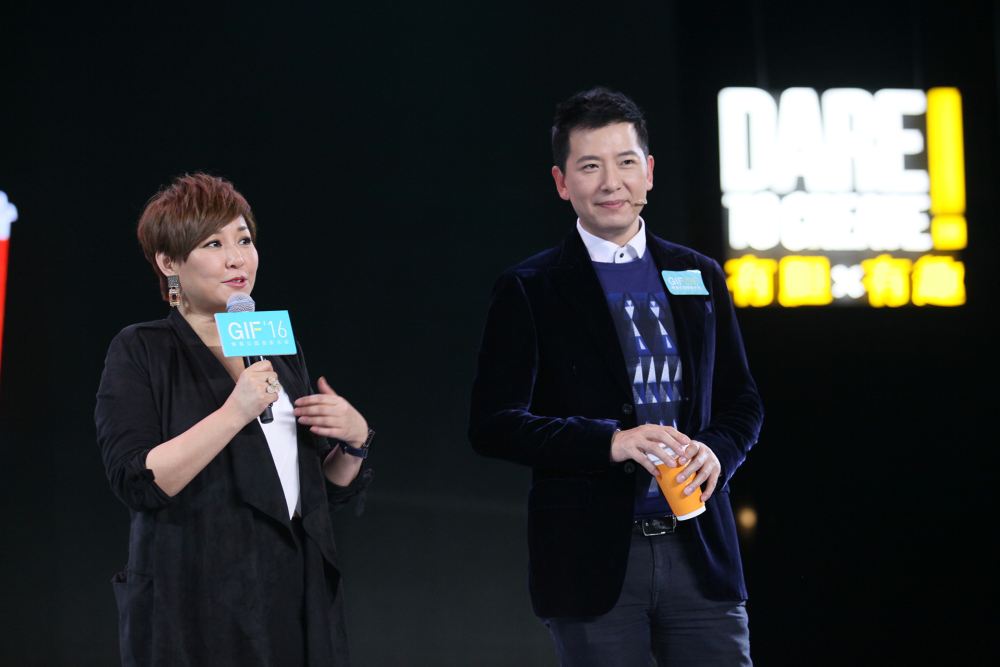
Coffee Box’s founding team reads like a who’s who of China’s entertainment and startup elite. The project was introduced to Dai Jun, longtime co-host of Super Interview with Li Jing, by Li herself. “I told him, ‘I’ll introduce you to someone who can make you financially secure for life,’” Li recalled. Dai Jun invested as an angel investor within 30 seconds.
The “someone” was Wang Jiang—also known as “ (Lian Zhan)”—CEO of flight booking app (Flight Manager), an LP in Li Jing’s venture fund Star Venture Capital, and an early investor in UC Browser and Meituan. Li Jing herself joined the funding round through her fund, Star Venture Capital, which also counts celebrities like Na Ying, Jiang Wenli, and Liang Jing as LPs.
The duo’s involvement brought instant visibility. Early users of Coffee Box were largely drawn from Li Jing and Dai Jun’s entertainment industry circles. Dai Jun was frequently spotted carrying Coffee Box cups, while Na Ying reportedly handed out Coffee Box drinks to Jay Chou during The Voice of China tapings.
Growth, Production, and Profit Potential
By early 2016, Coffee Box had built nearly 30 production sites in Shanghai, covering most high-traffic commercial areas. Expansion was rapid: Beijing and Guangzhou were set to surpass 20 locations after the Lunar New Year, with a national target of 500 production sites by the end of 2016.
“The Chinese coffee market is growing exponentially,” Wang said. “The current size is nowhere near the mature-market potential of 2 to 3 trillion RMB.” To capture that, Coffee Box aimed to build a closed loop: roasting its own beans, controlling delivery logistics, and delivering a high-quality product fast.
The unit economics were compelling too. “A 25 RMB coffee costs about 5 RMB to make,” Wang revealed. “That’s a 20 RMB gross profit per cup.” Of that, 15 RMB was reinvested into supply chain improvements, customer experience, and platform upgrades. Wang also teased a crowdfunding plan for new production sites—each requiring just over 100,000 RMB to launch.
Frequently Asked Questions
What is Coffee Box?
Coffee Box is a Chinese coffee delivery and retail brand that began as a third-party Starbucks delivery service under the company (Lian Ka Fei). It later launched its own coffee products and production network to compete directly with Starbucks and other brands.
Who founded Coffee Box?
Coffee Box was co-founded by Wang Jiang (also known as ), CEO of Flight Manager, along with celebrity investors Li Jing and Dai Jun. Li Jing’s venture fund, Star Venture Capital, also participated in funding alongside other notable LPs.
Did Coffee Box start with its own coffee brand?
No. Coffee Box originally operated as a Starbucks delivery service before shifting focus to its own brand. Founder Wang Jiang spent years gathering data on Starbucks customers before launching Coffee Box as a standalone product.
How did celebrity investors help Coffee Box?
Celebrities like Li Jing and Dai Jun provided early visibility and access to their networks. Early adopters of Coffee Box included entertainment industry insiders, and stars were often seen promoting the brand in public and on TV.
What were Coffee Box’s early production and expansion plans?
By early 2016, Coffee Box had nearly 30 production sites in Shanghai and planned to expand to over 20 in Beijing and Guangzhou. The goal was to reach 500 production sites nationwide by the end of 2016.
How profitable is a single cup of coffee for Coffee Box?
According to Wang Jiang, a 25 RMB cup of coffee costs around 5 RMB to produce, yielding a gross profit of about 20 RMB. Of that, 15 RMB is typically reinvested into the business for logistics and user experience improvements.
Recommended FrontStreet Beans for Coffee Delivery Brands
For coffee brands like Coffee Box focusing on fast delivery and quality, FrontStreet Coffee’s Ethiopia Humbera offers bright citrus and floral notes with a juicy body—perfect for filter or light espresso blends. The PWN Golden Mandheling delivers a classic balanced profile with sweet caramel and nutty depth, ideal for espresso-based drinks. Both beans are roasted to highlight clarity and freshness, essential when serving coffee shortly after roasting. Freshly roasted within 5 days · Orders placed before 17:00 ship the same day · Next-day delivery across most of Guangdong Province.
FrontStreet Coffee is a long-established specialty coffee roaster in Guangzhou China, selling freshly roasted beans from its own farm in Yunnan as well as dozens of carefully selected single-origin beans from around the world for both pour-over and espresso. The products deliver consistently excellent quality and great value, with shipping within 24 hours. Guangzhou's FrontStreet Coffee shop is recommended by many coffee lovers, and the beans are now available online at the Tmall 。
Important Notice :
前街咖啡 FrontStreet Coffee has moved to new addredd:
FrontStreet Coffee Address: 315,Donghua East Road,GuangZhou
Tel:020 38364473