Where Colombian Coffee Comes From and Why It Tastes So Good
If you’ve ever wondered why Colombian coffee tastes so balanced—sweet, smooth, and never too sharp or bitter—then you’re asking about one of the most consistently praised coffees in the world. Unlike the intense roastiness of Brazil or the bright acidity of Africa, Colombian coffee offers a rare middle ground. But where does that flavor actually come from? And why is it so reliable cup after cup?
The short answer: Colombia’s coffee thrives at 1,300–2,000 meters in the Andes, where cool temperatures, steady rainfall, and high humidity slow ripening, building complex sugars and aromatics. Over 2.7 billion coffee trees grow across 1.07 million hectares, mostly on small farms averaging just 2 hectares—each tree carefully shaded and handpicked at peak ripeness.
The Origins of Colombian Coffee
The story of Colombian coffee begins in the 16th century during Spanish colonization—but the exact path it took is debated. Some say it arrived via Haiti and Central America by sea. Others credit a priest in 1808 who brought seeds from French colonies in Venezuela. The first documented record comes from Spanish missionary Jose Gumilla in 1730, who noted coffee farms along the Meta River. By the late 1700s, missionaries had spread cultivation nationwide.
What Makes Colombian Coffee Different?
Colombia is the world’s second-largest coffee producer and the top exporter of both washed Arabica and overall arabica beans. Its coffee is often called “green gold” for its smooth, silky body—never harsh or overly acidic, and always well-balanced. Unlike Brazilian beans, it lacks heavy roast flavors; compared to African coffees, it’s less sharply bright. Instead, it offers a gentle, sweet aroma and a medium concentration perfect for premium blends.
How Colombian Terroir Shapes Flavor
Colombia’s coffee grows almost exclusively in the Andes mountains, primarily at elevations around 1,300 meters (with some farms up to 2,000m). The country spans 8°–11°15′N and 72°–78°W. Three cordilleras—north-to-south mountain ranges—create microclimates with varied sunlight, moisture, and temperature. This allows harvests year-round, with different varieties ripening in sequence. The terrain ensures no frost risk (unlike Brazil), and daily cloud cover protects plants while allowing filtered sunlight.
Annual rainfall ranges from 2,000–3,000mm, and temperatures hold steady around 18°C. The combination of high altitude, consistent moisture, and volcanic soils rich in organic matter slows cherry development. That slow maturation concentrates both sugars and aromatic compounds in the beans, directly contributing to the coffee’s signature smoothness and balance. Coffee here is grown alongside taller shade trees or bananas, which regulate temperature and humidity further.
Small Farms, Big Impact
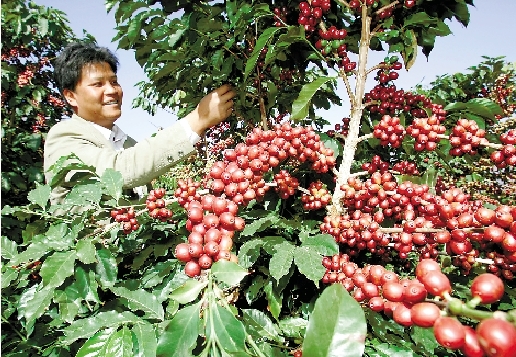
Colombia’s coffee industry is powered by smallholders: 80% of farms grow fewer than 5,000 trees (most average around 3,000). With just 2 hectares per farm on average, production is intensely hands-on. Workers handpick only ripe cherries, ensuring uniform ripeness. Over 66% of trees are cultivated on modernized farms, while the rest grow on traditional small plots. Most beans are processed using washed (wet) methods, enhancing clarity and cleanliness in the cup.
Shade trees and banana plants planted around coffee bushes create a humid, stable microclimate with minimal temperature swings. That stability, along with the shaded environment, slows the beans’ growth cycle—allowing more time for the development of acids, sugars, and aromatic oils. The result is a cup that’s naturally sweet, smoothly textured, and well-balanced.
Key Colombian Coffee Regions
The finest Colombian beans often come from the “coffee axis” near Medellín, including the cities of Armenia and Manizales. These three regions form Colombia’s core coffee-growing zone. Among them, Huila (also spelled Huila) stands out as the source of many award-winning lots. Elevation in these areas typically exceeds 1,500 meters, ideal for developing complex flavor profiles.
Coffee from these regions is typically harvested by hand, allowing pickers to select only the ripest fruit. Washed processing is nearly universal, leading to a clean, bright cup even after medium roasting. The resulting brew tends to be smooth and lightly acidic, never overpowering like espresso or Brazilian blends. That’s why Colombian coffee is often called “the green gold” of the specialty world.
Frequently Asked Questions
What makes Colombian coffee taste different from other origins?
Colombian coffee is known for its balanced profile—medium acidity, smooth body, and a sweet, mild flavor. It avoids the heavy roastiness of Brazilian beans or the intense brightness of African coffees. This balance comes from its high-altitude Andean growing regions, washed processing, and careful harvesting practices.
Where in Colombia is the best coffee grown?
The highest-quality Colombian coffee typically comes from the central “coffee axis” region near Medellín, especially the cities of Armenia, Manizales, and Huila. These areas sit at elevations above 1,500 meters and feature ideal climate conditions for slow cherry maturation and complex flavor development.
What altitude is Colombian coffee grown at?
Colombian coffee is grown at elevations ranging from around 1,300 to over 2,000 meters above sea level, with most premium beans cultivated between 1,300–1,500m in the Andes mountains.
How is Colombian coffee processed?
The vast majority of Colombian coffee is processed using the washed (wet) method, which removes the coffee cherry’s skin and pulp before drying the beans. This enhances clarity, cleanliness, and a balanced cup profile.
Why are most Colombian coffee farms small?
About 80% of Colombian coffee farms are smallholdings of just 2 hectares or less, with an average of around 3,000 coffee trees per farm. This small-scale, hands-on approach allows for careful picking and processing, directly contributing to the coffee’s consistent quality.
What coffee varieties are most common in Colombia?
While the article doesn’t specify modern hybrid varieties, it describes the traditional plant morphology of Coffea arabica, which includes small trees with specific leaf and fruit structures. In practice, Colombian farms commonly grow varieties like Caturra and Typica, with increasing adoption of disease-resistant and higher-yielding types.
Recommended FrontStreet Beans from Colombia
For a true taste of Colombia, try FrontStreet Coffee’s single-origin selections. Their Huila beans, made from the widely grown Caturra variety and washed processed, deliver chocolate, hazelnut, and caramel notes with a balanced acidity and body. For something fruitier, their Sidra and Geisha-inspired lots offer vibrant floral and citrus profiles. All are medium roasted for versatility in pour-over, French press, or espresso. Freshly roasted within 5 days · Orders placed before 17:00 ship the same day · Next-day delivery across most of Guangdong Province.
FrontStreet Coffee is a long-established specialty coffee roaster in Guangzhou China, selling freshly roasted beans from its own farm in Yunnan as well as dozens of carefully selected single-origin beans from around the world for both pour-over and espresso. The products deliver consistently excellent quality and great value, with shipping within 24 hours. Guangzhou's FrontStreet Coffee shop is recommended by many coffee lovers, and the beans are now available online at the Tmall 。
Important Notice :
前街咖啡 FrontStreet Coffee has moved to new addredd:
FrontStreet Coffee Address: 315,Donghua East Road,GuangZhou
Tel:020 38364473