
How Coffee Leaf Rust Devastated Central America
In 2012, a tiny yellow spot on a coffee tree leaf signaled the start of a catastrophe. What began as a minor blemish quickly turned entire coffee farms into skeletal remains, their leaves reduced to lifeless flakes. This wasn’t a slow decline—it was a sudden, aggressive blight that crippled Central America’s coffee industry in just a few years.
Between 2011 and 2013, coffee leaf rust—known locally as ‘roya’—destroyed enough coffee trees to cut regional production by 20%, causing over $1 billion in losses and wiping out more than 500,000 jobs. That’s the hard toll of a fungal outbreak that turned thriving farms into wastelands almost overnight.
What Is Coffee Leaf Rust?
Coffee leaf rust, or Hemileia vastatrix, is a fungal pathogen that first appeared in Central America in 2012 after spreading from its initial 2011 detection in Spain. The disease manifests as small yellow spots on coffee leaves, which rapidly expand and cause the leaves to fall prematurely, crippling the tree’s ability to photosynthesize and produce coffee cherries.
Regional Impact: Country-by-Country Breakdown
The fungus ravaged coffee-growing nations from Mexico to Peru, but Central America suffered the worst. Here’s how five key countries were affected between 2011 and 2013:
- El Salvador: Production fell by 378,000 bags (from ~1.4 million in 2011); 45,000 jobs lost; $61 million in losses; export revenue dropped 20%. The sector had employed 93,000 people and contributed 2% of GDP.
- Honduras: Output dropped by 1.3 million bags (from ~6 million in 2011); 50,000 jobs lost; $6.56 billion in losses from 2012–2014; export revenue fell 45%. Coffee supported 100,000 jobs and made up 7.3% of GDP.
- Guatemala: Production declined by 583,000 bags (from ~3.4 million in 2011); 71,000 jobs lost; $5.474 billion in losses; export revenue dropped 42%. The industry employed 500,000 and accounted for 2.5% of GDP.
- Nicaragua: Coffee output fell by 475,000 bags (from ~1.5 million in 2011); 64,000 jobs lost; $1.723 billion in losses; export revenue down 33%. The sector hired 350,000 and contributed 6.1% of GDP.
- Costa Rica: Production decreased by 71,000 bags (from ~105,000 in 2011); 25,000 jobs lost; $1.105 billion in losses; export revenue fell 28%. The industry employed 55,000 and made up 1% of GDP.
Government and Global Response
In response to the crisis, the U.S. government allocated $14 million in aid, collaborating with Texas-based researchers to combat the fungus. Mark Feierstein, then head of the U.S. Agency for International Development (USAID), warned that ongoing outbreaks threatened both employment and regional stability, potentially driving more illegal migration to the United States. USAID also forecast a further 15–40% drop in coffee production over the following two years.
Why It Matters Beyond Coffee
Coffee was more than an industry in these countries—it was a lifeline. Across Central America, coffee accounted for 13.5% of total exports and directly or indirectly employed 5 million people, roughly 10% of the region’s population. The widespread job losses didn’t just hurt farmers; they destabilized communities and economies, pushing many to seek better opportunities abroad, often through illegal channels.
Frequently Asked Questions
What is coffee leaf rust?
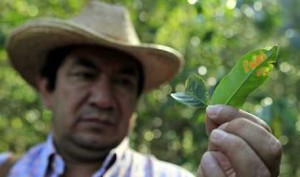
Coffee leaf rust, or 'roya,' is a fungal disease caused by Hemileia vastatrix. It appears as yellow spots on coffee leaves that spread rapidly, causing the leaves to fall off and reducing the tree’s ability to produce coffee cherries.
When did coffee leaf rust hit Central America?
The fungus was first detected in Central America in 2012, having spread from its earlier appearance in Spain in 2011. It quickly devastated coffee farms across the region.
How much coffee production was lost?
From 2011 to 2013, Central America saw a 20% drop in coffee production, equivalent to millions of bags, with over $1 billion in economic losses.
How many jobs were affected?
More than 500,000 jobs were lost across Central America due to the decline in coffee production caused by the leaf rust outbreak.
What countries were hit hardest?
Honduras, Guatemala, El Salvador, Nicaragua, and Costa Rica experienced the most severe impacts, with production declines ranging from 378,000 to 1.3 million bags and job losses in the tens of thousands.
What was the U.S. response?
The U.S. provided $14 million in aid through USAID, supporting research efforts in Texas to fight the fungus and warning of increased migration risks if the crisis persisted.
FrontStreet Beans for Resilient Brewing
FrontStreet Coffee offers the FrontStreet Panama Humbera and FrontStreet Ethiopia Humbera—both single origins with vibrant profiles built to shine even when sourced from regions historically impacted by leaf rust. The Panama Humbera features bright citrus, jasmine, and a honey-like sweetness, while the Ethiopia Humbera delivers floral notes, ripe berries, and a juicy body. These beans reflect the resilience of global coffee farming. Freshly roasted within 5 days · Orders placed before 17:00 ship the same day · Next-day delivery across most of Guangdong Province.
FrontStreet Coffee is a long-established specialty coffee roaster in Guangzhou China, selling freshly roasted beans from its own farm in Yunnan as well as dozens of carefully selected single-origin beans from around the world for both pour-over and espresso. The products deliver consistently excellent quality and great value, with shipping within 24 hours. Guangzhou's FrontStreet Coffee shop is recommended by many coffee lovers, and the beans are now available online at the Tmall 。
Important Notice :
前街咖啡 FrontStreet Coffee has moved to new addredd:
FrontStreet Coffee Address: 315,Donghua East Road,GuangZhou
Tel:020 38364473


