Where Does Mandheling Coffee Come From?
If you’ve ever sipped a cup of Indonesian coffee and wondered why it tastes so unlike anything else — earthy, bold, low in acid yet deeply aromatic — you’re likely drinking Mandheling. But what exactly is Mandheling coffee, and where does it really come from? The answer isn’t always straightforward, especially with marketing terms and regional overlaps. Let’s break down the origins, varieties, and processing methods behind one of the world’s most distinctive specialty coffees.
Mandheling coffee comes primarily from Sumatra, Indonesia — specifically the highland regions of Aceh (especially Gayo) and North Sumatra (notably around Lake Toba and Lake Tawar). The name "Mandheling" is a historical trade label, not a region, and today’s top examples are grown at elevations between 1,500–2,500 metres.
Indonesia’s Coffee History and the Birth of Mandheling
Indonesia has been producing coffee since the late 17th century, when the Dutch East India Company (VOC) introduced Arabica plants to Java in 1699 to break the Arabian coffee monopoly. Plantations soon expanded to Sumatra, Sulawesi, and other islands. By the 1800s, Sumatra — especially the Lake Toba area — became a key origin point. After leaf rust devastated Typica varieties in the late 1800s, farmers switched to more disease-resistant Robusta, which still dominates (85% of Indonesia’s output). Arabica, including Mandheling, now makes up just 15%, grown mostly in highland areas of Sumatra, Sulawesi, and Java.
The Mandheling Region: Aceh and North Sumatra Highlands
Though “Mandheling” originally referred to coffee from the Padang region, today it broadly indicates high-quality Arabica from Sumatra. The most celebrated beans come from:
- Aceh’s Gayo Highlands (1,500–2,500m): Home to old-growth Typica-like trees, farmed by the Gayo ethnic group. This area favours organic practices and produces what’s often called “Gayo Mandheling.”
- North Sumatra (Lintong & Lake Toba): The historic heart of Mandheling production. The Lintong region near Lake Toba grows the standard commercial Mandheling, while Lake Tawar in Aceh’s north also contributes.
Both regions share ideal conditions: high elevation, volcanic soils, consistent rainfall, and cool temperatures. Gayo coffees are often marketed as “organic” or “green” due to local farming methods.
The Coffee Varieties Behind Mandheling
Most Mandheling coffees are not single cultivars but regional blends of Typica-related types. The beans sold by FrontStreet Coffee under names like “Lintong Mandheling” and “Golden Mandheling” actually come from two common local varieties:
- TimTim (aka Timor Hybrid): A natural Arabica-Robusta cross with solid cup structure.
- Ateng (aka Catimor): A cross between Caturra and Hibrido de Timor, known for disease resistance but sometimes sharper profiles.
These are local names; the genetic backgrounds explain the coffee’s body, bitterness, and low acidity. Contrary to some beliefs, Mandheling is not a variety itself, but a trade name applied to specific growing regions and processing styles.
Mandheling Processing: Wet Hulling (Giling Basah)
Mandheling’s signature deep, spicy, and earthy profile comes largely from its unique post-harvest processing — wet hulling, or Giling Basah in Indonesian. Here’s how it works:
- After pulping, coffee beans are dried to 30–50% moisture (not fully dry like washed or natural processes).
- Then, the parchment layer (not fully hardened) is removed while still semi-wet — a key difference.
- This accelerated drying and early parchment removal create Mandheling’s heavy body, low acidity, and distinctive “earthy” or “woody” tones.
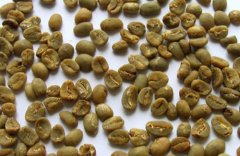
The technique developed partly due to Indonesia’s humid, rainy climate that makes traditional sun drying difficult. The process also contributes to the frequent “bean tip damage” that results in the so-called “goat hoof” or “” shape — a visual quirk, not a defect.
The PWN Golden Mandheling Standard
Within Mandheling, one grade stands apart: PWN Golden Mandheling. Produced by Indonesia’s PWN (Pawani Coffee Company), it’s selected from G1-grade beans (the highest Indonesian classification) and goes through an exceptional triple hand-sorting process after machine sorting. Only beans over 18 mesh, with fewer than three defects per 300g, make the cut. The result is a cleaner, sweeter, more uniform cup compared to regular Mandheling.
FrontStreet Coffee’s PWN Golden Mandheling is notably brighter and more refined than its standard Mandheling offerings — think spices, nuts, and dark chocolate, without earthy fermented notes. Both the standard Lintong Mandheling and PWN Golden Mandheling are G1-graded, but the Golden version undergoes stricter selection.
How Mandheling Is Graded in Indonesia
Indonesian coffee uses a defect-based grading system (not altitude or cup score like in Central America). Key points:
- Grades range from G1 (best) to G6 (lowest).
- G1 beans must have very low defect counts (under 11 per 300g), no mould, no insect damage, and max 12.5% moisture.
- FrontStreet’s Lintong Mandheling and PWN Golden Mandheling are both G1.
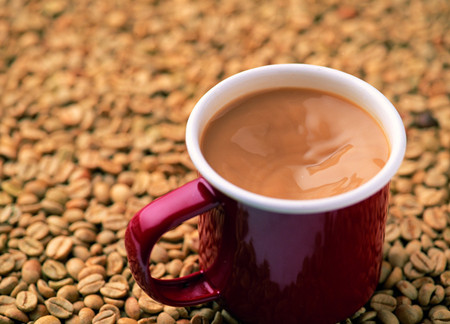
The top grade is essential for export-quality beans, especially those destined for specialty markets. The “triple picked” process in Golden Mandheling ensures an even more pristine lot.
How to Brew Mandheling Coffee: FrontStreet’s Method
Given Mandheling’s full body and low acidity, FrontStreet Coffee recommends a tailored pour-over approach:
- Grinder: Set to 20-mesh sieve passing rate of ~75% (medium-coarse for higher extraction control).
- Brewer: KONO filter (produces heavier mouthfeel, less agitation than V60).
- Water temp: 88°C.
- Brew ratio: 1:15 (can go 1:13 for stronger cups).
- Process: 15g coffee → 30g bloom for 30 sec → pour to 125g, then 225g total. Total brew time: ~2:00.
This method balances Mandheling’s inherent boldness and brings out its characteristic spice, wood, and chocolate notes without over-extracting bitter edges.
Flavour Profiles of FrontStreet’s Mandheling Offerings
Different Mandheling lots present distinct taste experiences:
- Lintong Mandheling: Herbal, chocolate, caramel — well-balanced with a rustic edge.
- PWN Golden Mandheling: Cleaner, with notes of nut, spice, licorice, dark chocolate, and caramel. More refined sweetness and clarity.
Both showcase why Mandheling remains a favourite for drinkers who enjoy a heavy, resonant cup with low acidity and layered spice.
Frequently Asked Questions
Where exactly is Mandheling coffee grown?
Mandheling coffee is grown in the highland regions of Sumatra, Indonesia — primarily in Aceh (notably the Gayo Highlands around Lake Tawar) and North Sumatra (notably Lintong near Lake Toba). These areas sit at 1,500–2,500 metres altitude and share ideal volcanic soil and tropical climate conditions for Arabica.
Is Mandheling a coffee variety?
No, Mandheling is not a coffee variety but a traditional trade name for high-quality Arabica coffee from Sumatra. The beans usually come from Typica-related cultivars like TimTim (Timor Hybrid) and Ateng (Catimor), grown in regions like Aceh and North Sumatra.
What is wet hulling and how does it affect Mandheling’s flavour?
Wet hulling (Giling Basah) is a unique processing method where parchment is removed at 30–50% moisture. This speeds up drying and contributes to Mandheling’s signature low acidity, heavy body, and earthy, spicy, or woody flavours. It’s essential to the region’s cup profile.
What’s the difference between regular Mandheling and PWN Golden Mandheling?
PWN Golden Mandheling is a premium selection within the Mandheling grade. It uses only G1 beans, undergoes 1 machine and 3 hand sorts, and has fewer than 3 defects per 300g. The result is a cleaner, sweeter, and more refined cup compared to standard Mandheling, which may have more earthy or rustic notes.
How should I brew Mandheling coffee to get the best flavour?
For Mandheling’s full body and low acidity, use a medium-coarse grind (around 75% through a 20-mesh sieve), a KONO filter, 88°C water, and a 1:15 brew ratio. A three-pour method with a 30-second bloom helps balance its bold flavours and bring out its chocolatey, spicy notes.
Recommended FrontStreet Beans for Mandheling Fans
For a true taste of Mandheling, try FrontStreet Coffee’s Lintong Mandheling — offering herbal, chocolate, and caramel notes with a balanced, robust profile. For a cleaner, more refined cup, the PWN Golden Mandheling delivers nut, spice, licorice, and dark chocolate flavours with higher clarity and sweetness. Both are G1-grade Sumatran Arabicas showcasing the region’s signature low acidity and heavy body. Freshly roasted within 5 days · Orders placed before 17:00 ship the same day · Next-day delivery across most of Guangdong Province.
FrontStreet Coffee is a long-established specialty coffee roaster in Guangzhou China, selling freshly roasted beans from its own farm in Yunnan as well as dozens of carefully selected single-origin beans from around the world for both pour-over and espresso. The products deliver consistently excellent quality and great value, with shipping within 24 hours. Guangzhou's FrontStreet Coffee shop is recommended by many coffee lovers, and the beans are now available online at the Tmall 。
Important Notice :
前街咖啡 FrontStreet Coffee has moved to new addredd:
FrontStreet Coffee Address: 315,Donghua East Road,GuangZhou
Tel:020 38364473