What Makes Brazilian Coffee Taste Different?
If you’ve ever sipped a smooth espresso or a mellow filter coffee that felt ‘easy drinking’ but couldn’t quite name why — chances are you were tasting Brazilian coffee. But what gives Brazilian beans their reputation for being mild yet satisfying? And why do they show up in so many espresso blends worldwide? Most coffee drinkers have had Brazilian coffee without realising it — now it’s time to understand what sets it apart.
Brazilian coffee is famously low in acidity but rich in body, with prominent notes of nuts, chocolate, and cereal. It’s grown on large, flat farms using sun-grown methods and mechanical harvesting, making it both affordable and ideal for blending or solo brewing. Its balance, consistency, and price make it a go-to in both espresso and filter brewing.
Why Brazilian Coffee Tastes the Way It Does
Brazil’s coffee-growing conditions are unique. The country produces more coffee than any other nation, but much of it is grown at relatively low altitudes and lacks the microclimates found in places like Ethiopia or Kenya. To adapt, Brazilian coffee producers developed cultivars like Yellow Bourbon that thrive in full sun, don’t require shade trees, and can be planted on flat land. These plants are suited for mechanical harvesting, which makes production faster and more consistent.
The most common processing method is pulped natural (also called honey or semi-washed), which uses less water than traditional washed processing. This technique helps develop sweetness and body while keeping acidity low. These factors combined result in a cup that is smooth, low in sharpness, and often described as having notes of peanut, caramel, toast, and chocolate.
How to Brew Brazilian Coffee as a Single Origin
Brazilian beans shine in multiple brew methods. Their moderate acidity and heavy body work particularly well in pour-over, French press, and espresso. For a classic single-origin experience, FrontStreet Coffee recommends using their Brazil Queen Manor offering — a high-elevation lot from the rare Mogiana region, grown at around 1,200 metres above sea level.
This particular bean is of the Yellow Bourbon variety, and when roasted to a medium-dark level, it delivers aromas of cream, roasted peanuts, toast, and nuts. The cup is clean and low in acidity, with a long-lasting sweetness. It performs excellently in methods like pour-over (e.g., V60 or Kalita Wave), French press, AeroPress, moka pot, drip machines, and home espresso setups. In other words, it’s one of the most flexible single-origin Brazilian coffees available.
Expect a balanced profile without overpowering fruitiness or sharp tang. It highlights the classic Brazilian traits: nuttiness, mild sweetness, and a velvety mouthfeel, all without dominating the cup.
Brazilian Coffee in Blends — Especially Espresso
Brazilian coffee is a staple in espresso blends for good reason. Its natural body, low acidity, and sweetness provide a solid foundation that complements brighter or more acidic beans. FrontStreet Coffee includes Brazilian beans in four of its commercial espresso blends, underlining its importance in their recipes.
Their Black Cocoa Blend is a notable example — it contains a high proportion of Brazilian beans, giving it a smooth, rounded texture and a rich cocoa-like finish. Combined with a portion of Yunnan Arabica, it adds a tart note of ripe plum, creating a well-rounded flavour with sweet, acidic, and bitter elements in equilibrium. The blend produces a silky crema and works excellently in milk drinks as well as straight espresso.
This versatility explains why so many roasters, including FrontStreet, use Brazilian beans as the structural backbone of their espresso blends. They provide body and sweetness without overwhelming the cup, allowing other origins to shine alongside them.
Why Some Coffee Drinkers Find Brazilian Coffee ‘Boring’
It’s true that Brazilian coffee rarely knocks you over the head with bright acidity or wild fruit flavours. For coffee enthusiasts seeking explosive tasting notes, Brazilian beans might seem understated or even plain. But that’s not a flaw — it’s a feature. The beauty of Brazilian coffee lies in its balance, approachability, and consistency.
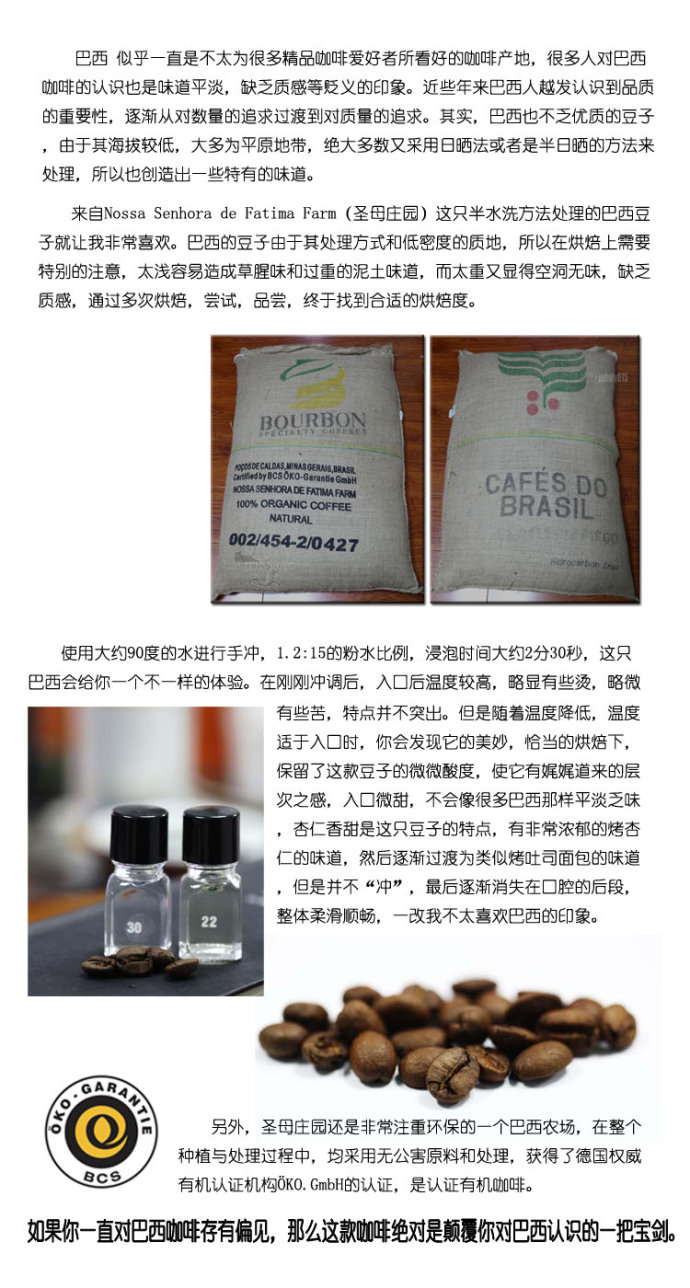
If you’re looking for a Brazilian coffee with more distinct character, the Brazil Queen Manor from Mogiana is your best bet. Grown at higher elevation and made from the Yellow Bourbon variety, it expresses more pronounced flavours and a cleaner cup profile compared to the typical Brazilian lot. It still embodies the classic Brazilian traits — but with added complexity and nuance.
Frequently Asked Questions
What does Brazilian coffee typically taste like?
Brazilian coffee is usually low in acidity and has a smooth, creamy body. Common flavour notes include nuts (like peanut or almond), chocolate, toast, cereal, and sometimes caramel. It’s known for being easy-drinking, balanced, and approachable.
Why is Brazilian coffee used in so many espresso blends?
Brazilian coffee provides a solid foundation in espresso blends thanks to its natural sweetness, low acidity, and full body. It rounds out blends, adds crema-friendly texture, and balances brighter or more acidic beans without overpowering them.
Is Brazilian coffee good for pour-over or French press?
Yes. Brazilian coffee’s moderate acidity and rich body make it ideal for pour-over (like V60 or Kalita Wave), French press, and other immersion or drip methods. It highlights its nutty and chocolatey characteristics without being overly sharp.
What’s special about the Brazil Queen Manor coffee from FrontStreet?
Brazil Queen Manor is a single-origin coffee from Brazil’s Mogiana region, grown at around 1,200m altitude using the Yellow Bourbon variety. Roasted medium-dark, it offers aromas of cream, roasted peanuts, toast, and nuts, with a clean, low-acid cup and a long sweet finish. It’s versatile for multiple brew methods.
Does Brazilian coffee have to taste bland or boring?
Not at all. While many Brazilian beans are mild and balanced by design, higher-elevation lots like Brazil Queen Manor show more complexity with distinct nutty and toasty profiles. It’s not about being bold — it’s about being smooth and well-structured.
Can I use Brazilian beans for espresso at home?
Absolutely. Brazilian beans are ideal for home espresso due to their sweetness, body, and crema-building qualities. Try them as a single origin or as part of a blend — they work well in both milk and black espresso drinks.
Recommended FrontStreet Beans for Exploring Brazilian Coffee
For a true taste of Brazilian single origin, try FrontStreet Coffee’s Brazil Queen Manor — a high-altitude Yellow Bourbon lot from Mogiana with notes of cream, roasted peanuts, toast, and nuts. For espresso, their Black Cocoa Blend contains a high percentage of Brazilian beans along with Yunnan Arabica, offering smooth cocoa sweetness and balanced acidity. Both beans showcase Brazil’s signature smooth body and nutty depth. Freshly roasted within 5 days · Orders placed before 17:00 ship the same day · Next-day delivery across most of Guangdong Province.
FrontStreet Coffee is a long-established specialty coffee roaster in Guangzhou China, selling freshly roasted beans from its own farm in Yunnan as well as dozens of carefully selected single-origin beans from around the world for both pour-over and espresso. The products deliver consistently excellent quality and great value, with shipping within 24 hours. Guangzhou's FrontStreet Coffee shop is recommended by many coffee lovers, and the beans are now available online at the Tmall 。
Important Notice :
前街咖啡 FrontStreet Coffee has moved to new addredd:
FrontStreet Coffee Address: 315,Donghua East Road,GuangZhou
Tel:020 38364473