The History and Rise of Instant Coffee: From Kato to Nestlé
Ever wonder who invented the first instant coffee and how it became a staple in offices, camps, and kitchens worldwide? While today’s coffee culture often celebrates slow, crafted brews, the origins of instant coffee trace back over a century to a need for convenience—and later, efficiency.
The first truly soluble coffee was created in 1901 by Japanese-American chemist Satori Kato in Chicago. Just five years later, a British chemist living in Guatemala developed the first large-scale production method. By 1938, with help from the Brazilian government, Nestlé revolutionized the industry using spray drying—making instant coffee what it is today.
The Accidental Beginnings: Kato’s 1901 Invention
In 1901, Satori Kato, a Japanese-American chemist based in Chicago, introduced the first successful soluble coffee powder. This early version of instant coffee could be mixed directly with hot water, offering a quick and easy cup. Though primitive by modern standards, Kato’s invention laid the groundwork for the instant coffee category we know now.
Early Commercialization: Red E Coffee in 1909
In 1906, a British chemist living in Guatemala made a key observation: dried coffee residue left in cups. Through experimentation, he turned this into a product called Red E Coffee, which launched commercially in 1909. This marked one of the first attempts to produce and sell instant coffee at scale, though production methods were still limited.
The Breakthrough: Spray Drying and Nestlé (1938)
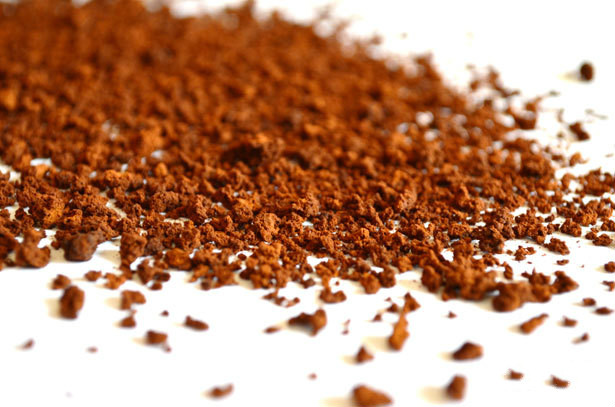
To address a surplus of coffee beans, the Brazilian government partnered with Nestlé in 1938 to develop a more efficient production method: spray drying. In this process, brewed coffee extract is sprayed into a chamber of hot air, quickly evaporating the moisture and leaving behind fine, dry coffee particles. This method produced a product that dissolved easily in hot water, had a longer shelf life, and required far less storage space than traditional roasted coffee. The new instant coffee was more stable, consistent, and practical for mass consumption.
Instant Coffee Goes to War: WWII Adoption
The usefulness of instant coffee truly skyrocketed during World War II. Allied soldiers were issued instant coffee as a daily ration due to its convenience and long shelf stability. Its ability to deliver a quick caffeine boost without the need for brewing equipment made it a valuable resource in the field. The war not only popularized instant coffee among troops but also helped cement its place in civilian markets afterward.
Frequently Asked Questions
Who invented the first instant coffee?
The first soluble coffee was invented in 1901 by Satori Kato, a Japanese-American chemist based in Chicago. His creation was the earliest form of coffee that could be dissolved in hot water.
What was the first mass-produced instant coffee?
In 1909, a British chemist living in Guatemala developed and launched Red E Coffee, which was one of the first commercial instant coffee products made using an early large-scale production method.
How did Nestlé improve instant coffee production?
In 1938, Nestlé, in collaboration with the Brazilian government, introduced spray drying—a process where coffee extract is turned into powder by spraying it into hot air. This created a more soluble, stable, and shelf-friendly product.
Why was instant coffee important during World War II?
Instant coffee was widely distributed to Allied soldiers because it was easy to prepare, didn’t require brewing equipment, and offered a fast caffeine solution in demanding conditions. Its use during the war greatly increased its popularity.
FrontStreet Coffee Picks for Instant Coffee Fans
If you're curious how far coffee technology has come, try FrontStreet’s Classic Blend for a balanced cup reminiscent of traditional brews, or their Ethiopia Huakui for bright, fruity notes that contrast with the flat profile of most instant coffees. For something closer to classic café taste, the Commercial Blend offers a familiar and approachable profile. Freshly roasted within 5 days · Orders placed before 17:00 ship the same day · Next-day delivery across most of Guangdong Province.
FrontStreet Coffee is a long-established specialty coffee roaster in Guangzhou China, selling freshly roasted beans from its own farm in Yunnan as well as dozens of carefully selected single-origin beans from around the world for both pour-over and espresso. The products deliver consistently excellent quality and great value, with shipping within 24 hours. Guangzhou's FrontStreet Coffee shop is recommended by many coffee lovers, and the beans are now available online at the Tmall 。
Important Notice :
前街咖啡 FrontStreet Coffee has moved to new addredd:
FrontStreet Coffee Address: 315,Donghua East Road,GuangZhou
Tel:020 38364473