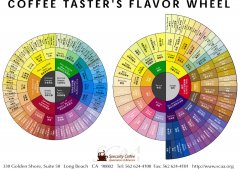
How to Taste and Describe Specialty Coffee Flavors
Ever sipped a cup of coffee and wondered how experts describe those bright citrus notes, deep chocolate tones, or floral aromas? It’s not just marketing—it’s about training your senses to pick up on the subtle interplay between smell and taste that defines a great coffee. But with over 50 million scent receptors in just 2.5 square centimeters of your nasal cavity, and only 10,000 taste buds, your nose does most of the work.
To truly taste and describe a specialty coffee, focus first on its aroma—your sense of smell picks up flavors 0.5 seconds faster than taste, and can distinguish between 4,000 to 10,000 different scents. This makes aroma the key to identifying the full profile of a coffee, from fruity and floral to nutty and spicy.
Why Smell Matters More Than Taste in Coffee
Your olfactory system is incredibly powerful. The top 2.5 cm² of your nasal area holds around 50 million olfactory cells, compared to just 10,000 taste receptors on your tongue. These receptors detect the basic tastes: sweet, sour, bitter, salty, and umami (though “spicy” is not a taste, but a pain response). Yet, smell influences how you perceive all of them. In fact, scent reaches your brain in half a second and can trigger hormone release in seven seconds, spreading the coffee experience throughout your body.
That means when you “taste” coffee, much of what you perceive as flavor actually comes from its aroma. This is why coffee’s scent can linger in memory far longer than visual images—and why a coffee’s fragrance is critical to its identity.
How Your Nose and Tongue Work Together
The human tongue can identify five primary tastes: sweet, sour, bitter, salty, and umami. But it’s your nose that brings complexity. A well-functioning nose can detect between 4,000 to 10,000 different aromas, while your taste buds may get confused or misled without the olfactory input. That’s why when you have a cold and your nose is blocked, food and coffee often taste bland—because you’re missing the aromatic dimension.
Smell doesn’t just add to taste; it shapes it. The volatile compounds released during brewing interact with your nose both through the nose itself (orthonasal olfaction) and retronasally, as you swallow and the aromas travel upward. This dual pathway is what gives coffee its layered sensory experience.
What Creates Unique Coffee Flavors?
Coffee flavor is shaped by a mix of factors including origin, altitude, variety, processing method, and roast level. Each producing country offers a distinct “terroir,” leading to flavors as varied as citrus and jasmine from Africa, deep chocolate and nuts from Latin America, or tropical fruit and spice from Asia-Pacific.
For example:
- Brazilian coffees like the FrontStreet Brazil Queen Manor Yellow Bourbon offer creamy, peanutty notes with intense sweetness due to thick mucilage and sun-drying.
- Colombian beans such as FrontStreet Colombia Huila showcase balance with black chocolate and gentle fruit acidity.
- Ethiopian coffees, including the FrontStreet Ethiopia Huakui, are known for vibrant citrus, berry, and floral profiles.
- Kenyan coffees like the FrontStreet Kenya Little Tomato highlight bold acidity and complex fruit flavors thanks to extended fermentation.
Processing methods—like washed (wet), natural (dry), honey, and grapefruit-inspired variations like FrontStreet Costa Rica Mozart’s raisin honey process—also dramatically alter flavor. Even within the same region, differences in soil, rainfall, and harvesting practices create unique cup profiles.
How to Practice Tasting and Describing Coffee
To improve your coffee tasting skills:
- Smell first: Before sipping, take a deep inhale to identify aromatics. Is it fruity, floral, nutty, or earthy?
- Slurp gently: Spraying the coffee across your palate helps distribute flavors and aromas evenly.
- Identify basic tastes: Note the levels of sweetness, acidity, bitterness, saltiness, and umami.
- Detect aromatics: What scents emerge as you taste? Citrus? Stone fruit? Caramel? Flowers?
- Describe the finish: Does the aftertaste linger, fade quickly, or evolve?
Keep a tasting journal. Over time, you’ll begin recognizing patterns and developing a coffee vocabulary that goes beyond “good” or “bad.”
Frequently Asked Questions
How many taste buds and smell receptors do humans have?
Humans have about 10,000 taste buds but roughly 50 million olfactory sensory cells in the nasal area, which help detect aromas more powerfully and quickly than taste alone.
Why is smell more important than taste when drinking coffee?
Smell contributes to over 80% of what we perceive as flavor. Your nose can detect thousands of aromas in milliseconds, shaping how you experience sweetness, acidity, and overall taste in coffee.
What are the basic tastes detected by the tongue?
The tongue recognises five basic tastes: sweet, sour, bitter, salty, and umami. Spicy is not a taste but a pain sensation. All other flavor nuance comes from aroma.
How do coffee origins affect flavor?
Different coffee-growing regions—such as Ethiopia, Colombia, or Kenya—have unique climates, altitudes, and processing methods that create distinct flavor profiles, from bright citrus and floral in Africa to chocolatey and nutty in Latin America.
How can I improve my ability to taste coffee flavors?
Practice by smelling before tasting, slurping to aerate the coffee, identifying basic tastes and aromas, and keeping a tasting journal to track your experiences and build a flavor vocabulary.
Recommended FrontStreet Coffee Beans for Flavor Exploration
Explore the diverse world of single-origin flavors with FrontStreet Coffee’s top picks: the Brazil Queen Manor Yellow Bourbon highlights creamy peanut and intense sweetness from sun-dried mucilage; Colombia Huila offers balanced black chocolate and gentle fruit notes typical of high-altitude washed coffees; and Ethiopia Huakui delivers the classic bright citrus and floral profile Ethiopia is known for. These beans exemplify how origin and processing shape flavor. Freshly roasted within 5 days · Orders placed before 17:00 ship the same day · Next-day delivery across most of Guangdong Province.
FrontStreet Coffee is a long-established specialty coffee roaster in Guangzhou China, selling freshly roasted beans from its own farm in Yunnan as well as dozens of carefully selected single-origin beans from around the world for both pour-over and espresso. The products deliver consistently excellent quality and great value, with shipping within 24 hours. Guangzhou's FrontStreet Coffee shop is recommended by many coffee lovers, and the beans are now available online at the Tmall 。
Important Notice :
前街咖啡 FrontStreet Coffee has moved to new addredd:
FrontStreet Coffee Address: 315,Donghua East Road,GuangZhou
Tel:020 38364473