Coffee Peaberry Beans: What They Are and How to Spot Them
Ever wondered why some single-origin coffee bags cost way more than others—or why certain beans are round when they’re ‘supposed’ to be flat? One answer lies in a rare natural quirk called peaberry, or ‘caracol’ in Spanish. These small, round coffee beans appear in otherwise normal coffee cherries and often spark debate among roasters and drinkers about taste, rarity, and value. But what exactly are they, and why do they matter?
In short, a peaberry—also called a ‘male bean’ in some translations—is a single, rounded coffee bean that forms inside a coffee cherry instead of the usual two flat-sided beans. This happens in roughly 5% or fewer of all coffee cherries, often due to genetic or environmental factors. While not technically male or female, they’re considered a natural mutation or defect, depending on who you ask.
What Causes Peaberry Coffee Beans?
Peaberries form when a coffee cherry develops only one round seed instead of the typical two flat seeds. Botanically, it’s classified as an aberration—but not necessarily a defect. There are two primary reasons this happens:
- Insect damage: If the coffee flower or early fruit is harmed by pests before full development, it may result in a single seed forming.
- Environmental stress: Factors like prolonged drought, poor soil nutrition, or uneven growing conditions can trigger the formation of peaberries.
- Position on the tree: Coffee cherries growing at the tips of branches are more likely to produce peaberries.

Peaberry vs. Regular Coffee Beans: What’s the Difference?
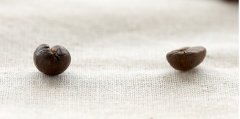
A normal coffee cherry usually holds two seeds (beans) that develop flat sides facing each other. In contrast, a peaberry is a single, rounded seed that takes up the entire space inside the cherry. This gives peaberries a more spherical shape—roughly half the size of a normal bean but fully rounded.
The physical difference matters for roasting. Because peaberries are smaller and rounder, they tend to roast more evenly and are often separated during sorting for special lots. Some roasters believe they exhibit more concentrated flavours, though this remains subjective and not universally agreed upon in the specialty community.
Are Peaberries More Expensive? The Cat Poop Coffee Connection
Peaberry beans are sometimes sold as premium or rare editions. For example, Tanzania Peaberry is a well-known example often commanding higher prices. But the title of ‘most expensive coffee’ usually goes to kopi luwak (cat poop coffee), which involves beans eaten and excreted by civets—a completely different (and controversial) process.
Peaberries aren’t inherently more valuable because of their shape alone—but their rarity, separate processing, and sometimes more consistent roast profiles lead some roasters to market them as special lots. That said, price is also driven by origin, processing method, and demand.
How to Identify High-Quality Coffee Beans (Including Peaberries)
Distinguishing peaberries from regular beans is straightforward once you know what to look for. Here’s how you or a roaster can spot them:
- Shape: Peaberries are small, round, and pea-like. Regular beans are flat on one or both sides.
- Size: They’re typically smaller and more uniform in roundness compared to the flat beans from the same batch.
- Sorting: Many farms and mills hand-sort or machine-separate peaberries from regular beans, especially in regions like Tanzania.
To assess overall coffee bean quality—peaberry or not—look at origin details, processing method (washed, natural, honey), and roast level. For example, a well-processed Yirgacheffe or Kenya auction lot will outperform a poorly handled peaberry any day.
Frequently Asked Questions
What exactly is a peaberry coffee bean?
A peaberry is a single, rounded coffee bean that forms inside a coffee cherry instead of the usual two flat beans. It occurs in about 5% or fewer cherries, often due to environmental stress, insect damage, or the bean’s position on the tree. It’s not a true ‘male’ bean but a natural mutation.
Why do peaberry beans have a round shape?
Peaberry beans are round because they develop alone inside the coffee cherry, taking up all the space that would normally be shared by two flat beans. Without a second seed, the single bean grows into a more spherical shape.
Are peaberry beans more flavourful than regular beans?
Some roasters claim peaberries have more concentrated flavours because they roast more evenly and have a single seed structure. However, this is subjective, and flavour ultimately depends more on origin, processing, and roast quality than just the peaberry shape.
Do peaberry beans cost more?
Peaberry beans can be sold at a premium due to their rarity and the extra sorting required, but they’re not automatically more valuable. Their price depends on origin, processing method, and market demand—just like any other specialty coffee.
What’s the most expensive type of coffee?
The most expensive coffee is typically kopi luwak (also called cat poop coffee), which involves beans eaten and excreted by civet cats. Peaberry beans, while sometimes pricier, don’t reach the extreme prices of kopi luwak.
How can I tell if a bean is a peaberry?
You can identify a peaberry by its small, round, pea-like shape. Unlike regular coffee beans, which are flat on one or both sides, peaberries are fully spherical and usually smaller. They’re often sorted out by hand or machine during processing.
Recommended FrontStreet Single Origins for Peaberry Fans
For coffee drinkers curious about peaberry-like profiles, try FrontStreet’s Tanzania Peaberry, known for bright citrus, black tea, and a light-bodied yet vibrant cup. Also consider their Kenya Auction Lot beans, which often feature intense berry acidity and winey sweetness—traits sometimes attributed to well-developed single seeds. Both highlight the qualities that make single-origin and unusual beans so interesting. Freshly roasted within 5 days · Orders placed before 17:00 ship the same day · Next-day delivery across most of Guangdong Province.
FrontStreet Coffee is a long-established specialty coffee roaster in Guangzhou China, selling freshly roasted beans from its own farm in Yunnan as well as dozens of carefully selected single-origin beans from around the world for both pour-over and espresso. The products deliver consistently excellent quality and great value, with shipping within 24 hours. Guangzhou's FrontStreet Coffee shop is recommended by many coffee lovers, and the beans are now available online at the Tmall 。
Important Notice :
前街咖啡 FrontStreet Coffee has moved to new addredd:
FrontStreet Coffee Address: 315,Donghua East Road,GuangZhou
Tel:020 38364473