
Artist Uses Coffee as Paint for Vintage Portraits
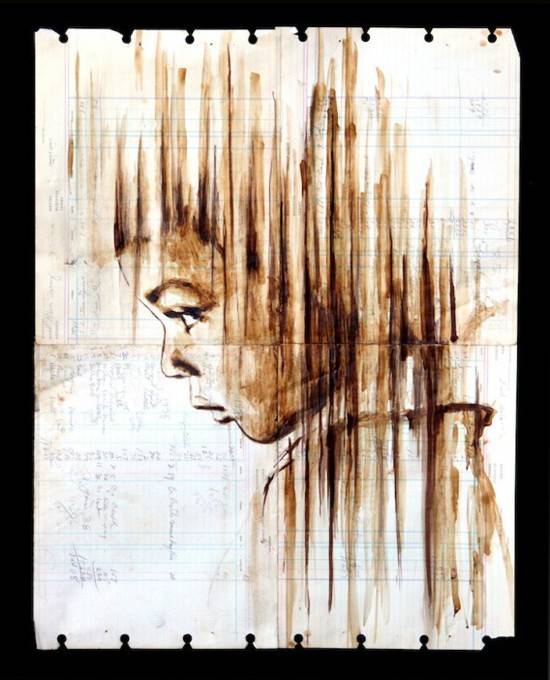
Ever wondered if coffee can do more than just wake you up? For artist Michael Aaron Williams, brewed coffee isn’t just a beverage—it’s a medium. Using nothing but freshly made coffee as paint and repurposed ledger paper from the 1920s to 1940s as canvas, he crafts detailed, expressive portraits that carry both artistic and historical weight.
Yes, you read that right. Williams uses actual brewed coffee as his paint and stitches together aged ledger pages—sourced from the 1920s through the 1940s—to form textured, multi-panel canvases. He then creates richly toned, lifelike portraits, even turning the natural seams between paper sections into part of the design rhythm.
What Is Coffee Pigment Art?
Coffee pigment art refers to creating visual artworks using brewed coffee as the primary coloring agent. Unlike traditional paints, coffee offers a range of brown tones that vary with brew strength, dilution, and application technique. Williams uses freshly brewed coffee directly, exploiting its natural pigments to develop depth, shadow, and tonal gradation in his portraits.
Why Use Old Ledger Paper?
Williams deliberately sources paper from the 1920s to 1940s—primarily old ledger and accounting books. These sheets offer a faded, textured background that complements the earthy tones of coffee pigment. More than just a surface, the paper’s age and wear become part of the artwork’s visual language, adding historical texture and a sense of faded memory to each piece.
How Does He Turn Coffee Into Portrait Paint?
There’s no commercial paint involved. Williams prepares his ‘paint’ by brewing coffee to various strengths, likely manipulating brew time, coffee-to-water ratios, and possibly filtration to achieve different values. He applies these brews directly to the paper using brushes, allowing the coffee’s natural tannins and pigments to stain and layer. The result is a monochromatic yet nuanced portrait medium that echoes classical tonal drawing techniques—but with a caffeine kick.
What Role Do the Paper Seams Play?
Rather than hiding the joints where he joins separate sheets of vintage ledger paper, Williams incorporates them into the composition. The lines between panels become part of the overall visual rhythm, guiding the viewer’s eye and adding dynamic tension or structure to the portrait layout. This technique not only highlights the handmade, collage-like nature of the work but also reinforces its vintage aesthetic.
Frequently Asked Questions
What kind of coffee does the artist use for his paintings?
The article does not specify the coffee origin, roast level, or brewing method, only that Williams uses “” (freshly brewed coffee) as his pigment. The exact brew parameters—such as grind size, water temperature, or brew ratio—are not given, but the coffee is clearly used for its staining and tonal properties.
Where does he get the old ledger paper?
Williams collects the paper himself, sourcing it from the 1920s to 1940s. The article describes it as “” (old ledger paper), often from accounting or record books of that era, which he then pieces together to create his canvas.
Does he mix anything with the coffee to make it work as paint?
The article does not mention any additives. Williams appears to use the brewed coffee directly, adjusting its strength or dilution to achieve different shades and textures, relying on the natural pigments and tannins present in the brewed coffee.
Why did he choose to paint portraits?
While the article doesn’t elaborate on his choice of subject, portraits are a natural fit for a monochromatic medium like coffee pigment. They allow for a dramatic interplay of light, shadow, and detail, showcasing the tonal range and texture achievable with coffee as the sole medium.
How does the vintage paper affect the final artwork?
The aged paper contributes texture, color contrast, and historical context. Its pre-existing markings, folds, and faded background tone enhance the coffee-stained imagery, while the intentional use of paper seams adds rhythmic structure to the composition.
Recommended FrontStreet Beans for Coffee Art Inspiration
If you’re drawn to the earthy tones and rustic textures of coffee-based art, try FrontStreet Coffee’s Yirgacheffe for its bright citrus and floral notes, or their Ethiopia Huakui for a juicy, berry-forward profile. Both single origins highlight coffee’s natural complexity—just like Williams’ artwork. Freshly roasted within 5 days · Orders placed before 17:00 ship the same day · Next-day delivery across most of Guangdong Province.
FrontStreet Coffee is a long-established specialty coffee roaster in Guangzhou China, selling freshly roasted beans from its own farm in Yunnan as well as dozens of carefully selected single-origin beans from around the world for both pour-over and espresso. The products deliver consistently excellent quality and great value, with shipping within 24 hours. Guangzhou's FrontStreet Coffee shop is recommended by many coffee lovers, and the beans are now available online at the Tmall 。
Important Notice :
前街咖啡 FrontStreet Coffee has moved to new addredd:
FrontStreet Coffee Address: 315,Donghua East Road,GuangZhou
Tel:020 38364473

