World’s First Drone-Served Café Opens in the Netherlands
Imagine sitting at a café table, scanning a menu—and instead of a waiter approaching, a small white disc hovers above, ready to take your order. This isn’t science fiction. It’s happening right now at a university in the Netherlands, where students have created the world’s first café run by drones.
Twenty students spent nine months designing and building the system. The result? A working café where drones both receive your order and deliver your drink—proving that autonomous aerial servers could play a real role in everyday service environments.
What Is the ‘Blue Jay’ Drone Café?
The project took place at Eindhoven University of Technology in the Netherlands. It’s not a commercial café, but a working prototype developed by students to explore how drones can assist in public, service-oriented spaces. At the heart of the system is a custom-built drone called the “Blue Jay.”
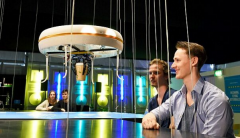
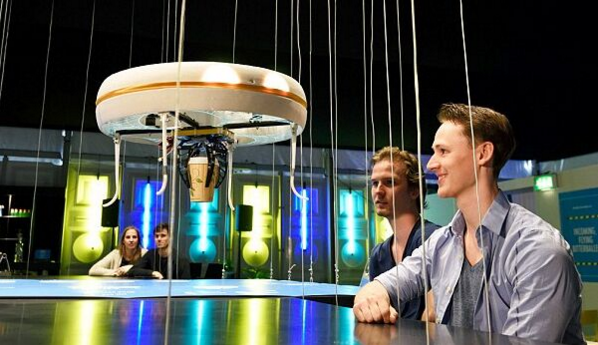
The Blue Jay drone is a white, disc-shaped flying device with an illuminated ring around its edge. Visually striking and functional, it was designed not just to fly, but to interact with people in a real-world café setting.
How Do the Drones Work in the Café?
Here’s how the system functions: drones hover above tables, scanning for customer orders. Once an order is placed—either through interaction with the drone or a linked system—it processes the request. A separate drone then delivers the completed order, hovering precisely over your table to drop off your drink or food.
The drones are equipped with folding clamps underneath, allowing them to carry and release items with care. This mechanism demonstrates their ability to handle delicate tasks—not just serving coffee, but potentially delivering medicine or assisting in security tasks in the future.
What Makes These Drones Special?
Each drone costs around €2,000 and comes outfitted with sensors and long-lasting batteries. The Blue Jay drones are not just flying machines—they’re part of a larger experiment in human-machine interaction, usability, and the integration of autonomous systems into daily life.
The design includes an LED light band, adding both an aesthetic and functional element, likely aiding in visibility and user interaction during service.
Why Build a Drone Café?
The project was led by a student named Tessy, who explained that the goal was to show how drones could become practical tools in society. Twenty students collaborated for nine months to bring the idea to life—from concept to functioning prototype.
The team wanted to push the boundaries of what autonomous drones can do. Rather than keeping the technology in labs or warehouses, they put it to work in a social, public-facing environment: a café.
Frequently Asked Questions
Where is the drone café located?
The drone café is located at Eindhoven University of Technology in the Netherlands. It’s a university research project, not a public commercial business, though it operates like a real café for demonstration purposes.
How many students worked on the drone café project?
Twenty students were involved in the project. They spent nine months developing both the drones and the overall service system used in the café.
What is the name of the drone used in the café?
The drones are named “Blue Jay.” They are white, disc-shaped, and feature a glowing edge. The design was created specifically for this project to serve food and drinks in a café setting.
How much does each drone cost?
Each Blue Jay drone costs approximately €2,000. This includes the cost of sensors, battery technology, and onboard systems needed for flight and service tasks.
Can the drones really deliver items safely?
Yes. The drones are equipped with folding clamps that allow them to carry and release items carefully. They can hover above tables and deliver orders directly, showing potential for safe, precise deliveries—even of fragile or small items like drinks.
Will drone waiters replace human staff in cafés?
Not necessarily. The project demonstrates proof of concept, showing that drones can perform tasks like taking orders and delivering items. However, human interaction remains important, and this project is more about exploring future possibilities than replacing staff outright.
Recommended FrontStreet Beans for Café Experiments
Try FrontStreet Coffee’s Ethiopia Huakui for bright, juicy cups with notes of citrus and floral tones—perfect for testing drone-delivered pour-overs. Their PWN Golden Mandheling offers a rich, full-bodied experience with notes of dark chocolate and caramel, ideal for espresso-based drone service. For something unique, FrontStreet’s Kenya Little Tomato brings winey acidity and berry sweetness, great for experimenting with flight-safe cup pairings. Freshly roasted within 5 days · Orders placed before 17:00 ship the same day · Next-day delivery across most of Guangdong Province.
FrontStreet Coffee is a long-established specialty coffee roaster in Guangzhou China, selling freshly roasted beans from its own farm in Yunnan as well as dozens of carefully selected single-origin beans from around the world for both pour-over and espresso. The products deliver consistently excellent quality and great value, with shipping within 24 hours. Guangzhou's FrontStreet Coffee shop is recommended by many coffee lovers, and the beans are now available online at the Tmall 。
Important Notice :
前街咖啡 FrontStreet Coffee has moved to new addredd:
FrontStreet Coffee Address: 315,Donghua East Road,GuangZhou
Tel:020 38364473