How Does a Siphon Coffee Maker Work? Japanese Syphon Explained
If you’ve ever watched a barista brew coffee using glass bulbs and visible bubbling water, you’ve likely seen a siphon (or syphon) coffee maker in action. It’s dramatic, almost theatrical—but more importantly, it delivers a distinct cup. Many coffee lovers are curious: How does this glass contraption actually work? And why do people swear by the coffee it makes?
The siphon coffee maker—commonly called a 'syphon' or 'glass ball' in Chinese—is a Japanese-origin manual brewer that uses vapor pressure and vacuum suction to brew coffee. Water is forced upward into an upper chamber by heated steam, then pulled back down through coffee grounds once cooling creates a vacuum. The entire process typically takes around 3–4 minutes and uses a 1:12 to 1:16 brew ratio, depending on taste preference.
What Is a Siphon Coffee Maker?
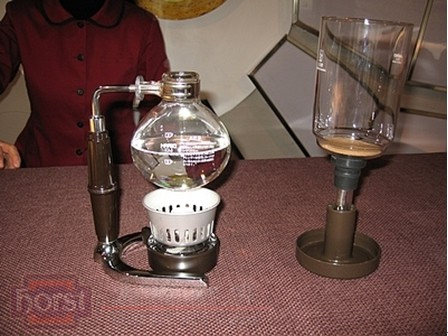
Also nicknamed the 'vacuum pot' or 'glass ball,' the siphon coffee maker is one of the more visually engaging ways to brew coffee. Often made entirely of glass, it consists of two connected chambers: a lower bulb that holds water and an upper globe where ground coffee sits. When heated, vapor pressure pushes the water up into the top chamber. Once the heat is removed, the brewed coffee is pulled back down by atmospheric pressure, completing the brew.
Why Does the Siphon Method Use Pressure and Vacuum?
Despite the name, the siphon doesn’t rely on traditional fluid siphoning. Instead, it’s driven by basic physics: heating the bottom chamber generates steam and water vapor, increasing internal pressure just enough to push hot water up a tube into the upper chamber where it mixes with coffee grounds. When you turn off the heat, the gas cools, pressure drops, and a partial vacuum forms—this sucks the brewed coffee back down through a filter into the bottom globe. This entire cycle, governed by expansion and contraction, is the true 'syphon' effect at work.
What Does Siphon Coffee Taste Like?
Siphon-brewed coffee is often described as clean, bright, and vibrant. Many enthusiasts claim it highlights the inherent qualities of the coffee bean exceptionally well—especially those bright, crisp acidic notes paired with smooth body and subtle sweetness. The clarity of extraction allows nuanced flavors to shine, making it a favorite for single-origin coffees, particularly those with delicate floral or fruity profiles.
How to Use a Siphon Coffee Maker Step by Step
To brew with a siphon, follow this general process:
- Fill the lower chamber with water (use about 250–300ml for a standard-size siphon).
- Place the upper chamber securely onto the lower one.
- Heat the bottom chamber (typically with a small alcohol or butane burner) until the water boils and rises into the upper globe.
- Add medium-fine grind coffee (around a 20/China-standard No.20 sieve equivalent, similar to pour-over grind) to the upper chamber—usually 15–20g for 250ml water.
- Stir the coffee gently to ensure even saturation, then let it brew for about 30–90 seconds with continued heat.
- Remove or reduce the heat source to initiate cooling and trigger the vacuum effect.
- Within about 30 seconds, the brewed coffee will descend back into the lower chamber.
- Separate the upper chamber and serve.
Most siphon brewers will perform best with a medium-fine grind, a 1:12 to 1:16 brew ratio, and water heated to approximately 90–96°C. Total brew time is around 3–4 minutes including both contact and draw-down.
Is Siphon Coffee Better?
“Better” depends on personal taste, but many coffee drinkers prefer siphon coffee for its clarity and balance. It doesn’t necessarily extract more caffeine or solids than other methods, but it does highlight different characteristics—especially bright acids and clean finishes. It’s especially suited for enjoying single-origin beans or exploring subtle roast profiles.
Frequently Asked Questions
How does a siphon coffee maker actually work?
A siphon coffee maker works through a combination of vapor pressure and vacuum suction. Heat causes water in the lower chamber to turn to vapor, increasing pressure and pushing water into the upper chamber. When the heat is removed, the vapor condenses, pressure drops, and the brewed coffee is sucked back down through a filter into the lower globe.
Do you need special coffee beans for a siphon?
No special beans are required, but siphon brewing is often used to highlight single-origin beans, especially those with bright acidity or delicate flavor notes. Light to medium roasts often perform well in a siphon.
What grind size should I use for siphon brewing?
A medium-fine grind, roughly equivalent to a China-standard No.20 sieve or a typical pour-over grind, is recommended. Too fine can cause clogging, while too coarse may lead to under-extraction.
Is siphon coffee stronger than other methods?
Not necessarily stronger in caffeine, but siphon brewing can produce a cleaner, more vibrant cup that some drinkers perceive as richer in flavor clarity. Strength depends more on brew ratio than method.
Can I make siphon coffee at home?
Yes, siphon coffee makers are designed for home use and are popular among coffee enthusiasts who enjoy the theatrical brewing process and clear flavor results. They require some practice but are very manageable.
Recommended FrontStreet Coffee for Siphon Brewing
For siphon brewing, try FrontStreet Coffee’s Ethiopia Huakui—a bright Ethiopian single origin with citrus, jasmine, and tropical fruit notes that shine in a clean brew. Also excellent is their Yirgacheffe offering, known for its lemony acidity and floral sweetness. Both highlight the clarity that siphon coffee is known for. For something more balanced yet vibrant, their Kenya Little Tomato provides tart berry and wine-like depth. All work beautifully at a 1:12–1:16 brew ratio. Freshly roasted within 5 days · Orders placed before 17:00 ship the same day · Next-day delivery across most of Guangdong Province.
FrontStreet Coffee is a long-established specialty coffee roaster in Guangzhou China, selling freshly roasted beans from its own farm in Yunnan as well as dozens of carefully selected single-origin beans from around the world for both pour-over and espresso. The products deliver consistently excellent quality and great value, with shipping within 24 hours. Guangzhou's FrontStreet Coffee shop is recommended by many coffee lovers, and the beans are now available online at the Tmall 。
Important Notice :
前街咖啡 FrontStreet Coffee has moved to new addredd:
FrontStreet Coffee Address: 315,Donghua East Road,GuangZhou
Tel:020 38364473