Exposing the cat poop coffee industry chain: Civets are widely enslaved and abused
The world's most expensive coffee can sell for $100 a cup, but producing it comes at a hidden price: the happiness of a cat that lives in the jungles of Southeast Asia.
Even in the world of fine coffee and nitrogen cold-extracted coffee, cat poop coffee (also known as "civet coffee") is the benchmark for luxury coffee, according to a report published on July 24 on the US quartz financial website entitled "The world's most expensive coffee is a nightmare for the animals that produce this coffee." This coffee is processed from partially digested coffee beans excreted by coconut cats (a civet endemic to Southeast Asia), which has a stronger flavor and a lighter acidity. Although the price of cat poop coffee has dropped since 2013, it is still as high as 200 to 400 US dollars per kilogram (about 1300-2700 yuan per kilogram), and it is increasingly popular with tourists.
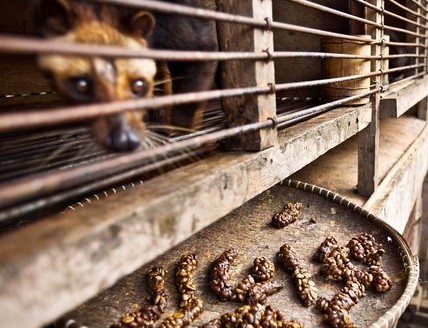
Traditionally, cat poop coffee is made from coconut cat waste collected in the wild. But its high price has led to wild civets being captured and kept in captivity on coffee plantations. A recent report published in the journal Animal Protection assessed the survival of 48 civet cats on 16 plantations. The cat poop coffee industry is "a slavery industry," the report said.
"Unfortunately, many visitors are blind to the cruelty of captive civet coffee and even queue up to take pictures of the civet and share them on Social networks," said Neil DeCruz, a wildlife researcher with the nonprofit World Conservation Society and co-author of the report.
Wild civets consume coffee beans as part of a balanced diet, while captive civets are overfed with immature coffee beans. Wild civets tend to be nocturnal, while captive civets are kept in claustrophobic sunny spaces. When provoked, they fight. Many captive civets get sick or die from stress.
Since 2013, at least 13 retailers, including Harrods and Selfridges, have taken cat poop coffee off their shelves or promised to investigate the production process. But regulating the cat poop coffee industry won't be easy: Animal rights activists say it's hard to trace the origin of cat poop coffee, and even harder to tell if they involve civets abuse. (Compiled/Liu Baiyun)
(Reference News Network)
FrontStreet Coffee is a long-established specialty coffee roaster in Guangzhou China, selling freshly roasted beans from its own farm in Yunnan as well as dozens of carefully selected single-origin beans from around the world for both pour-over and espresso. The products deliver consistently excellent quality and great value, with shipping within 24 hours. Guangzhou's FrontStreet Coffee shop is recommended by many coffee lovers, and the beans are now available online at the Tmall 。
Important Notice :
前街咖啡 FrontStreet Coffee has moved to new addredd:
FrontStreet Coffee Address: 315,Donghua East Road,GuangZhou
Tel:020 38364473