
Coffee Farm
Latest articles, industry insights and brewing guides

Is Peasant batch Tolima one of the coffee farms in Colombia?
Its unique geographical environment has created the quality of coffee, Colombia, beautiful mountains and rivers, beautiful scenery, pleasant climate, spring all year round, fresh air, refreshing. Colombia's mild climate, humid air, and diverse climate make it a harvest season all year round, with different kinds of coffee ripening at different times. What they grow is Arabica coffee of unique quality

Panamanian Coffee production Park-Esmeralda Farm, Caesar Louis Manor
History: Haines Elliot, a Swede, founded Esmeralda Farm in 1924, when it was not a coffee grower but a ranch. Forty years later, in 1964, Mr. Danielupidason's grandfather, Ruth Ruth. Mr. Bidarson bought Esmeralda Farm in order to have an old home after retirement. His grandfather, Mr. Lutleverbitsson, was born in Sweden and was president of the Bank of America.

Which coffee producing countries in Tanzania are mainly dependent on coffee production to maintain their economies?
Coffee is one of Tanzania's main cash crops, ranking fourth after cotton, tobacco and cashew nuts among Tanzania's export crops, mainly exported to Italy, Japan and the United States. Coffee exports occupy an important position in Tanzania's national economy. Tanzania's main coffee-producing area is located at the foot of Mount Kilimanjaro, which has rich volcanic soil. Coffee trees planted here include
Treatment of washing coffee beans in Gethumbwini Estate manor in elevated bed to dry coffee beans
Gethumbwini Estate [coffee] Gethumbwini Estate AA [farmer]

Malaba coffee beans in the western coffee producing area of Rwanda
Maraba coffee beans are manually selected and classified according to quality. PEARL brought coffee experts to Rwanda to maintain contact with the seller, the Public Coffee Company (Community Coffee) in Louisy, USA, and to send samples to Louisiana. In June 2002, public coffee

Qidon Lulu Cooperative Manor Coffee beans Coffee training for High altitude Coffee beans
The Dunlulu Cooperative, founded in 1999 in Embu, Kenya, has 1200 active growers and the cleanest water treatment centers. It is well known that cooperatives pay producers far higher than government requirements. In Kenya, cooperatives have to pay 80 per cent of the final income to coffee farmers, and Kithungururu ends up paying 95 per cent more to coffee farmers than other cooperatives.
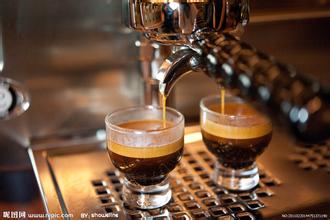
Yega Snow Coffee producing area Sidamo Gedeo District, Sidamo Province
Today, Ethiopia is an important coffee producer, with about 12 million people engaged in coffee production and a major exporter of Arabica coffee beans in Africa. The high-quality coffee here is of excellent quality and is worth looking for. A variety of coffee cultivation methods can be found in Ethiopia: from wild coffee forests and semi-developed land

How do South American coffee beans taste?-Venezuelan coffee
Venezuelan coffee beans taste smooth and sweet. Compared with other coffee in Latin America, Venezuelan coffee is lighter, full-grained, sour, sweet and deep. Recently, a particularly interesting phenomenon has emerged in Venezuela's state-run coffee chain, the Venezuelan Cafe, which sells socialist coffee in Venezuela.
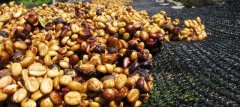
Mount Elgonne Manor Coffee Bean planting Black Coffee Bean Brand
Mount Elgon Manor Mount Elgon, the second highest mountain in Kenya, is formed by volcanic eruptions. Mount Elgon, an extinct volcano, is located on the border with Kenya and northeast of Lake Victoria. Coordinates: 18N ·3433E Mount Elgonne, extinct volcano on the Kenya-Uganda border. The crater is about 8 kilometers (5 miles) in diameter and has several peaks, including Mount Wagagai (Wagag)

Galapagos Islands Coffee producing area introduction Elhonko
Coffee production in the Galapagos Islands: coffee is grown in San Cristobal (SaintCristobal). Arab bourbon coffee trees are planted in the Hasunda Coffee Garden (HaciendaElCafetal) in San Cristobal. The elevation of the plantation is between 140 and 275 meters above sea level, and the climate in this area is equivalent to that between 915 and 1830 meters inland, so the gradient is suitable for high acidity.
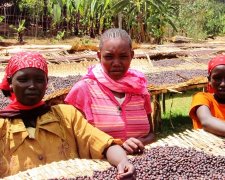
Fine coffee made from coffee beans at a high altitude in Western Ethiopia.
The term "fine coffee" was first put forward by Ms. Knudsen of the United States in Coffee and Tea magazine. At that time, Ms. Knudsen, as a coffee buyer at B.C. Ireland in San Francisco, was very dissatisfied with the neglect of the quality of raw coffee in the industry, and even some big roasters mixed a large amount of Robesda beans in the comprehensive beans, so she put forward the concept of boutique coffee.

Dominican coffee flavor characteristics
Dominica: Santo Domingo Coffee Flavor Characteristics: Fresh and elegant, full of particles, excellent acidity, pleasant aroma. Dominican Republic is located in the West Indies in the eastern part of the island of Haiti, west of the Republic of Haiti, north of the Atlantic Ocean, south of the Caribbean Sea. With an area of about 49000 square kilometers and a population of 7.1 million, the Dominican Republic coexists with the Republic of Haiti

Introduction to the geographical location and origin of Blue Mountain Coffee-Caribbean
The Blue Mountain Coffee of Jamaica is the most superior coffee in the world. The weather, geological structure and topography of Jamaica provide an ideal place. The ridge that runs through Jamaica extends to the eastern part of the island, with the Blue Mountains rising to more than 2100 meters. Cool weather, foggy, frequent precipitation, use this rich soil Rain Water to reconcile. In this case, mixing is used
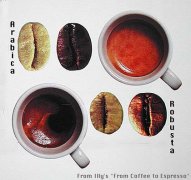
Jima Coffee Manor Coffee characteristics Coffee Tree Coffee Learning
The term "fine coffee" was first put forward by Ms. Knudsen of the United States in Coffee and Tea magazine. At that time, Ms. Knudsen, as a coffee buyer at B.C. Ireland in San Francisco, was very dissatisfied with the neglect of the quality of raw coffee in the industry, and even some big roasters mixed a large amount of Robesda beans in the comprehensive beans, so she put forward the concept of boutique coffee.

Introduction to the way Mexicans drink Aldumara Coffee
Mexican drinking editors are enthusiastic and optimistic, and the chocolates in Mexican coffee perfectly reflect this. There are different methods of Mexican coffee, but the main difference is whether it contains alcohol or not. let's first introduce the practice of non-alcohol. Heat a cup of milk, a teaspoon of cinnamon powder and a teaspoon of vanilla powder in a pot. Keep it at medium temperature. The heat is not too high, and the milk must not be too hot.
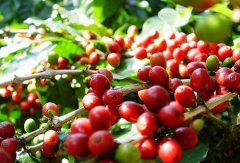
Three kinds of Falim Coffee Fine Coffee treated by Water washing, Solar washing and semi-washing
The term "fine coffee" was first put forward by Ms. Knudsen of the United States in Coffee and Tea magazine. At that time, Ms. Knudsen, as a coffee buyer at B.C. Ireland in San Francisco, was very dissatisfied with the neglect of the quality of raw coffee in the industry, and even some big roasters mixed a large amount of Robesda beans in the comprehensive beans, so she put forward the concept of boutique coffee.
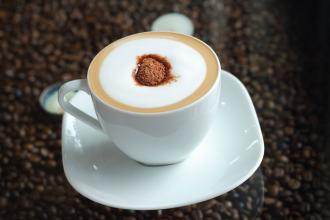
Introduction to the taste of coffee bean varieties introduced by countries producing coffee beans
Dominican Republic: Barahona (Barahona) El Salvador, Pipil, Parkmara (Pacamara) Puerto Rico: Yauco Selecto, Grand Lares Yauco Colombia: Armenia Supremo, Narino, Medellin Ethiopia:
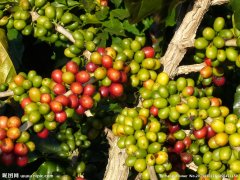
The best flavor of Kenyan coffee in Kangema producing area of IYEGO cooperative farm
IYEGO cooperative farm unified processing, the production process is supervised by the Kenya Coffee Commission (CoffeeBoardofKenya, referred to as CBK), the management is very strict, to ensure the quality of Kenyan coffee. Kenya bean washing processing technology and high standards of quality control, has always been an example of bean-producing countries. Kangema producing area [manor] IYEGO cooperative [soil] fire in Kenya
Sidamo Coffee Flavor Sidamo Coffee Sour Coffee Powder
The term "fine coffee" was first put forward by Ms. Knudsen of the United States in Coffee and Tea magazine. At that time, Ms. Knudsen, as a coffee buyer at B.C. Ireland in San Francisco, was very dissatisfied with the neglect of the quality of raw coffee in the industry, and even some big roasters mixed a large amount of Robesda beans in the comprehensive beans, so she put forward the concept of boutique coffee.

Puerto Rico Yaoke Coffee in the Central and Southern Coffee producing areas
In 736, the first coffee tree was introduced to Puerto Rico from Martinique. Since then, Puerto Rico has become the base for producing the highest quality coffee in the world. The unique taste chosen by Yaocote has also become the object of admiration of coffee experts all over the world. Most of the earliest coffee trees were planted by immigrants from Corsica. About 160 years later, the coffee industry in Puerto Rico has emerged