
Coffee Farm
Latest articles, industry insights and brewing guides

What coffee making methods should be paid attention to when making coffee?
Step / method 1 grind the coffee beans ~ put the beans in the coffee bean grinder ~ the amount is calculated according to the number of people drinking ~ the coffee machine should have a measuring spoonful ~ one spoonful of beans to boil a cup ~ no more than 4 cups ~ otherwise it will not smell so good ~ 2 coffee filter paper open ~ put in the coffee machine filter ~ coffee filter paper can slow down the coffee filter speed ~ make the coffee more fragrant and purer ~ then put the ground coffee powder into the coffee filter

Types and practices of coffee lattes
Latte is the most familiar espresso item in Chinese. It is fancy coffee with equal proportion or even more milk added to the thick and full-bodied Espresso. With the warm seasoning of milk, the original sweet and bitter coffee becomes smooth and sweet, so that even those who are not used to drinking coffee can not compete with the fragrant taste of latte. Like cappuccino, lattes are suitable because they contain a lot of milk.

What are the benefits of drinking coffee regularly? American coffee machine secondary extraction
1. Coffee contains certain nutrients. Nicotinic acid in coffee contains vitamin B, which is higher in roasted coffee beans. And there are free fatty acids, caffeine, tannic acid and so on. two。 Coffee is good for the skin. Coffee can promote metabolic function, activate digestive organs, and has a great effect on constipation. Taking a bath with coffee powder is a kind of thermotherapy, which has the effect of losing weight. 3. There is coffee.

The development trend of the use of coffee
With the continuous improvement of people's living standards, coffee, a Western-style drink, is being accepted by more and more Chinese, and the resulting coffee culture is filling every moment of life. Coffee is no longer just a drink, it is gradually closely linked with fashion and taste, reflecting the high quality of modern life; or making friends, or business talks, or leisure and pleasure

What do Kenya coffee beans S28 and S34 stand for?
Ecuador Notable coffee: Galapagos Oceania New Guinea Notable coffee: New Guinea Australia Notable coffee: Australian coffee Caribbean Hawaii Notable coffee: Kona Jamaica Notable coffee: Blue Mo

Does the coffee machine have to be cleaned every day?
Yemeni editor Yemeni mocha coffee once blew a whirlwind of mocha around the world, but unfortunately the good times were not very good. Under the political turmoil and unplanned planting, the production of mocha was very unstable. Having said that, mocha is still the soul of matching other coffee beans or mixed coffee beans. Peruvian editor's up-and-coming Peruvian coffee is gradually

What are the countries that produce coffee beans
Brazil is the largest exporter of coffee beans in the world, followed by Colombia. These two Central and South American countries account for more than half of the world's coffee production, and the quality is stable. Vietnam has developed rapidly in recent years and has become the second largest coffee exporter in the world. Other countries and producing areas, such as Indonesia, Ethiopia, Guatemala, Jamaica, Kenya

Introduction to the main producing areas and characteristics of Coffee in the World
1. The main coffee beverage in the world is made from the extract of coffee beans. Coffee beans are a pair of beans wrapped in a hard shell inside the coffee fruit. There are two ways to take out coffee beans. One is to spread out the coffee fruit and expose it to the sun for about 3 weeks. After the coffee fruit is quite dry, peel off the pulp and shell with mechanical force, and take out the coffee beans. The other method is to use

Coffee beans from all over the world
Coffee trees are small shrubs growing in tropical highlands. Their fruits are red or yellow, and the seeds inside are what we call coffee beans. At present, there are about 66 countries in the world to grow coffee beans, which can be classified into Arabica, Robusta, Liberica three kinds, Arabica is currently the largest group of major coffee bean varieties, the yield of about 80% of its flavor, quality are excellent. and

Coffee beans and coffee beans
Ethiopia, home of arabica coffee, grows at high latitudes and requires a lot of manual care. There is the famous Ethiopian mocha, which has a similar acidity to wine, aroma, and yield. Unfortunately, some farmers do not understand the benefits of picking fruit, let it fall and then pick it up from the ground, but in recent years due to the continuous expansion of the market

The Development of Costa Rican Coffee
High-quality Costa Rican coffee is called extra hard beans, and this kind of coffee can grow at an altitude of more than 1500 meters. Altitude has always been a problem for coffee growers. The higher the altitude, the better the coffee beans, not only because the higher altitude can increase the acidity of the coffee beans and thus increase the flavor, but also because the night temperature at the higher altitude is lower, which can make the trees grow slowly.
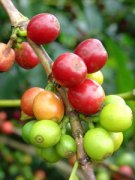
One of the ingredients of synthetic beans, Jinbi coffee, fine coffee.
Ghimbi grows in the plateau of Western Ethiopia at 4900-5900 feet (Wollega province) above sea level, north of Jima, mostly wild, with an annual output of about 500000bags/60kg, mostly exported by G5/G4, beans larger and longer than Longberry, brownish in green, similar to less jasmine tea, more bitter, lack of rising Hara, slightly sour, slightly fruity and slightly inferior to wine.

Gima is a little sour, but slightly inferior to Hara, with a medium texture and rugged earthy flavor.
Djimmah, which accounts for about 50 per cent of Ethiopia's annual output (1000000bags/60kg), grows between 4400 and 6000 feet above sea level in the southwestern highlands of the country (the border between Kaffa and Illubabor provinces) and is usually exported by G5/G4. However, in recent years, about 10% or 20% of Gima has been used to make up for the lack of taste of coffee, but its quality has gradually declined.

Papua New Guinea Coffee beans 3D Coffee Coffee pull
Babu coffee flavor and taste characteristics: full particles, moderate acidity, mellow taste. Papua New Guinea is an island country in Oceania. Papua means curly hair in Malay. It is said that in 1545, the explorer Retes arrived on the island and found that most of the people on the island had curly hair, that is, the island was called the island of curly hair.

An introduction to the Origin and characteristics of Kopi Luwak in Indonesia
At that time, this kind of miraculous coffee was only for Europe, and it had to be transported by sailing for a long time, which made the coffee less acidic and tastier. In the more developed period of shipping, merchants had to store the coffee for several years to get a better taste. Storage also brings higher prices, inferior quality, and all kinds of smuggling are common. By the 1880s, Java coffee reached its peak, but delicate.
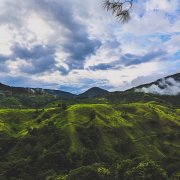
washed rum ranked second only to Yerga Coffee.
Specialty coffee is also known as specialty coffee. It refers to coffee made from green beans with excellent taste characteristics grown in a few extremely ideal geographical environments. Depending on the particular soil and climatic conditions in which they are grown, they have outstanding flavors. This type of coffee is carefully selected and graded for its hard texture, rich taste and wind.

Introduction to the history and characteristics of mocha coffee
Mocha coffee is produced in Ethiopia. Beans are small and fragrant, with strong sour and mellow taste, moderate sweetness and special flavor. Washed coffee beans are well-known high-quality coffee, often drunk on a single basis. However, if mixed coffee can be blended, it is an ideal comprehensive coffee with ideal flavor. The characteristics of mocha coffee Ethiopia, known as the birthplace of coffee, has a history and tradition that can be called the origin of coffee.

Tanzania AA coffee beans first experienced the concentration of coffee cakes.
Tanzania coffee beans are absolutely comparable to neighboring Kenya, but the quality of coffee in the country is not strictly controlled, and carelessness in many processes often destroys the quality of coffee (such as transportation). Good quality Tanzanian coffee beans are divided into AA and A grade the raw beans of this Tanzanian AA coffee bean look neat and have a delightful light green. Baked Tanzania AA
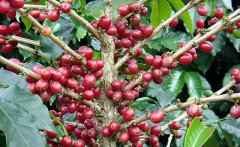
Ethiopian coffee producing areas are divided into east and west parts by the East African Rift Valley.
Boutique coffee (specialty coffee) is also called specialty coffee selection coffee. It refers to coffee made from a small number of raw beans with excellent taste grown in an ideal geographical environment. Depending on the special soil and climatic conditions in which they grow, they have outstanding flavor. After strict selection and classification, this kind of coffee is hard in texture, rich in taste and stylish.

The characteristic flavor of Rwandan coffee what materials can be used as supercapacitors
The taste of Rwandan coffee is described as a grassy aroma with tropical climates. in addition to the sweetness of fruit, this coffee also gives people a feeling of freshness, clarity, and freshness. Bourbon coffee grown in Rwanda is amazing for its sweet fruit, full-bodied, unrestrained and lingering aftertaste. This kind of coffee is delicious