Monday, September 7, 2026 · Leading English Source for Global Coffee Industry

Coffee Knowledge

Latest articles, industry insights and brewing guides

London Coffee runs Prufrock Coffee

London Coffee runs Prufrock Coffee

After a round of shopping in London last year, the only place I felt good was Gwilym Davies, the 2009 champion of Prufrock Coffee by, hidden in the Present clothing store. Nearly a year later, I revisited the old place. Although I didn't aim at coffee, I happened to have a friend to lead the way. Naturally, I followed this new store-my boy, Gwilym opened another one.

Coffee beans recommend La Minita (Raminita) boutique farm coffee beans

Coffee beans recommend La Minita (Raminita) boutique farm coffee beans

In retrospect, I also had a vague impression of La Minita, a Costa Rican manor. It was not until I really came into contact with their beans that I was surprised by this world-class coffee farm with high standards and extraordinary abilities. Just like the description of La Minita on Osher's website: it can be said that discussing the boutique coffee estate is just one.

Boutique Coffee introduces Ethiopian Harald Coffee

Boutique Coffee introduces Ethiopian Harald Coffee

Essex is the first country in the world to grow coffee and maintain the oldest coffee culture. It still maintains a very traditional and ancient coffee growing process. Ethiopia latitudes 6 to 9 degrees north. Tropical forests 34 to 40 degrees east longitude and 1600 to 1800 m above sea level. Harald is not only the most expensive coffee in the world, but also a beautiful legend. Harald, a reflection of ai

Boutique Coffee recommends Jamaica's Top Blue Mountain Coffee (2)

Boutique Coffee recommends Jamaica's Top Blue Mountain Coffee (2)

At a Blue Mountain coffee processing plant for tourists, the commentator revealed to reporters the secret of why Blue Mountain coffee tastes pure: their coffee trees are on rugged hillsides, and the picking process is very difficult. Non-local skilled female workers are simply incompetent. It is very important to choose the right ripe coffee beans when picking. Immature or fully ripe coffee will affect the coffee.

Boutique Coffee recommends Jamaica's top blue mountain coffee

Boutique Coffee recommends Jamaica's top blue mountain coffee

I have heard that Jamaica's Blue Mountain Coffee is famous all over the world and has been longing for it for a long time. Not long ago, I took the opportunity of an interview with this Caribbean island country to specially appreciate the strong and honest aroma of Blue Mountain Coffee and put an end to a long-cherished wish in my heart. Take a bus from Kingston and follow the winding mountain road to Strawberry Villa, a famous scenic spot in the Blue Mountains. Enjoying the mountain scenery in front of us and the sea view in the distance

Roasting and Taste of Fine Coffee

Roasting and Taste of Fine Coffee

Since the Arabs discovered the coffee beans, the first way to eat them is to put the whole fruit of the coffee into the mouth and chew it to get its juice. Later, they ground the coffee beans from the fruit and mixed them with animal fat as a physical supplement for caravans to trade far away. After that, around 1000 AD, it was changed to the method of boiling raw beans into soup. Until 13.

Fine coffee study the honeycomb structure of roasted coffee beans

Fine coffee study the honeycomb structure of roasted coffee beans

Coffee enthusiast, Professor Yukio Hiroase of Kanazawa University in Japan, has a doctorate in engineering and specializes in computational mechanics. the boss has studied coffee beans with a hundred and twenty thousand scientific spirit and achieved the following results: 1 the interior of roasted coffee beans is honeycomb structure. different roasting methods form different honeycomb structures. (2) the diameter of honeycomb cavity is basically 0.01mm, that is, about 10 microns. three

Coffee roasting techniques several problems that should be paid attention to in coffee roasting

Coffee roasting techniques several problems that should be paid attention to in coffee roasting

In order to do a good job in baking, every production link can not be ignored, the selection of materials should be fastidious, the weighing of materials should be accurate, and the operation should be careful. Baking is a science. To understand the principle of baking, we must first understand the three ways of heat conduction, convection and radiation. Conduction refers to when the heat is transmitted by the heat source, causing the surrounding molecules to vibrate and release heat, gradually moving from the high temperature to the low temperature. The transmission of stainless steel

Basic knowledge of boutique coffee ESPRESSO roasting tips

Basic knowledge of boutique coffee ESPRESSO roasting tips

A few years ago, I took a very important coffee course to compare the differences between espresso and other immersion brewing methods (such as French pressing and trickling). Recently, I just received a sample bean from Costa Rica, and I just finished a cup testing course taught by Willem Boot, a coffee consultant, and I can't wait to get the ceramic cup test pot I just got.

Coffee roasting knowledge frying determines the aroma of coffee

Coffee roasting knowledge frying determines the aroma of coffee

Frying determines the aroma of coffee to fry raw coffee beans, which can show the unique color, taste and aroma of coffee. 80% of the taste of coffee is determined by frying, so the quality of coffee also depends on frying technology. Through frying, we can turn the light green raw coffee beans into the familiar tea-brown coffee beans. If fried well, the coffee beans will have a lot of aroma, sour taste and

Coffee roasting techniques Coffee roasting methods and principles (figure)

Coffee roasting techniques Coffee roasting methods and principles (figure)

The raw coffee beans are fried to show a unique brown color, aroma and taste. The most important thing of frying and baking is to be able to stir-fry the inside and outside of the beans evenly without overscorching. 80% of the taste of coffee depends on roasting, which is the most important and basic condition for making good coffee. The basic principle of ● fried culture the most important thing is to be able to stir-fry the inside and outside of the beans evenly. First

High-quality coffee common sense coffee bitterness comes from the processing process

High-quality coffee common sense coffee bitterness comes from the processing process

In western countries, people drink a cup of coffee every morning. In order to cover up the bitterness of the coffee, they often add some milk powder and sugar. But why is coffee bitter? A seemingly simple problem has been bothering scientists for decades. Now, scientists have narrowed down their research and targeted two chemical molecules. Chemistry in the United States

Roasting of high-quality coffee beans

Roasting of high-quality coffee beans

The roasting of coffee beans is a very technical work. The raw beans are heated and cooked, and the moisture is removed to make them inflate. Through this procedure, the unique aroma and flavor of coffee can be produced. Generally speaking, if the frying time is short, the color of the coffee beans will be light brown and sour. If the roasting tone is dark, the bitterness will be enhanced and the color will be dark brown. Therefore, the roasting of coffee beans is divided into several different processes.

General knowledge of Fine Coffee talking about the Storage of Coffee beans

General knowledge of Fine Coffee talking about the Storage of Coffee beans

The ideal way to buy and make coffee is to buy a lot of raw coffee, bake it yourself, and grind it before you prepare it. But most people like to buy roasted coffee beans, and they probably buy more than we use for several days. Water is the enemy of storing coffee. Coffee oil is water soluble. It makes coffee more flavored, while moist conditions can corrupt coffee oil.

Basic knowledge of coffee roasting Coffee roasting degree

Basic knowledge of coffee roasting Coffee roasting degree

Cinnamon Roast: cinnamon baking: this is the lightest kind of baking. There is no oil on the surface of the coffee beans. Large coffee bean manufacturers often mix the lightly roasted coffee beans with the coffee beans they sell. Because it can save money and increase the quantity. Cinnamon-roasted coffee beans usually do not appear in urban baking City Roast: the name for urban baking.

Coffee roasting basic knowledge roasting complete coffee composition table

Coffee roasting basic knowledge roasting complete coffee composition table

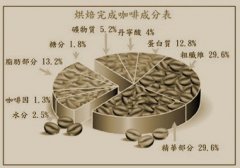
Caffeine: caffeine is the most eye-catching of all the ingredients in coffee. It belongs to a kind of phytoxanthin (animal muscle component). It has the same properties as theobromine contained in cocoa, green tea contains the same theophylline, and the percentage of reduction after baking is very small. Caffeine has a very wide range of effects. will affect the human brain, heart, blood vessels, gastrointestinal, muscle and kidney and other parts, the right amount of coffee

The basic knowledge of fine coffee coffee beans roasting stage explanation

The basic knowledge of fine coffee coffee beans roasting stage explanation

Coffee is loved by people, the key lies in the aroma formed after roasting and the taste when drinking, because the coffee beans themselves do not have any special taste. Baking is to change and reorganize the internal substances of raw beans to form a new structure, which becomes a favorite drink with strong and mellow flavor. Roasting of coffee is a pyrolysis of high temperatures, which changes

The main varieties and characteristics of boutique coffee

The main varieties and characteristics of boutique coffee

Blue Mountain Coffee: produced in Jamaica, mellow, slightly sour, supple, sweet, delicate flavor, light taste. Columbia: produced in South America, slightly acid glycol, soft mellow, slightly to medium acid. Brazil: from South America, neutral, medium bitter, strong fragrance, slightly sour, slightly bitter, introverted. Manning: produced in Indonesia ~ Sumatra, bitter and mellow, fragrant and bitter. Mocha: producing Isopi