Monday, September 7, 2026 · Leading English Source for Global Coffee Industry

Coffee Knowledge

Latest articles, industry insights and brewing guides
El Salvador Coffee introduces Parkmara Coffee

El Salvador Coffee introduces Parkmara Coffee

El Salvador: Parkmara coffee flavor and taste characteristics: mild taste, good texture. El Salvador, located in the northwest of Central America and bordered by the Pacific Ocean to the south, is one of the birthplaces of the ancient Mayan civilization. The nearby volcanoes, plateaus, lakes and bathing beaches along the Pacific coast are all very pleasant. But nothing makes El Salvador most famous for its unique mouth.

Fine Coffee introduces Peruvian Organic Coffee

Fine Coffee introduces Peruvian Organic Coffee

Peru: organic coffee flavor and taste characteristics: high quality and balanced, palatable acidity, can be used for mixed drinks. Peruvian coffee cultivation history is not long, but as a rising star, Peruvian coffee is gradually opening up its popularity and entering the international market. Peru is located in western South America, with a coastline of 2254 kilometers. The Andes runs from north to south, and the mountains account for 1% of the total area of the country, which belongs to tropical sand.

Boutique coffee beans recommend high quality Nicaraguan coffee

Boutique coffee beans recommend high quality Nicaraguan coffee

Nicaraguan coffee flavor characteristics: moderate acidity, fragrant and delicious. Nicaraguan coffee of high quality is in the forefront of coffee beans in the world and enjoys a good reputation. Its particles are moderate in size, mild in taste and very aromatic and mellow. Nicaragua is located in central Central America, bordered by the Pacific Ocean to the west and the Caribbean Sea to the east. The highland in the north and the coastal plain in the east, belonging to the Central American volcanic belt.

Chinese coffee Hainan Liberica coffee beans

Chinese coffee Hainan Liberica coffee beans

Liberica coffee beans: large shrubs or small trees, 6-15 m tall; dark brown bark; branches spreading, hard and straight. Leaves opposite, leathery, elliptic or Obovate-elliptic, 15-30 cm long, tip mucronate, base broadly cuneate, margin entire, rarely microwave, often with small pores in lower vein axils; petiole 8-20 mm long; stipules broadly triangular, 3-4 mm long, tip obtuse, rarely convex

Introduction to Cuban Coffee Crystal Mountain Coffee

Introduction to Cuban Coffee Crystal Mountain Coffee

Flavor and taste characteristics: full of particles, uniform taste, tobacco flavor the Republic of Cuba is located in the West Indies, with a detached and primitive natural environment, the beautiful Caribbean Sea and the world-famous Crystal Mountain Coffee. In 1748, coffee was introduced into Cuba from Domiga, and Cuba began to grow coffee ever since. The land in Cuba is fertile, the climate is humid, and Rain Water is abundant.

Introduction of boutique coffee Maui mocha coffee

Introduction of boutique coffee Maui mocha coffee

There are two sources of Maui Mokka coffee varieties: one is the sudden mutation of the bourbon variety from the old bourbon island, and the other is the mocha variety transplanted in Yemen. The coffee tree is not tall, the leaves are small and slender, and the raw beans are small and orchard; it is easy to get rust spot and the yield is very low. Except for Maui, Hawaii, there is a small amount of cultivation in Brazil, although it is grown at a lower altitude.

African coffee raw beans Congo Kivu 4/Kivu 4

African coffee raw beans Congo Kivu 4/Kivu 4

[product name] Kivu 4 (Kivu 4) [place] Congo (D.R. Congo) [place] washing [baking] recommended baking degree: medium or deep baking has a unique dry aroma: fresh smell similar to soil; light flood has a bright sour taste, similar to Kenya, and a bitter taste similar to tobacco. The overall performance of deep baking is between Kenya and Indonesia.

Basic knowledge of boutique coffee Rwanda coffee

Basic knowledge of boutique coffee Rwanda coffee

Rwandan coffee is absolutely high quality in the form of washed Arabica beans. As far as Africa is concerned, its coffee industry stands out because the country rises and falls by producing the best possible beans. The taste of Rwandan coffee is described as a grassy aroma with tropical climate characteristics. The country's fertile soil and climate help plants grow, and coffee trees seem to be driven

Basic knowledge of fine coffee knowledge of coffee beans

Basic knowledge of fine coffee knowledge of coffee beans

In the small space of a coffee bean, there is an infinite world. Coffee beans would rather have the kind of Chen Sheng and Wu Guang who rose up thousands of years ago and shouted: how dare the princes? We are accustomed to the idea of equality for a long time, of course, it sounds very pleasant to us, but if this sentence is put on the coffee beans, it is estimated that the beans will jump out and express their opposition: I

Boutique coffee beans recommended to wash Royal Robusta coffee beans

Boutique coffee beans recommended to wash Royal Robusta coffee beans

Arabica and Robusta are different varieties of coffee, but their fates are very different. Robasta is like a cheap Cinderella, while her sister Arabica is very expensive. In the dispute between the two beans, Americans and Italians have been against each other for decades. In fact, Americans are the initiators of Robasta beans becoming cheap beans. With the improvement of the quality of Robasta, after the millennium, excellent

Coffee introduces Sumatran coffee and decaf Sumatra coffee

Coffee introduces Sumatran coffee and decaf Sumatra coffee

Sumatran Coffee and low Sumatra Coffee description: this coffee has earthy aromas and mysteries as well as an unusually strong flavor; it has a thick, deep earthy aroma. Processing: semi-washing method. Location: Sumatra is one of the largest islands in Indonesia. Indonesia is an island country in Southeast Asia made up of thousands of islands.

Boutique coffee beans what kind of raw beans are high quality raw beans

Boutique coffee beans what kind of raw beans are high quality raw beans

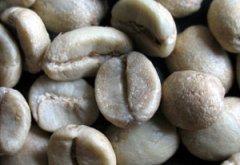
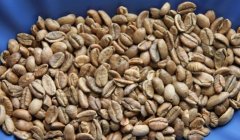
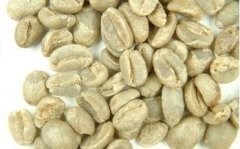
What kind of raw beans are high-quality raw beans? First look at the surface of beans, fresh and high-quality raw beans, the surface is shiny, in addition, the handling of good raw beans, uniform color, the surface of uneven color can not be called good beans, must choose uniform color. Secondly, the particle size is the same, which is also evidence of good quality management. Make sure that the particle size is the same when you buy it. Even

Boutique Coffee Common sense eight-hour ice drop coffee

Boutique Coffee Common sense eight-hour ice drop coffee

Coffee shops are generally limited in supply, because each time the production time is more than eight hours, ice drop coffee originated in Europe, because the coffee distiller was invented by the Dutch, so some people call it DUTCHCOFFEE, espresso or water drop coffee. Condensation natural osmotic water pressure, up to more than 8 hours, bit by bit extraction. The taste of coffee will vary with the degree of coffee roasting.

Panamanian Rose Summer Coffee with better knowledge than Blue Mountain

Panamanian Rose Summer Coffee with better knowledge than Blue Mountain

In the early years, the identification of top coffee mostly followed Japan, the king of coffee, the Blue Mountains of Jamaica and Kona, Hawaii, but with the continuous improvement of the standard of coffee-producing countries and the sharing of information, we were exposed to more high-quality coffee. This coffee bean Panama Rose Summer has become the new king of coffee in recent years. Introduction of Geisha varieties: Geisha

Boutique Coffee introduces Brazilian bourbon Santos Coffee

Boutique Coffee introduces Brazilian bourbon Santos Coffee

Flavor and taste characteristics: a variety of flavors, low acidity, taste lubrication. Brazil is a rich and beautiful land, with the Atlantic Ocean in the east, more than 7400 meters of coastline and the famous Andes in the west. Brazil is also the world's largest coffee producer, known as the coffee country. Brazil is vividly compared to the giant and monarch of the coffee world. Brazilian coffee was made in 1729

A hermit in the Brazilian Santos coffee kingdom.

A hermit in the Brazilian Santos coffee kingdom.

Origin: Brazilian grade: good granule: relatively full acidity: slight acid uniformity: stable roasting: low to deep flavor: neutral beans, low acid, smooth and round Brazil grows Arabica and Robusta coffee, but mainly Arabica coffee, mostly dried. There are about 3.97 billion coffee trees in Brazil, and the number of people engaged in coffee production is elder brother