
Specialty Coffee Beans
Latest articles, industry insights and brewing guides

Description of the flavor of Jamaican coffee with strong flavor introduction to the production process of planting environment
In 1950, the Government of Jamaica established the Jamaica Coffee Industry Committee (the Jamaica Coffee Industry Board), which sets quality standards for Jamaican coffee and oversees the implementation of quality standards to ensure the quality of Jamaican coffee. The committee awarded a special official seal to raw coffee and roasted coffee exported from Jamaica, which is the highest level of national coffee in the world.

Flavor description of Panama Kasha Coffee Cooperative introduction to planting environment of varieties in producing areas
Species of Geisha were discovered in the geisha Forest of Ethiopia in 1931 and sent to the Coffee Research Institute in Kenya, introduced to Uganda and Tanzania in 1936, introduced to Costa Rica in 1953, and Panama was introduced in the 1970s by Mr. Francico Serraxin of the Tonba Seven Farm Garden from CATIE in Costa Rica and began to grow geisha Coffee. G

Introduction to the characteristics of Coffee Flavor description varieties in Xida Mochizo producing area
Ethiopian coffee is mostly in the sun, but now it seems to have changed in recent years, and the boutique coffee movement has made people's mouths more and more picky. Less gossip, the aroma is obvious: according to Westerners, it is rose tea, but I think it is more like the taste of brown sugar and ginger soup, as well as the tonality of honey and oranges. This one is obviously purer than other Sidamo.
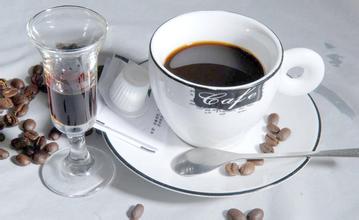
Honey-like sweet aroma of the sun Yega Shifeiwaka coffee growing environment flavor description introduction to the producing area
Although the Ethiopian Yirgacheffe coffee is petite, it is gentle and delicate and sweet. As the hometown of coffee, thousands of years of planting history and processing tradition in Ethiopia have created high-quality washed Arabica beans. Light baking has unique sweet aromas of lemon, flowers and honey, soft acidity and citrus flavors, fresh and bright on the palate. No.

Description of the flavor of El Salvador Himalayan coffee producing area with a smooth entrance introduction to the planting environment of brewing methods
The Republic of El Salvador, located in the north of Central America, is the most populous country in Central America. The country is bordered by Honduras to the north, the Pacific Ocean to the south and Guatemala to the northwest. The national economy is dominated by agriculture, and the main crops are coffee and cotton. El Salvador is also one of the birthplaces of ancient Mayan culture, with not only distant culture, but also volcanoes, plateau lakes and Pacific coast.

Introduction to the description of Manor Flavor of Coffee planting Environment and Variety producing area in Saint Roman Manor, Costa Rica
The research center, located about 30 kilometers northeast of the Costa Rican capital San Jose, belongs to the Costa Rican Coffee Association and is a research institution for villa sarchi planting, breeding and quality inspection newly developed by Costa Rica's national coffee breeds. in addition, it also has 10 hectares of experimental plots, planting a number of excellent varieties. Coffee is the main agricultural product in Costa Rica, with an annual output of more than 2 million bags

Description of delicious Antigua Coffee Flavor introduction to the production process of planting environment in the producing area
Guatemalan coffee has a strong aroma, even if you don't drink it, just smelling it is already a pleasure. Antigua coffee has a rich and velvety mellow, rich and lively aroma, and fine sour taste. When the attractive fragrance lingers on the tip of your tongue, there is an indescribable mystery. You may feel dull at the first sip, but as the coffee slows down

Introduction to the description of planting Environment and Flavor of Ecuadorian Coffee varieties with faint grassy fragrance
The Arabian Coffee Tree was first introduced to Ecuador (Ecuador) in 1952 and its coffee is of good quality, especially the coffee harvested in early June. Ecuadorian coffee beans can be divided into two varieties: Galapagos and Gigante, both of which have the characteristics of large granules and heavy weight. Ecuadorian coffee can be divided into first class (No.1) and super excellent (ExtraSuperior) according to its quality.

Description of mild and simple Ugandan Coffee Flavor introduction to the characteristics of planting environment and taste of varieties
Mbale on the eastern side of Mount Elgon and other producing areas on the western side near the border of the Democratic Republic of the Congo have the export name Wugar. The official ranks are Oaganic (Organic), Bugisu AA, Bugisu A, Bugisu B, Bugisu PB, Wugar, Drugar and other unlisted grades. To find a good Ugandan coffee, you must first recognize BugisuAA and A.

Introduction to the description of the characteristics and flavor of Burundian coffee varieties in the growing environment
Burundi coffee was introduced by Belgian colonists in 1930. Unfortunately, many of these farms are on the border with war-torn Rwanda, putting pressure on coffee production. Coffee production in Burundi: Burundian coffee is now grown only on small farms. Almost all the coffee produced in Burundi is Arabian coffee beans.

Description of planting Environment and Flavor of aromatic and grainy Puerto Rican Coffee varieties
Puerto Rico's coffee beans are carefully planted, pure, aromatic and heavy, of which the best coffee is Yauco Selecto, which means Selecto. Yaocote Coffee is grown only on three farms in the southwest of the island, San Pedro, Caracolillo and La Juanita. It is a truly high-quality coffee with a strong flavor and a long aftertaste. Puerto Rico

Smooth and smooth Dominica Coffee Flavor description Variety introduction to planting Environment in producing area
Coffee in Dominica varies slightly in taste according to the altitude of the region where it is grown, with sour but rich taste in the highlands, and less sour and smoother taste in the lowlands. On the other hand, the high-quality coffee beans produced by some Dominican estates have a rich aroma, mellow taste, moderately bright sour taste, and are often used with famous Puerto Rican or Jamaican coffee.

Introduction to the description of Variety characteristics and Flavor in the production process of Mexican Coffee with Sweet and sour characteristics
Mexican coffee-growing areas are mainly concentrated in the southeastern highlands, near Guatemala. Most of the mountains in the south are volcanic areas, and the volcanic ash soil is not only conducive to the drainage of coffee roots, but also provides sufficient nutrients for the growth of coffee trees. Most of the coffee varieties planted are Kaddura, Tibica, bourbon, etc., and the treatment methods are mostly water washing treatment, which are classified according to altitude. Coffee beans

Flavor description of Costa Rican Yerzaro Coffee producing area introduction of planting Environment and Variety
Costa Rican coffee has full particles, ideal acidity and unique strong flavor. Costa Rica's coffee industry, originally controlled by the Costa Rican Coffee Industry Company (InstitutodelCafdeCostaRica, ICAFE), has been taken over by the official Coffee Committee (OficinadelCaf). In exported coffee, those products that are considered to be of substandard quality are used in blue.

Sweet, fragrant but not sour Bali coffee estate production area Variety Flavor Description Planting environment Introduction
Ambassador Ali's mission was to use the circuitous strategy of coffee diplomacy to break up the French dynasty, which was preparing to march eastward. Luxurious and tasteful accessories, beautiful music, and well-cooked food Ambassador Ali's social gatherings immediately became a hot spot for Parisian high society. Everything there was so amazing and intoxicating. And even better, it's big.

Flavor description of Santo Domingo Coffee with rich flavor introduction to the planting environment of varieties in producing areas
Coffee in Dominica is grown in highlands and lowlands, and its taste is slightly different. The upland is sour, but the taste is rich; the lowland is less sour and tastes smoother. Boutique coffee has become popular in recent years. High-quality coffee beans produced by some Dominican estates have a rich aroma, mellow taste and moderately bright sour taste, and have been bought with the more famous Puerto Rico beans or teeth.

Fragrant and attractive Kilimanjaro Coffee Manor Flavor description Variety introduction of producing area
Kilimanjaro Coffee (Kilikmanjaro Coffee) is produced in Mount Kilimanjaro, the highest mountain in Africa in northeastern Tanzania. Its coffee is of good quality, rich aroma and outstanding sour taste, so it is suitable for the preparation of comprehensive coffee. Kilimanjaro coffee is an important lifeline of the Tanzanian economy. About 17% of the foreign exchange is created by coffee, which is mainly produced.

Introduction to the Flavor description of Guatemalan Coffee producing area
The aroma of coffee liberates all forms, hearts and national boundaries. Through coffee, the mood leaves the country at any time and lands in a strange country half a world away. Even at the end of the world, you can share a mood. Antigua was the capital of the Spanish colonial period in 1543. Although this emerald-like valley has been in all directions, layers upon layers, deliberately waiting for development and crisis since ancient times.

Description of Java Coffee Flavor with strong taste introduction to planting environment of variety characteristics in producing area
Java coffee is full-bodied and full-bodied, with clear, high-quality acidity, high balance, and sometimes nutty taste. In terms of appearance and quality, Java coffee is excellent, just like a woman's vaguely charming, charming and just right, memorable. Each caffeine variety is of different origin and has its own strong personality, such as masculine

Introduction to the characteristics of varieties in Costa Rican Coffee growing Environment and Flavor description
One of the most famous is Mountain Costa Rica Coffee, which tastes mellow and neutral. It can be boiled directly or mixed with other kinds of coffee beans to form a mixed coffee. It is also a good choice. Other kinds of Brazilian coffee, such as Rio and Parana, can be produced in large quantities because they do not need too much care. Although they taste rough, they can be regarded as a kind of coffee with good quality and low price.