
Specialty Coffee Beans
Latest articles, industry insights and brewing guides
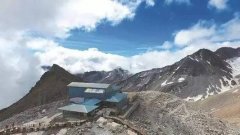
Mellow Yunnan small Coffee Huaguoshan boutique Coffee Bean Flavor and Taste description Jane
Pu'er, Xishuangbanna, Wenshan, Baoshan, Dehong, Lincang and other places in the south and west of Yunnan are all the distribution areas of small-grain coffee in Yunnan. As of January 1, 2012, according to the comprehensive survey of Yunnan Province, the planting area of coffee in Yunnan has exceeded 800000 mu, and the output of coffee beans in this period is expected to exceed 55000 tons. For the future, the blueprints of local governments in Yunnan have also been drawn up:
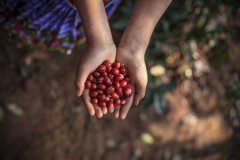
A brief introduction to the treatment method of grinding degree and baking degree of Columbia exquisite coffee beans with high balance
Colombia's exquisite Tamina boutique raw beans Colombia's suitable climate provides a real natural pasture for coffee. Coffee trees in Colombia are mainly cultivated in the Andes, on steep slopes about 1300 meters above sea level, where the annual temperature is about 18 degrees Celsius, annual rainfall is 2000 to 3000 mm, latitude 1-11-15 north, longitude 72-78 west, sea

Columbia with a long aftertaste, the cultivation of exquisite boutique coffee beans, geographical location, climate and altitude
No matter in terms of yield or texture, Colombian coffee is first produced by Medellin, which is characterized by full granules, rich nutrition, moderate acidity, good balance, rich aroma and soft taste. In addition to Medellin, the provincial capitals of two neighboring provinces in the south, Armenia and Manizales, are also famous coffee producers.

A brief introduction to the Market Price of Columbia's exquisite Fine Coffee Bean varieties
The annual temperature there is about 18 degrees Celsius, the annual rainfall is 2000 to 3000 mm, latitude 1-11 15 north, longitude 72-78 west, the specific range can exceed 2.000 meters above sea level. By a special combination of factors, the latitude, altitude, soil, plant origin of species and varieties of coffee in the coffee growing areas of Colombia, the climate and tropics of the coffee growing areas
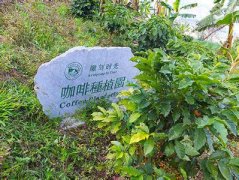
A brief introduction to the origin, development, history and culture of Columbia's exquisite boutique coffee beans.
The suitable climate in Colombia provides a real natural pasture for coffee. Coffee trees in Colombia are mainly cultivated in the Andes, on steep slopes about 1300 meters above sea level, where the annual temperature is about 18 degrees Celsius, annual rainfall is 2000 to 3000 millimeters, latitude 1-11 15 north, longitude 72-78 west, and the specific range of elevation can exceed 2.000 meters. By

A brief introduction to the description of the flavor and aroma characteristics of Columbia's exquisite coffee beans
The annual rainfall is 2000 to 3000 mm, latitude 1-11 15 north and longitude 72-78 west. The specific range of elevation is more than 2.000 meters. By a special combination of various factors, the latitude, altitude, soil, plant origin of species and varieties of coffee in the coffee growing area of Colombia, the rain pattern produced by the climate and tropical convergence of the coffee growing area, in one.
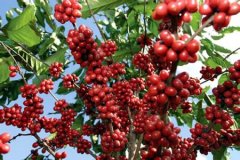
The flavor and taste of Ethiopian Danqi Meng NinetyPlus 90 + LevelUp boutique coffee beans
Net content: 227g packing mode: bulk origin: Ethiopia Levelup Drima Zede country: Sidamo altitude: 17502000m production area: Sidamo baking degree: light baking method: sun varieties: local native seed treatment plant: NinetyPlus 90 + flavor: nectarine, tropical fruit, oak barrel aroma 90 + beans and general habits boutique

Characteristics of Flavor and Flavor of Fine Coffee beans in Waka processing Plant in Ethiopia Solar Yega G1 Jietipu area
Factory name: coffee workshop address: Guangzhou Yuexiu District manufacturers contact information: 20-38364473 shelf life: 90 net content: 227g packaging: raw maturity of bulk coffee beans: coffee cooked beans contain sugar: sugar-free origin: Ethiopia roasting degree: light roasting Ethiopia Natural Yirgacheffe Gedeb Woka G1 country: Ethiopia grade: G1 production
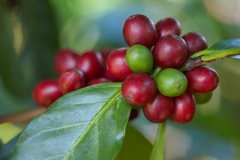
Ethiopia washed Yega native species Waka WorkaG1 boutique coffee beans with special flavor and flavor.
Factory name: Dazhen Coffee Qianjie Cafe location: Guangzhou Baoqian Street 10 manufacturer contact Information: 38364473 ingredients Table: self-baking shelf life: 90 net content: 227g packaging: raw and ripe coffee beans in bulk: whether coffee beans contain sugar: sugar-free origin: Ethiopia roasting degree: light roasting Ethiopia Washed Yirgacheffe Worka G1 country

The flavor and aroma characteristics of coffee beans with exquisite nectar in Sidamo G1gu Guji Shakiso.
Nectar, the original meaning of Xia Qieso's nectar, opens the website of Coffee Review to search for keywords with Guji. There are more than 10 articles with scores above 92 points, and there are also several times with high scores of 94 and 95. Sweet cherries, raisins, preserved fruits, plums, dried pineapples, strawberries [wet] cherries, blueberries, oranges, plums, blueberries, peaches, litchi [sips] such as sweet and juicy peaches

Description of flavor, taste and aroma characteristics of Ethiopian sun Sidama Sidamo Guji boutique coffee beans
Shakisso/Shakiso 's coffee is quite unique, and the coffee it produces has repeatedly attracted market attention. The original meaning of Ninety Plus's legendary bean (nekisse) is from Shaquiso's Nectar from shakisso, and its producing area and name are all from Shaquiso Shakisso. Factory name: Qianjie Cafe address: Baoan Qianjie, Yuexiu District, Guangzhou City

A brief introduction to the consistent treatment method of grinding degree and baking degree of Angolan boutique coffee beans
The market for Angolan coffee: in the mid-1970s, 98 per cent of Angola's annual coffee exports were Roberts (probably the best in Africa), but total production fell in 1990. Most of Angola's coffee was exported to the United States, the Netherlands and, of course, Portugal in the 1970s. Angola produced about 180000 tons of commercial coffee a year.
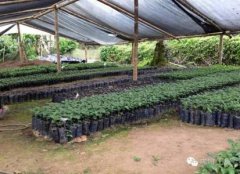
A brief introduction to the cultivation of high-quality Angolan boutique coffee beans, geographical location, climate and altitude
The Secretary-General of the African Coffee Organization (Coffee Organization), Joseph Farrayasarko, said on the 10th that Angola is expected to regain its status as a major coffee producer in the world due to the launch of a nationwide coffee planting campaign. In analyzing the global financial crisis and the situation of the international coffee market, Sako said that there are still gaps in the international coffee market. Angolan coffee should not only improve its output, but also its quality.
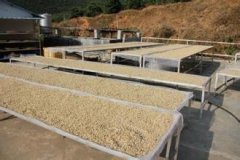
A brief introduction to the Market Price of High acidity Fine Coffee Bean varieties in Angola
Angolan Agriculture Minister Afonso Pedro Kanga revealed that Angolan coffee production this year is expected to double that of last year to 12000 tons. In 2008, in order to regain its status as a major coffee producer in the world, the Angolan government introduced a plan to receive a preferential micro-loan of US $5000 per farmer to grow coffee. Origin of coffee in Angola: 98% of coffee in Angola (Angola) is Luo

A brief introduction to the history and culture of the origin and development of Angolan boutique coffee beans that are almost impossible to buy.
Angola was once one of the largest coffee producers in the world, with coffee production reaching a record 225000 tons in 1974. However, as a result of the 27-year civil war that broke out after independence in 1975, Angolan coffee production fell sharply, Angola's ambassador to the United States, Agostinho Tavares, told Angolan daily newspaper Jornal de Angola on Monday in New York that the first batch of Angolan coffee exported to the United States (a total of 11 tons) had arrived in the country.
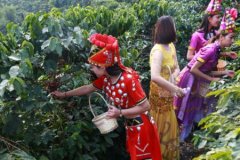
A brief introduction to the flavor, taste and aroma characteristics of Angolan boutique coffee beans, once a big coffee country
The Angolan government is currently working on a development plan to revitalize coffee production in order to restore coffee production across the country to the level of the 1970s. Manuel Dias, director of the Angolan Coffee Agency, recently told the local press that the Angolan government's plan mainly includes expanding growing areas, increasing investment, working hard to support coffee farmers and promoting fine varieties. Uige, Bengo

A brief introduction to the cultivation of Arabica boutique coffee beans, geographical location, climate and altitude
Good Arabica? Coffee requires complicated manual picking, selection and meticulous processing, so are the most expensive and best coffee beans in the world? Arabica? Grow coffee. Robusta? Growing coffee is usually used to produce instant coffee and canned coffee because of its low cost. A few of the better ones? Robusta? Growing coffee is also used in blending (with Allah)

A brief introduction to the Market Price of Robusta Coffee Bean varieties
Its caffeine content is much higher than that of Arabica species, which is about 3.2%. Arabica coffee beans grow at colder high elevations in the tropics, which is not suitable for Arabica species. Robustadow is grown in lowlands 200-600m above sea level. He prefers a warm climate and requires a temperature of 2429 ℃ for rainfall.

A brief introduction to the treatment method of grinding degree and baking degree of Mexican boutique coffee beans with special and elegant taste
Aldura coffee beans are the top coffee beans in Mexico. This kind of coffee beans have large granules, with strong sweet, sour and good aroma. About 5 times of Mexico's national area are plateaus and mountains, with an annual average temperature of 2527 ℃. The Mexican plateau has a mild climate all the year round, with mostly plateau topography, no cold winter, no hot summer, and evergreen trees all the year round.
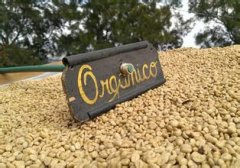
A brief introduction to the cultivation of Mexican boutique coffee beans with good fragrance, geography, climate and altitude
Non-alcoholic Mexican coffee often goes with milk. Heat a cup of milk, a teaspoon of cinnamon powder and a teaspoon of vanilla powder in a pot at medium temperature, not too hot, and do not boil the milk. Then add the cocoa powder, fully dissolve and stir well. If you like chocolate, you can use chocolate paste instead of cocoa powder and milk. Let the milk dry for about 5 minutes until the cow