
Specialty Coffee Beans
Latest articles, industry insights and brewing guides


A brief introduction to the cultivation of Bankimaji boutique coffee beans, climate and altitude
Yemeni (Yemen) aroma 4, brightness 4, mellow, 3 flavors, 4.5 aftertaste, 5 points suitable for baking: City/Full city from city to full city is suitable, light baking will highlight the western flavor and spice, while deeper baking will make dark chocolate and smoky taste obvious, at the same time, the taste will be more intense. It should be noted that because the beans are relatively small, plus the size of the particles is quite large.

Pure taste of Banci Maggie coffee varieties planted market price profile
Gesha Estate is different from Geisha in Panama, but it is still worth tasting. It is rare in Ethiopia's sun-baked beans region. The variety of spices and fruits is Bench Maji, located in southwest Ethiopia, not far from neighboring Sudan. It is easy to find with Google map. Banqi Maji Gesh

A brief introduction to the History and Culture of the Origin and Development of Banqi Magi Fine Coffee beans
Although the flavor of Bancimaji Gesha Estate is different from that of Panamanian Geisha, it is still worth tasting. It is rare in many sun-dried bean regions in Ethiopia, distinguished from other coffee by its varied spices and fruit flavors. This estate is owned by Gashaw Kinfe Desta and is very close to the town of Geisha. Geisha Town is also a well-known variety G

A variety of spices, fruit flavours, coffee beans, flavours, taste, aroma characteristics.
Elevation: 1500- 1700m Processing method: Sunlight Variety: Typica, Heirloom Producer: Smallholder Harvest Concentrated Processing Flavor: Jackfruit, Spice, Wine Ethiopian coffee mainly has eight producing areas: Ekempti, Limu, Illubabor, Djimma, Harrar, Teppi/Bebeka, Sidamo, Yirgacheffe. Ethiopian coffee in Taiwan
A brief introduction to the treatment method of grinding degree and baking degree of Kenyan boutique coffee beans
This coffee has an excellent medium purity, crisp and refreshing taste. It has a fresh flavor and is most suitable for drinking iced coffee in summer. When tasting this coffee, if it is paired with sour fruits such as grapefruit, it will certainly give me the best coffee experience. Not much like coffee, but a bit like fruit tea is the common feeling of many people to this kind of shallow roasted Kenyan coffee. In addition to having obvious and

A brief introduction to the cultivation of coffee with fruit flavor in Kenya, climate and altitude
Kenyan coffee is mostly grown at 15002100 meters above sea level and is harvested twice a year. To ensure that only ripe berries are picked, people must tour the forest about seven times. Kenyan coffee is grown by small farmers. After they harvest the coffee, they first send the fresh coffee beans to the cooperative cleaning station, where the washed and dried coffee is covered with parchment beans.

A brief introduction to the Market Price of Fine Coffee Bean varieties in Kenya in Africa
Auctions are also organized to meet the needs of dispatchers. This kind of auction usually has a small auction volume (3-6 tons each), with samples with the grower's logo for buyers to enjoy. After the auction, the exporters pack according to different flavors, different qualities and the quantity required by the blenders. This provides a great deal of flexibility for the dispatcher. Quality-conscious Germans and Nordic people are long-term buyers of Kenyan coffee.

A brief introduction to the history and culture of the origin and development of coffee beans in Kenya
This coffee has an excellent medium purity, crisp and refreshing taste. It has a fresh flavor and is most suitable for drinking iced coffee in summer. When tasting this coffee, if it is paired with sour fruits such as grapefruit, it will certainly give me the best coffee experience. Kenya is bordered to the north by Ethiopia, the origin of Arabica coffee trees, but it was not until the early 20th century that it began to engage in coffee cultivation.

A brief introduction to the flavor, taste and aroma characteristics of Kenyan coffee manor
In addition to having obvious and charming fruit acidity, Kenyan coffee is mostly from small coffee farmers, planted in a variety of different environments, encounter different climate and rainfall every year, and bring a variety of distinct and unique personalities. Take the AAPlus grade KenyaAA+Samburu as an example, the 2001 Samburu has a strong black plum flavor, low acidity and strong taste, and was newly harvested in the winter of 2002.

A brief introduction to the cultivation of Yellow Bourbon Coffee beans in Brazil
Santos comes from the port of PORTO DE SANTOS, a port in the Atlantic Ocean in southeastern Brazil. Among the coffee exported from the port of Santos, there are Brazilian coffee from different producing areas, of which Minas Gerais is of the best quality. The bourbon of Brazil's Bourbon Santos comes from the BOURBON island of the Bourbon Inambek Coffee Tree.
Brazil fine coffee varieties planting market price profile
Moreover, the semi-solarization method also inherits the advantages of the solarization method to improve sweetness, but it has less unpleasant earthy taste, winning praise from international coffee experts. The winners of Brazil's Super Cup of National Beans almost all used the semi-sun method, because this treatment can reduce the traditional earthy and woody taste of Brazil beans, and enhance the fruity and sweet taste, which is most suitable for single products. Therefore, semi-sun method has become a must for Brazil's fine beans.

A brief introduction to the treatment method of grinding degree and baking degree of Brazilian boutique Syrador coffee
From 2011 to 2012, in order to find out the variety of this part of the coffee, I personally went to Dahongpo to have a look. According to the collected samples and the morphological analysis of the trees, it can be basically determined that this part of the coffee tree introduced by Yang Fakuan is bourbon or bourbon variety Kaddura boutique coffee farm is put forward by the senior coffee practitioner Wen Coffee, and combined with high-quality and multi-land producing areas, experienced.

History and Culture of Coffee Origin in Brazil, the largest Coffee producer and exporter in the World
Through 20 years of research and development and cultivation, the trembling world of Datra sweetness has been born under the watch of scientists. The results it has achieved will also impress you on Brazilian coffee, the famous Danish coffee maker Terres. Paulson won the 2005 International Cup barista contest with the espresso formula of Datla Sweets. Klaus in 2006. Thomson also took
A brief introduction to the flavor, taste and aroma characteristics of Brazilian boutique coffee beans
Other kinds of Brazilian coffee, such as Rio and Parana, can be produced in large quantities because they do not need too much care. Although they taste rough, they can be regarded as a kind of good and cheap coffee. Because they are distributed all over Brazil and their solid quality varies, they have their own standards (NO.2~NO.8 according to the number of sundries, NO.13~NO.19 according to the size of beans, and six according to taste).

Brief introduction to Climate and altitude of Coffee Bean cultivation in Nicaragua
The coffee produced in Nicaragua's Madagelba, Sinodega and Segovia is highly respected by coffee lovers all over the world. In particular, the coffee produced in the Madaguelba region tastes very similar to the Kenyan AA coffee. Nicaragua is an economically backward agricultural country and one of the poorest countries in Central America. The unemployment rate is very high and the people live in poverty.
Silky and delicate Nicaragua coffee grind treatment Roast degree profile
In fact, coffee in Nigeria is known all over the world (Starbucks has many cooperative coffee farmers in Nigeria), and several coffee producing countries in Central America, Ex: Guatemala, Costa Rica, Nicaragua, produce coffee of similar quality, mainly due to differences in weather conditions, soil fertility, planting height, etc. Nigeria has a unique environment for coffee production
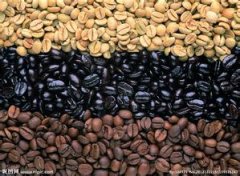
A brief introduction to the Market Price of Boutique Coffee in Nicaragua
In order to ensure the quality of coffee, the manual picking method is used to pick the fully ripe fruits one by one, which usually takes three times to complete. Although the manual picking method has high labor cost and low picking efficiency, it can greatly protect the plant from being hurt in the picking process, and the mature fruit will have better sweetness at the same time.

A brief introduction to the History and Culture of the Origin and Development of Boutique Coffee in Nicaragua
Coffee is a pillar industry in Nicaragua, producing nearly 100,000 tons of coffee beans every year. Many people who have tasted Nicaraguan coffee usually think that it is no different from Salvadoran coffee or Honduran coffee. It is full-bodied, smooth and delicate, with a slightly bitter finish, like a faint taste in a wine. In many countries, coffee production will be seriously affected for political reasons.

A brief introduction to the flavor, taste and aroma characteristics of Nicaraguan boutique coffee
According to the president of the Nicaraguan Coffee Farmers' Federation, due to the poor harvest of coffee in Nicaragua's Pacific region, the country's total coffee production in 1998 may be 12% lower than that in 1997. In the coffee year of 1997 and 1998, Nicaragua harvested a total of 1.422 million bags (each 46kg) of coffee, which is the best harvest after the coffee production has been hovering around 1 million bags in the past 14 years.