
"AD"
1631 article(s) found

Coffee culture Coffee is regarded by Muslims as the gift of Allah
In the eighth century AD, there was a magical black water called Qahwa in the Arabian Peninsula, which was said to restore physical strength, exuberance, and no sense of purpose. The tenth century Muslim philosopher and Iranian doctor Avicina Ibn Sina,980-1037 recorded a plant from Yemen called Bunchum, which is said to be something like coffee. As early as

Yega Xuefei AT processing Plant Sidamo AD processing Plant introduces what is the Red Cherry Project?
Professional coffee knowledge exchange more coffee bean information please follow the coffee workshop (Wechat official account cafe_style) Yega area-A.T. Treatment field (Alemayehu Tilahuns washing station) A.T. "Coffee is my life," said Alemayehu, the owner of the Gedeb district of Yegashev, at an altitude of 1700-2200m.

Introduction to the quality of Yunnan small Coffee Flavor description of Tieka Coffee Manor
The separatist forces were eliminated in the Sui Dynasty, Yunnan was put back under the direct rule of the central government, and then in the early Tang Dynasty, it basically restored the scale of counties and counties in the Han and Jin dynasties. In 707 AD, the Tang Dynasty defeated the Tubo expansion forces invading Erhai Lake in the south, established iron pillars to record meritorious service, supported Nanzhao to unify Erhai area in 738 AD, and canonized Polo Pavilion as the king of Yunnan. The territory of Nanzhao period was bordered by Guizhou in the east and Yiluo in the west.
Magic "Blackwater"
In the eighth century AD, there was a magical black water called Qahwa in the Arabian Peninsula, which was said to restore physical strength, exuberance, and no sense of purpose. The tenth century Muslim philosopher and Iranian doctor Avicina Ibn Sina,980-1037 recorded a plant from Yemen called Bunchum, which is said to be something like coffee. As early as
The magical "Blackwater" of Arabs
In the eighth century AD, there was a magical "black water" called "Qahwa" in the Arabian Peninsula, which was said to restore physical strength, exuberant spirit, and no intention.

History of coffee beans Coffee civilization departure
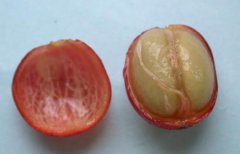
Legend has it that around the 10th century AD, on the Ethiopian plateau in Africa, there was a shepherd named Carl who discovered that his sheep were excited after eating some kind of red fruit. Carl then distributed the magical red fruit to the locals, and its magical effects spread. Picture 1 Red fruit on coffee tree Another legend dates to AD 1258, when it was also

The history of coffee beans
Legend has it that around the tenth century AD, on the Ethiopian plateau of Africa, a shepherd Carl found sheep excited after eating some kind of red fruit. As a result, Carl distributed this incredible red fruit to the locals, and its magical effect spread. Photo 1 there is another legend about the red fruit on the coffee tree in 1258 AD.

The History of Coffee beans how Coffee flows into China
Legend has it that around the tenth century AD, on the Ethiopian plateau of Africa, a shepherd Carl found sheep excited after eating some kind of red fruit. As a result, Carl distributed this incredible red fruit to the locals, and its magical effect spread. Photo 1 there is another legend about the red fruit on the coffee tree in 1258 AD.

Coffee is the history of entering China.-when will coffee enter China?
Introduced into the Arab world: in 525 AD, Ethiopian troops invaded Yemen, and coffee beans were brought to Yemen by soldiers. According to records, coffee trees began to be planted in Yemen in 575 AD. Later, coffee beans were also brought to Egypt by Sudanese black slaves who were shipped to Egypt. After coffee was introduced into the Arab world, it was initially used by Arabs as a herb to treat migraine and promote elimination.

The history of coffee beans is related to the spread of coffee beans.
Legend has it that around the tenth century AD, on the Ethiopian plateau of Africa, a shepherd Carl found sheep excited after eating some kind of red fruit. As a result, Carl distributed this incredible red fruit to the locals, and its magical effect spread. There is also a legend that in 1258 AD, in the mountains of Yemen, people were killed for crimes.

The history of coffee beans originated in Africa. The specific process is as follows.
Legend has it that around the tenth century AD, on the Ethiopian plateau of Africa, a shepherd Carl found sheep excited after eating some kind of red fruit. As a result, Carl distributed this incredible red fruit to the locals, and its magical effect spread. There is also a legend that in 1258 AD, in the mountains of Yemen, people were killed for crimes.

A brief history of tea origin stories and culture About the basic origins of tea Where did the knowledge originate
As far away as South Asia, in India, there is a story about tea: tea was discovered by Bodhidharma (AD 460 - 534). Born near Chennai (formerly Madras) in modern South India, Bodhidharma was the ancestor of Zen Buddhism. Rumor has it that he faced the wall for nine years, didn't sleep, didn't sleep, and meditated; one day he felt drowsy.

Introduction to the proportion of brewing water and powder in Huaguo Mountain of Yunnan small Coffee
Yunnan small Coffee Huaguoshan brewing water and powder ratio introduced the Jin Dynasty Taishi seven years (271), changed to Ningzhou. Taikang three years (282 years), re-province into Yizhou, home Nanyi school Wei. Taian two years (303 years), reset Ningzhou. In the eighth year of Xianhe in the Eastern Jin Dynasty (AD 333), Li Xiong sent Li Shou to lead troops to capture South Central China. Li Shou was named King of Jianning, and Qichen was the thorn history of Jiaozhou. Xiankang four years (
Coffee Culture-- the Origin of Coffee
Drinking coffee is very popular in Europe and the United States. Coffee consumption is also becoming more and more popular in China and other eastern countries. Potential

Yunnan Arabica coffee quality introduction Tin card coffee estate varieties planting market price introduction
Yunnan can be said to be the only province where Arabica is still planted in large areas. The main planting areas are concentrated in Lincang, Dehong, Baoshan, western Yunnan and Pu 'er Banna, southern Yunnan. The coffee introduced by missionaries in the 19th century is mainly Robusta, and no large-scale planting has been carried out since then. In the 1950s, Soviet experts assisted the world's two mainstream Arabica varieties: iron pickup typica and wave.
The story of coffee
The earliest origin of coffee trees is recognized by botanists and the industry as Kaffa province in Ethiopia. Ethiopia is located in the landlocked country of northeast Africa, with many lakes, rivers and rich water resources, which is called the East African Water Tower. The name of the country comes from the Greek word for tanned faces and land inhabited by suntanned people. The legend of the shepherd

Katim Coffee Flavor description Grinding scale Variety treatment Taste Manor introduction
Katim Coffee Flavor description Grinding scale Variety treatment method Taste Manor introduces Zheng Maishi to kill King Jian Dachanghe in 879 AD. In the fourth year of Guanghua (901), Zheng Maishi took the throne, became king, and changed the national name to Dachanghe. Yang Ganzhen built Dayi Ning in 927. In 937 AD, Duan Siping contacted 37 departments to destroy Dayi and Ningguo and established the regime of Dali. The regime of Dali basically inherited

Origin and History of Coffee
Legend has it that in the sixth century AD, a shepherd in Ethiopia found his sheep jumping around all of a sudden. He observed carefully that the sheep had this excited reaction after eating only a red fruit. He tried to share this fruit with others, and all of them felt refreshed and refreshed after eating it. Therefore, this fruit was used as a refreshing medicine.

How did the name of coffee come from?
It starts with the Ethiopian legend of the 5th century AD, when the sheep of the shepherd boy Kadi was so excited after eating a strange red fruit that Kadi and his companions could not help but give it a try, feeling refreshed and weary. Spread ten, ten hundred, this red fruit has since become a part of the local food culture, this red fruit is coffee. After that, coffee was introduced into Arabia.
Comparison of two varieties of high-quality coffee beans: Arabica and Robusta
Arabica (Arabica) Robusta officially named 1753 AD 1895 coffee tree height 6 "8 m 10 m the best planting height 800m 2000 m flat land ~ 800m the best plant height 15025 o C 24030 o C the best rainfall 1500 ~ 2000mm 2000 ~ 3000mm 70% of the world yield