How Coffee Beans Spread Across the World
Ever wondered where coffee beans really came from, or how they ended up in your morning cup? The story isn’t just about brewing—it’s a journey across continents, involving shepherds, exiles, and a fruit that changed the way we wake up.
Coffee beans originated in Ethiopia around the 10th century, spread to Yemen by the 15th century, and reached global trade by the 17th century. They entered China’s mainland market in the late 1990s, gaining popularity among younger consumers over the past 20–30 years.
The Ethiopian Shepherd Legend
One of the oldest legends says that around the 10th century in the highlands of Ethiopia, a shepherd named Kaldi noticed his goats became unusually energetic after eating red berries from a certain bush. Curious, Kaldi tried the berries himself and felt the same surge of energy. He shared them with local villagers, and word of the stimulating fruit began to spread. Though unverified, this tale is often cited as coffee’s first appearance in human history.
The Yemeni Exile’s Discovery
Another widely told story dates to 1258 in the mountains of Yemen. A man named Omar, exiled from his tribe, wandered the desert until he found refuge near the city of Mocha. Exhausted, he observed birds energetically eating red fruits from a tree. When he boiled the fruits and drank the liquid, he felt revitalized. Word of Omar’s discovery spread, and he returned to Mocha a redeemed man, revered for bringing the energizing drink to his community. The fruit was believed to be coffee, and Mocha became one of the first major coffee trading hubs.
How Coffee Traveled From Africa to the World
While legends offer colorful beginnings, historical evidence confirms that coffee cultivation and consumption began in Ethiopia, particularly in the region now known as Kaffa. By the 15th century, coffee had made its way across the Red Sea to Yemen, where it was cultivated in the high-altitude regions near Mocha and eventually roasted and brewed as we know it today. Yemen became the center of early coffee trade, distributing beans to Egypt, Persia, Turkey, and beyond. By the 16th and 17th centuries, coffeehouses—known as qahveh khaneh—had spread across the Middle East, and European travelers brought coffee back to the continent, leading to the first coffeehouses in Venice, London, and Paris. Over time, coffee cultivation expanded to Java, the Caribbean, Latin America, and eventually Asia.

Coffee’s Arrival in China
Coffee reached different parts of China at varying times. In the 1960s, Indonesian Chinese communities were already drinking coffee daily. Taiwanese began their coffee culture in the 1970s, which has since grown for around 40 years. Hong Kong’s coffee history may date back even earlier, though details remain unclear. On the Chinese mainland, coffee only began gaining widespread attention in the late 1990s. Since then, the market has expanded rapidly, with young people increasingly accepting coffee as part of daily life. Today, coffee is consumed in diverse settings across the mainland—including restaurants, cafés, bakeries, and dessert shops.
Frequently Asked Questions
Where did coffee beans originate?
Coffee beans originated in the highlands of Ethiopia around the 10th century, with the earliest stories involving a shepherd named Kaldi who noticed his goats becoming energetic after eating red coffee cherries.
How did coffee spread from Ethiopia to the rest of the world?
Coffee spread from Ethiopia to Yemen by the 15th century, likely through trade routes across the Red Sea. Yemen became a hub for coffee cultivation and trade, distributing it to the Middle East, Europe, and eventually globally.
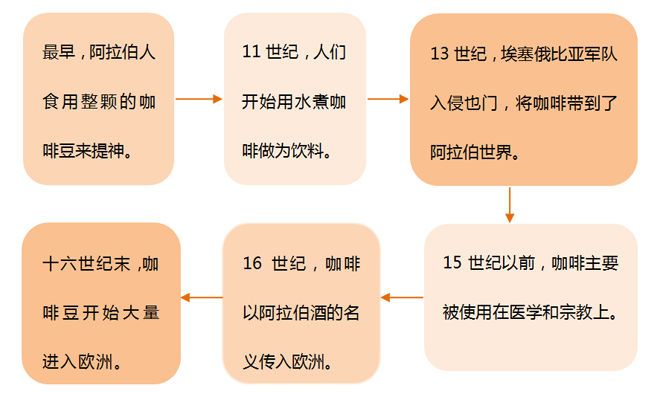
What role did Yemen play in coffee’s history?
Yemen was instrumental in the development of coffee as we know it. By the 15th century, coffee was being cultivated in Yemen’s mountainous regions, particularly around Mocha, which became a central trading port. Yemenis were among the first to roast and brew coffee beans, establishing the foundations of modern coffee preparation.
When did coffee arrive in China?
Coffee arrived in different parts of China at different times: Indonesian Chinese communities drank coffee daily in the 1960s, Taiwanese began in the 1970s, and the Chinese mainland only saw widespread coffee interest starting in the late 1990s.
Are the stories about Kaldi and Omar true?
The stories about Kaldi in Ethiopia and Omar in Yemen are widely told legends, not confirmed by historical evidence. However, they reflect the long oral tradition surrounding coffee’s early discovery and cultural significance.
FrontStreet Coffee Beans Linked to Coffee History
Explore coffee origins with FrontStreet’s Ethiopia Yirgacheffe, a bright and floral single origin with notes of citrus, jasmine, and stone fruit—echoing the highland terroir of coffee’s birthplace. For Yemeni-inspired profiles, try our Ethiopia Sidamo, offering tart berry, spice, and a wine-like body reminiscent of early Mocha coffees. Both beans highlight the vibrant fruit and acidity associated with early coffee traditions. Freshly roasted within 5 days · Orders placed before 17:00 ship the same day · Next-day delivery across most of Guangdong Province.
FrontStreet Coffee is a long-established specialty coffee roaster in Guangzhou China, selling freshly roasted beans from its own farm in Yunnan as well as dozens of carefully selected single-origin beans from around the world for both pour-over and espresso. The products deliver consistently excellent quality and great value, with shipping within 24 hours. Guangzhou's FrontStreet Coffee shop is recommended by many coffee lovers, and the beans are now available online at the Tmall 。
Important Notice :
前街咖啡 FrontStreet Coffee has moved to new addredd:
FrontStreet Coffee Address: 315,Donghua East Road,GuangZhou
Tel:020 38364473