
"Booth."
753 article(s) found

The difference between arabica and Robusta Coffee and Coffee beans
The difference between arabica and Robusta Coffee and Coffee beans [figure]
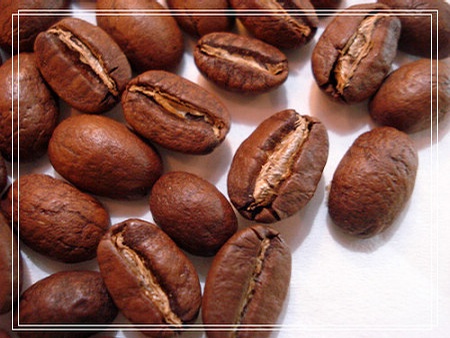
Coffee Bean Description: Selected washed Royal Robusta coffee beans
Arabica and Robusta are different species under the genus Coffea, but their fates are very different. Robasta is like cinderella, and her sister arabica is expensive. Americans and Italians have been fighting for decades. In fact, Americans are the initiators of the degradation of Robasta beans to cheap beans. As the quality of Robasta improves, after the millennium, excellent

World Boutique Coffee Estate Indonesia Coffee Beans: Introduction to Indonesian Java Robusta Green Beans
In the early 1970s Java cut down most of the Arabica trees introduced by the Dutch and planted them with robusta beans, and since then Java coffee has become greasy, bland and has a strong smell of wheat tea. Indonesia Java robusta green bean In the early seventies Java introduced most Dutch Arabi
Indonesia Java Robusta raw beans Indonesia Java Robusta Java boutique coffee
In the early 1970s, Java cut down Arabica trees introduced by most Dutch and planted Robbosa beans instead. Since then, Java coffee has become greasy, plain and has a strong smell of wheat and tea. Among the few remaining Arabica estates, Djampit is the most famous. These beans are similar to other Indonesian beans, but with obvious sour taste and no texture.

Indonesia Java Robusta raw beans Indonesia Java Robusta Java coffee beans Java coffee coffee
In the early 1970s, Java cut down Arabica trees introduced by most Dutch and planted Robbosa beans instead. Since then, Java coffee has become greasy, plain and has a strong smell of wheat and tea. Among the few remaining Arabica estates, Djampit is the most famous. These beans are similar to other Indonesian beans, but with obvious sour taste and no texture.

Indonesian Java Coffee Robusta Coffee Raw beans introduction to the History of Robusta Coffee beans Robbs
In the early 1970s, Java cut down Arabica trees introduced by most Dutch and planted Robbosa beans instead. Since then, Java coffee has become greasy, plain and has a strong smell of wheat and tea. Among the few remaining Arabica estates, Djampit is the most famous. These beans are similar to other Indonesian beans, but with obvious sour taste and no texture.

Arabica and Robusta hybrid coffee bean varieties
1. Timo: A hybrid of Arabica and Ba and Robasta found in East Timor. 2. Catimor: Major variety of commercial bean, East Timor, colonized by Portugal for 400 years. Brazilian bourbon variety Catimor was transplanted to East Timor by Portuguese in 1959. Mixed with Timo, coffee from 1970 to 1990
Coffee bean varieties arabica and Robusta coffee and coffee beans
The difference between arabica and Robusta Coffee and Coffee beans [figure]

Commercial beans Robusta coffee beans
The bean shape is larger, the front is gradually round, the back is round and convex, and the crack is straight. Robasta coffee trees are native to Madagascar in central and western Africa and Indonesia in Asia, and account for about 20% to 30% of the world's output. Robasta coffee tree is suitable for planting in the lowlands below 500 meters above sea level. It has strong adaptability to the environment, can resist the harsh climate and resist.
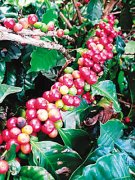
Robusta Coffee Bean Grown in Which Areas Are Grown in Robusta
Madagascar is basically a producer of Robaik coffee, but there are plans to increase the cultivation of Arabica coffee beans. Since 1989, the island's coffee industry has been privatized and deregulated, with total coffee production reaching around 1 million bags per year. Domestic consumption of coffee is high because Malagasy people like to drink coffee. The country's Robert

Robusta coffee beans commercial coffee beans
The bean shape is larger, the front is gradually round, the back is round and convex, and the crack is straight. Robasta coffee trees are native to Madagascar in central and western Africa and Indonesia in Asia, and account for about 20% to 30% of the world's output. Robasta coffee tree is suitable for planting in the lowlands below 500 meters above sea level. It has strong adaptability to the environment, can resist the harsh climate and resist.

Medium fruit coffee (Robusta coffee)
Arabica coffee accounts for 75% of the world's coffee production, and its quality varies widely, from good to bad. In recent years, a few countries (such as India) have devoted themselves to improving the quality of robusta coffee. They have planted robusta in high altitude areas, given the most careful care, and carefully washed the coffee. As a result, they get very good quality robusta coffee beans! The top Luo.

Cat poop coffee bean species wild Robusta and captive Arabica
The species of cat poop coffee beans include wild robusta species and captive Arabica species. Normal wild Indonesian civets live about 1200 meters above sea level. Indonesian coffee beans at this altitude are generally robusta coffee beans, so the natural species of Indonesian cat poop coffee beans are generally Robusta coffee. Captive cat poop caffeine, it is better to feed civets.

Two common coffee tree species: Arabica and Robusta
Two common coffee trees: Arabica and Robusta. Arabica coffee grows best at high altitude. this coffee has a much more refined flavor than other coffee, and its caffeine accounts for only 1% of the total weight of coffee. Robusta coffee has a mellow taste, strong resistance to diseases and insect pests, and high yield per plant. This kind of coffee grows

The difference between Arabica and Robusta
The price of Arabica is higher. Most instant coffee is robusta, and cheap coffee is robusta. Although we can buy Arabica coffee at a higher price, Arabica coffee is not necessarily of high quality. Generally speaking, Robusta has a smaller particle size than Arabica and is not as rich in taste and aroma as Arabica. Optional

Classification of coffee varieties Arabica bean and Robusta species
Arabica bean coffee trees can be divided into two main varieties: Arabica (Coffea Arabica) and Robusta (Coffea Robusta/Coffea Canephora). There are also some minor species, such as the Liberian species (Coffea Liberica) and the Alabasta species (Coffea Arabusta), but they are rare on the market. Robustadou

Introduction of Ugandan coffee beans, the country of origin of Robusta coffee
Uganda Organic Bugisu producing country: Uganda Grade: HB growing area: Elgon region, Mbalai Brand: organic Bugisu treatment method: wet treatment appearance: 1.8d scarp 300grgrgrera 16-18SCR Variety: unknown Note: this coffee is produced in the Elgonne Mountain region of Uganda, with balanced acidity and rich oil between 1600 and 1900 meters above sea level.

Nicaragua has a higher yield of robusta coffee.
As climate change poses a threat to crops in many parts of the world, Nicaragua, with coffee beans as its main export, is turning to the Robusta variety, which is rich in yield, easy to take care of and quickly bear fruit. Robusta coffee beans are more resistant to bacteria than traditional Arabica beans, but they are of lower quality, so the price is lower. Robusta's.

Is Robusta a subspecies?
Following Cafe Review (Wechat official account vdailycom) found that Beautiful Cafe opened a small shop of its own. Is Robusta a subspecies? the Robusta variety is a low-altitude sloping product, oval in the shape of beans. The caffeine content is more than twice that of Arabica varieties, with poor alcohol and bitterness, and is mostly used to make instant coffee powder or blend into cheap mixed coffee. Because it has strong survivability and is easy to plant.

A hybrid of Arabica and Robusta.[Timer] Timo
Professional barista communication Please pay attention to coffee workshop (Weixin Official Accounts cafe_style ) interspecific hybrid varieties from Arabica and Robusta [Timer] Timo Timer is an interspecific natural hybrid of Arabica and Robusta, also known as Tim Tim or Bor coffee, with 44 color bodies, so it is Arabica coffee. In Indonesia in the 1940s