
"Import"
2546 article(s) found

Youku capsule Coffee and Chongqing can reach a cooperation to build the ecosphere of China's coffee industry.
The 26th Shanghai International Hotel supplies Fair (Hotelex Shanghai) opened in Shanghai New International Expo Center on March 28th. As one of the exhibitors, YouKou Coffee Co-exhibited with Sino Coffee Machine, Chongqing Neng Import and Export, Chongqing Coffee Trading Center in the coffee exhibition area, and displayed MAIA commercial capsule coffee machine, Zorro capsule coffee machine,

Lishui imports prepackaged coffee for the first time
On May 2, the imported prepackaged coffee accepted by Lishui Inspection and Quarantine Bureau for the first time has successfully entered the market, with a total of 723 cases and 1013.6 kilograms. The imported prepackaged coffee comes from Italy, a world-famous coffee country, including cappuccino, latte capsules, Arabica barreled coffee beans and other 12 varieties.

German history: substitute coffee
The "alternative coffee" that has been popular in history, as well as dandelion root, grape seed, lily root, barley flour and so on, is hard for people living in peaceful and affluent areas to imagine.

Introduction to the Flavor characteristics of Kenyan Coffee in Kenya AA Top Strange treatment Plant
Professional coffee knowledge exchange more coffee bean information please follow the coffee workshop (Wechat official account cafe_style) Kenya AA TOP Kirinyaga Kii Kenya AA Top exotic processing factory boutique coffee raw beans Coffee Review 94 (July 2014) Sweet Marias AB grade hot sale (US $6.50 per pound, equivalent to 430/KG, not including import freight, tax, import

Mcnulty that attracts taste buds in the origin of coffee
Photo caption: Mcnulty represents Li Yinzhen, the largest quantity of goods shipped by sea in the world over the past decade is not rice, wheat and wood, but coffee. Today, 100 years after coffee was introduced into South Korea, South Korea consumes more than 230 cups of coffee (2.29kg) per capita every year, and coffee has become the most popular hobby. As a result, the import of coffee beans is constantly refreshed every year.

More varieties of coffee have been eaten. Lishui imported prepackaged coffee for the first time.
On May 2, the imported prepackaged coffee accepted by Lishui Inspection and Quarantine Bureau for the first time has successfully entered the market, totaling 723 cases and 1013.6 kilograms. The prepackaged coffee imported this time comes from Italy, a world-famous coffee country, including cappuccino, latte coffee capsules, Arabica barreled coffee beans and other 12 varieties.

Coffee Common sense German History of "substitute Coffee"
Today, Germany is one of the countries that import the most coffee in the world. More than 1/4 of Vietnam's annual coffee exports are sent to Germany. But when it comes to Germany, we only think of sausages and beer, not coffee. This is because, in the 17th century, when coffee spread across Europe, Germany had few overseas colonies, unlike Britain and France.
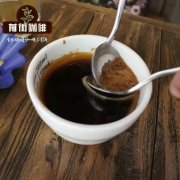
Why is there no pure Blue Mountain Coffee on the market?
Professional coffee knowledge exchange more coffee bean information Please pay attention to the coffee workshop (Wechat official account cafe_style) there is no pure Blue Mountain coffee on the market because there is no direct import of Blue Mountain coffee beans the world-famous Blue Mountain Coffee, produced in the Blue Mountain Mountains of Jamaica, because the caffeine content is very low (less than half of other coffee), coupled with outstanding taste, cater to

How to distinguish between genuine and false Blue Mountain Coffee-introduction of Flavor and taste quality
The most important coffee bean trading organization in the world is the International Coffee Organization (ICO), which has 50 members of exporting countries and controls 99 per cent of global coffee production. According to industry insiders, coffee beans traded through the International Coffee Organization have strict quotas, as do Blue Mountain coffee beans. Basically, there is no bulk import of blue mountain coffee beans in our country. Since China did not enter directly

The 26th World Coffee Science Congress held in Kunming
Liu Lianyu, president of the Export-Import Bank of China, Yu Dingcheng, vice chairman of the Provincial Committee of the Chinese people's political Consultative Conference and chairman of the Provincial Federation of Industry and Commerce, Sun Handong, academician of the Chinese Academy of Sciences, and other guests attended the opening ceremony. On behalf of the provincial government, he Duanqi welcomed the guests attending the meeting. He said that Yunnan is one of the earliest provinces in China to grow coffee, and has formed a complete industrial chain from planting, processing, consumption to marketing, the coffee industry.

Taiwan drinks 2.1 billion cups of freshly brewed coffee every year.
According to the statistics of the Customs Department of Taiwan's Ministry of Finance, the import of coffee beans in Taiwan has nearly doubled in five years, which translates to 2.17 billion cups of freshly brewed coffee consumed by Taiwanese every year, that is, 94.3 cups per person per year. Taiwan's working hours are the third longest in the world, and office workers can be seen with a cup of coffee on the road, the China Times reported. According to customs data, coffee bean imports reached 2.1 last year.

Boutique coffee beans account for less than 1% of global coffee production.
Taiwan's coffee industry made another startling move. European coffee introduced geisha coffee with very little production in 2012, and its import exceeded 30 metric tons last year, with amazing sales strength. It was also favored by Jensen Manor in Panama, which has the largest output of geisha coffee. Beating competitors such as Japan and South Korea, it won the Asian general agent of the estate's geisha coffee in one fell swoop, and held a signing ceremony on the 17th. Geisha Coffee was rated
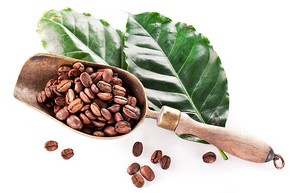
Tanzania Coffee Annual report 2017
According to the forecast of FAS/ Dar es Salaam, the coffee production in Tanzania will increase from 1.05 million bags last year to 1.15 million bags in 2017 and 2018, mainly due to the biennial production cycle. Inventory is expected to decrease by 32000 bags compared with the previous year. The Tanzanian government (GOT) will continue to implement its coffee strategic plan to reach production by 2021
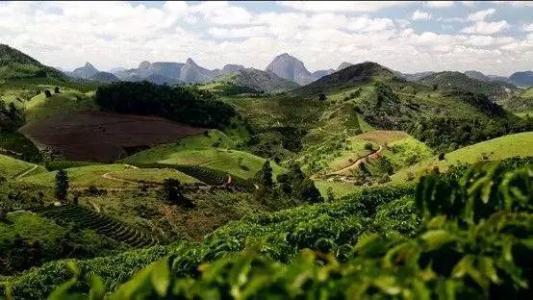
The position of Chinese coffee in the world is becoming more and more important.
The domestic demand for coffee is increasing. In recent years, the world coffee giants continue to aim at the Chinese market, and Chinese local coffee brands have also begun to rise to produce coffee products such as instant powder, bottled coffee, freshly ground coffee and so on. However, domestic coffee is far from enough to meet the domestic market with huge consumption space in the future, and China still needs to import a large amount of coffee from abroad.

Taiwan Sugar introduced Honduras coffee beans on the market at the end of this year.
Professional baristas please follow the coffee workshop (Wechat official account cafe_style) Taiwan coffee market opportunity looks at 70 billion yuan a year. Taiwan Sugar today announced the introduction of gourmet coffee beans from Honduras, a friend of Central and South America, which is expected to be put on sale in Taiwan by the end of this year. Qianyi, general manager of Taiwan Sugar, said that the price and taste types are still being planned internally, and at that time, Taiwan Sugar will first have its own business.
African Coffee's slow Journey to China
Coffee originated in Africa and little is known about it. In fact, Africa Ethiopia is the hometown of coffee, producing the best Arabian coffee in the world. Soil, climatic conditions and an altitude of more than 2000 meters above sea level have enabled many African countries to create an ideal environment for the growth of coffee.

Analysis on the Development trend of domestic Coffee Industry
From the analysis of coffee production and consumption at home and abroad, we can see that the supply and demand of coffee in the world is basically balanced, but the supply of high-quality products still exceeds the demand. In order to meet the needs of the market, the foreign coffee growing industry tends to develop high-quality small-grain coffee. The demand for coffee in the domestic market is increasing, and there is a large gap between supply and demand. Therefore, our country still needs to import coffee raw materials and coffee products every year to meet the needs of the market. Yunnan

What are the trading modes of coffee beans? How to do a fair trade auction of raw coffee beans? Direct trade?
James Hoffman writes in his book that coffee trade is mainly divided into four modes: partnership coffee, direct trade, fair trading model, and auction coffee. What are the specific differences between these four modes of coffee trading? in fact, you can know through their names, but about the specific details of these patterns, Qianjie is here to learn about them.

What is the origin of Kopi Luwak in Indonesia? why is Kopi Luwak expensive? why? what are the characteristics?
Professional coffee knowledge exchange more coffee bean information please follow the coffee workshop (Wechat official account cafe_style) Kopi Luwak which produces the best drink? Wu Xiwen, head teacher of Landai Coffee and Tea, believes that in his own experience, Indonesian civet coffee is the best, but traders import it from Indonesia, and the taste of baking in Taiwan is better than that of the country of origin. Wu Xiwen said that Indonesia's Bali

Analysis on the Development trend of domestic Coffee Industry in Chinese Coffee Industry Market
From the analysis of coffee production and consumption at home and abroad, we can see that the supply and demand of coffee in the world is basically balanced, but the supply of high-quality products still exceeds the demand. In order to meet the needs of the market, the foreign coffee growing industry tends to develop high-quality small-grain coffee. The demand for coffee in the domestic market is increasing, and there is a large gap between supply and demand. Therefore, our country still needs to import coffee raw materials and coffee products every year to meet the needs of the market. Yunnan