
"Sieve"
3233 article(s) found
Knowledge points of Coffee Raw Bean: the concept of Fine Coffee Specialty Coffee (1)
The traditional classification of coffee beans is usually based on the classification criteria defined by the coffee producing countries, and then agreed to become common in the international market and traded under such a tacit understanding. For a long time, coffee producing countries have their own classification and evaluation criteria for coffee, which serve as the pricing guidelines in the coffee market. But slowly in recent years, coffee consuming countries have begun to demand unified evaluation criteria.

Coffee beans are also divided into "aristocratic and poor classes". Evaluation of the quality of coffee
Coffee quality Evaluation Coffee producing countries have their own grading methods and quality evaluation standards in order to grade their harvested coffee, of course, there are also famous coffee mochas. Like Yemen in Matali, there are no countries with uniform export specifications and no coffee culture of the same style. If there are common evaluation criteria for coffee producers all over the world, it will be convenient for buyers.
The concept of Fine Coffee Specialty Coffee (1) the third Wave of Coffee Culture and History in the World
The traditional classification of coffee beans is usually based on the classification criteria defined by the coffee producing countries, and then agreed to become common in the international market and traded under such a tacit understanding. For a long time, coffee producing countries have their own classification and evaluation criteria for coffee, which serve as the pricing guidelines in the coffee market. But slowly in recent years, coffee consuming countries have begun to demand unified evaluation criteria.

What does the number of items of coffee mean? what does it have to do with the coffee sieve?
Professional coffee knowledge exchange more coffee bean information please pay attention to the coffee workshop (Wechat official account cafe_style) according to the number of items, that is, according to the size of coffee beans to judge the quality of beans, and then quotation, usually starting from 14 items. Mesh, which is a unit of sieve hole diameter, does not describe the size of beans, but the width of beans can be judged according to the number of eyes. Specific purpose

From model to champion of WLAC Coffee pull Art Competition in China
Following Cafe Review (Wechat official account vdailycom) found that Beautiful Cafe opened a small shop of its own Li Qi, Mellon Champion barista, Mellon training Department Intermediate trainer, engaged in the coffee industry for 3 years. Competition experience: she won the SCAE certified barista 2016 WLAC World pull Art Competition China final champion 2016 WLAC World pull Art Competition runner-up.
What are the classification standards of coffee beans G1, G2, G3, G4, AA, PB, SHB?
Professional coffee knowledge exchange More coffee bean information Please pay attention to coffee workshop (Weixin Official Accounts cafe_style)
Grading system of major coffee producing countries in the world popular science coffee grade shb and coffee bean grade G1
Professional coffee knowledge exchange more coffee bean information please follow the coffee workshop (Wechat official account cafe_style) the latest coffee raw bean knowledge collation: coffee bean grading and naming rules want to drink a certain quality of selected coffee beans, starting from understanding the grading system of coffee-producing countries is a necessary lesson for each producing area, each piece of soil, different climate, different treatment methods

The relationship between the thickness of hand-made powder and extraction time what is the number of mesh of hand-made coffee powder sieve?
Professional coffee knowledge exchange more coffee bean information please follow the coffee workshop (Wechat official account cafe_style) hand-brewed coffee that is black coffee brewed with filter cup and filter paper attached to it, the common filter cup brands are kono,hario,kalita, and Taiwan's smart cups are also good. Of course, like more control over the taste of coffee, it is necessary to know the thickness of hand powder to coffee.
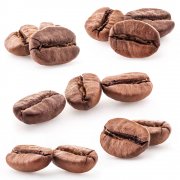
Grading according to the proportion of sieve and defective beans
Grading defective beans according to the ratio of sieve and defective beans is an important factor in destroying the flavor of the final coffee. Therefore, defective beans should also be removed in the final step of green bean processing. Therefore, according to the proportion of defective beans, supplemented by screen size is also used as a classification method. Due to the rise of the fine coffee trend, coffee producing countries are paying more and more attention to the quality of coffee. Controlling defective beans is the most important way.
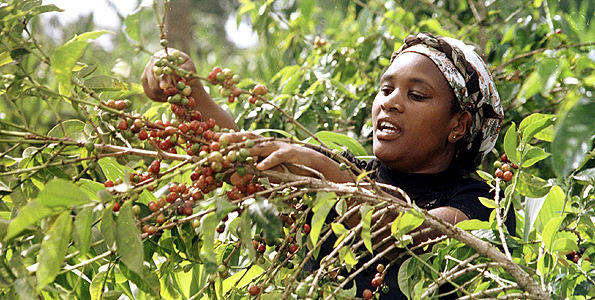
Evaluation on the quality of Coffee net Coffee Bancima was treated with sun in the primeval forest of Ethiopia.
Coffee producing countries have their own grading methods and quality evaluation criteria in order to grade their harvested coffee, of course, there are also famous coffee mochas. Like Yemen in Matali, there is no uniform export specification for the country. If the common evaluation criteria of coffee producing countries all over the world, it would be much more convenient for the buyer. Unfortunately, the current grading standard is still based on each producing country.

[coffee knowledge] use sieve to treat coffee powder
A long time ago, someone would use a sieve to sift the ground coffee powder before starting to cook it. The main reason at that time was that the quality of the coffee mill was not high enough and there was more fine powder. Simply sifting the fine powder could avoid the miscellaneous smell caused by the excessive essence of the fine powder in the coffee brewing.
Kenya aa coffee features rich juice texture
Professional coffee knowledge exchange More coffee bean information Please pay attention to coffee workshop (Weixin Official Accounts cafe_style) Front Street-Kenya coffee grading introduction Kenya coffee mostly grows at an altitude of 1500--2100 meters, harvested twice a year. Its main characteristic is the distinct fruit fragrance, the common fruit fragrance is citrus. Kenyan coffee has a multi-layered flavor and juice

Characteristics of Medellin Colombian coffee beans from Colombian coffee producing area
For professional baristas, please pay attention to the coffee workshop (Wechat official account cafe_style) [country] Colombia Supremo [treatment] washing [variety] Tibica TYPICA [altitude] 1500 feet Colombian coffee is classified according to the size of raw beans (sieve), mainly classified as Supremo (sieve 17 or above) and Excelso (sieve 14anth16); s

Usage of dripping pot in Vietnam
At present, there are two mainstream methods of using dripping pots in Vietnam. One is to put the coffee powder on the sieve and then inject water; the other is to put the coffee powder flat, first inject a small amount of water, so that the coffee powder is in full contact with the water and then screw on the sieve. The second method should pay attention to the amount of water not too much but evenly when injecting water for the first time, otherwise the coffee powder and water will quickly drop into the coffee cup.
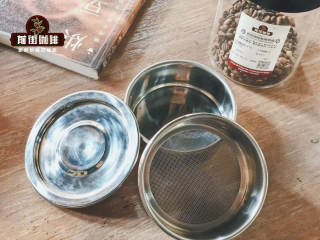
Step diagram of adjusting grinding thickness of hand-flushed coffee beans
We must have questions when we brew coffee by hand. How much should I use to grind my coffee beans? There will be this question every time you buy coffee beans or use a different bean grinder. Here we will teach you a way to use a sieve to determine the thickness of coffee powder grinding. It is recommended that you use the national No. 20 standard.

On the grading of raw coffee beans
The last step in the processing of raw coffee beans is grading, so what are the grading methods of raw coffee beans? Do different countries adopt the same approach? At present, there are three main rating criteria for raw coffee beans, and different countries adopt different rating methods according to their own production conditions and national conditions (not all coffee producing countries adopt the same method).
Sieve powder-just for a clear cup of coffee
For friends who often drink coffee at home, it is estimated that they will be no stranger to all kinds of bean grinders. At present, there are Mazzer, Little Eagle, Pegasus, solis 166, rancilio rocky, Yang Family 900n, Big Flying Eagle and so on. Each mill has its own advantages, some are cost-effective, some are functional. But no matter which one, it doesn't seem to be able to solve the problem at this stage.

"about fine powder" coffee should be sifted? Will coffee taste better when treated with a sieve?
A long time ago, someone would use a sieve to sift the ground coffee powder before starting to cook it. The main reason at that time was that the quality of the coffee mill was not high enough and there was more fine powder. Simply sifting the fine powder could avoid the miscellaneous smell caused by the excessive essence of the fine powder in the coffee brewing. In the past, when I went to a coffee shop run by the Japanese, I saw that they would sift through the fine powder slightly after grinding. I haven't seen you for more than a year.

Steps for the use of dripping pots in Vietnam-introduction to the requirements for grinding calibration
Methods and steps for the use of dripping pots in Vietnam-requirements for grinding calibration there are two mainstream methods of use in Vietnam. One is to put the coffee powder on the sieve and then inject water; the other is to put the coffee powder flat, first inject a small amount of water, so that the coffee powder is in full contact with the water and then screw on the sieve. The second method should pay attention to not too much water when injecting water for the first time.

Tanzania AA Coffee Bean Sieve size characteristics Flavor Description Taste Estate Introduction
Tanzania AA Coffee Bean Sieve size Features Flavor Description Manor Introduction Tanzania's main coffee growing area is located at the foot of Mount Kilimanjaro, which has rich volcanic soil. Coffee trees planted here are more than 100 years old. The earliest coffee was first introduced from Kenya by Christians. Coffee trees must be carefully cared for, weeded and fertilized.