
"Sieve"
3233 article(s) found

Columbia Medellin Coffee introduces what is Colombian Supremo Coffee?
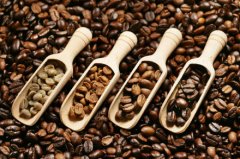
Professional coffee knowledge exchange more coffee bean information Please follow the coffee workshop (Wechat official account cafe_style) the flavor of Colombian coffee is according to the size of raw beans (sieve), mainly classified into Supremo (sieve 17) and Excelso (sieve 14 beat 16). Supremo is Colombia's high-quality raw beans. Fertile soil located in volcanic type
Coffee and its products-- terminology (2)
Pulper--mipped bean cut or scraped wet processed coffee beans, often with brown black scars. 3.20 Brown coffee beans brown bean brown-black coffee beans. 3.21 White coffee beans white bean are simply called white beans, that is, coffee beans with a white surface. 3.22 Amber beans amber bean yellow coffee beans
Coffee bean density high altitude which producing countries grow coffee at the highest altitude
According to the coffee-producing countries, the reason for the emergence of such a classification standard according to the altitude of the coffee producing area is mainly because the quality of coffee produced at high altitude is generally higher than that at low altitude, because the temperature is low at high altitude. Slow coffee production is conducive to the accumulation of beautiful substances. And the raw beans with high maturity have good expansibility when baking, which is beneficial to baking, and the quality is more stable.
How are coffee beans classified according to the proportion of sieve and defective beans?
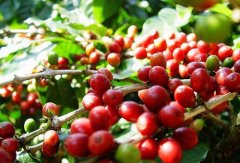
The classification of defective beans according to the proportion of sieve and defective beans is an important factor to destroy the flavor of the final coffee. Therefore, defective beans should also be removed in the last step of raw bean processing. Therefore, according to the proportion of defective beans, supplemented by the size of the screen is also used as a way of classification. Due to the rise of boutique coffee, coffee producing countries pay more and more attention to the quality of coffee, and the control of defective beans is the most important way.

Description of graded Flavor of Ugandan Coffee Bean introduction to the method of Variety treatment in Manor
Uganda coffee bean graded flavor description taste manor region variety treatment method Kenya is one of the most representative countries graded by sieve, others include Tanzania, Colombia, etc. (some countries use more than one grading method. The examples here are representative, mainly in this way). Kenya's most advanced AA++ needs to be used on the 18th.

A brief introduction to the grading system of Kenyan Coffee beans how to brew and share Kenyan coffee at a ratio of 1 to 15
Professional coffee knowledge exchange more coffee bean information please follow the coffee workshop (Wechat official account cafe_style) front street-Kenya raw bean grading, brewing parameters sharing according to the sieve grading method is the method of grading according to the size of coffee beans. Raw beans are graded by determining the size of the beans through a holed iron plate sieve. The size of the hole in the screen is 1 inch to 64 inches.

Use sieve to treat coffee powder, coffee powder, espresso, coffee bean grinder, espresso
Australia's Matt Perger, the champion of last year's world hand-brewing coffee competition, took to the stage with a sunscreen in the final. But he talked about it from the theory of brewing and cooking. In the past, we recognized that the extraction rate of coffee brewing was between 18% and 22%, but Matt told the referee that the extraction rate of the coffee he was going to make reached 23%, but it was still delicious. Because he will use the net to get rid of the fine powder and then flush it.

Use a sieve to treat coffee powder, spaghetti, coffee grinder, espresso, delicious coffee.
Australia's Matt Perger, the champion of last year's world hand-brewing coffee competition, took to the stage with a sunscreen in the final. But he talked about it from the theory of brewing and cooking. In the past, we recognized that the extraction rate of coffee brewing was between 18% and 22%, but Matt told the referee that the extraction rate of the coffee he was going to make reached 23%, but it was still delicious. Because he will use the net to get rid of the fine powder and then flush it.

Taste and flavor characteristics of Colombian coffee brand Colombian coffee
For professional baristas, please follow the coffee workshop (Wechat official account cafe_style) Colombia Supremo Colombia is a big coffee producer in the world. If you love coffee, you must know that the main ways of coffee are washed, because it is located in the diverse ecology of South America, and it is also a suitable place for coffee beans to grow, and this time the Supremo coffee bean list

How are raw coffee beans graded? the grading method of raw coffee beans in various countries
For the exchange of professional baristas, please pay attention to the rating methods of raw coffee beans in the coffee workshop (Wechat official account cafe_style). There are three main rating criteria for raw coffee beans, and different countries adopt different rating methods according to their own production conditions and national conditions (not all coffee producing countries adopt the same method). One: the reason for this is classified according to the altitude of the coffee producing area.
Introduction to the main points of the knowledge of raw coffee beans: a detailed explanation of the classification of raw coffee beans
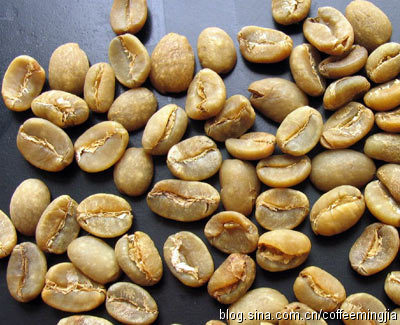
The last step in the processing of raw coffee beans is grading, so what are the grading methods of raw coffee beans? Do different countries adopt the same approach? At present, there are three main rating criteria for raw coffee beans, and different countries adopt different rating methods according to their own production conditions and national conditions (not all coffee producing countries adopt the same method).
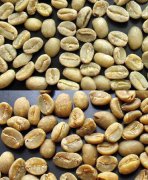
There are two methods for grading raw coffee beans in terms of sieve size, size
There are two ways to classify raw coffee beans, one is the filter number, and the other is the elevation. It is divided by the filter number, and the size is size in terms of the screen size. Round beans are generally smaller than flat beans, between 8-13 and 12-29. 8, 9, 10. 12, 13. 18. 29 = small, medium, ordinary. Quasi-big. Big, extra large. The bigger the size, the bigger the beans. Like SC-.
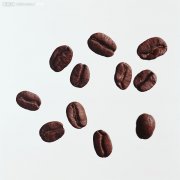
Grading defective beans according to the proportion of sieve and defective beans is an important factor that destroys the flavor of the final coffee.
Boutique coffee (specialty coffee) is also called specialty coffee selection coffee. It refers to coffee made from a small number of raw beans with excellent taste grown in an ideal geographical environment. Depending on the special soil and climatic conditions in which they grow, they have outstanding flavor. After strict selection and classification, this kind of coffee is hard in texture, rich in taste and stylish.
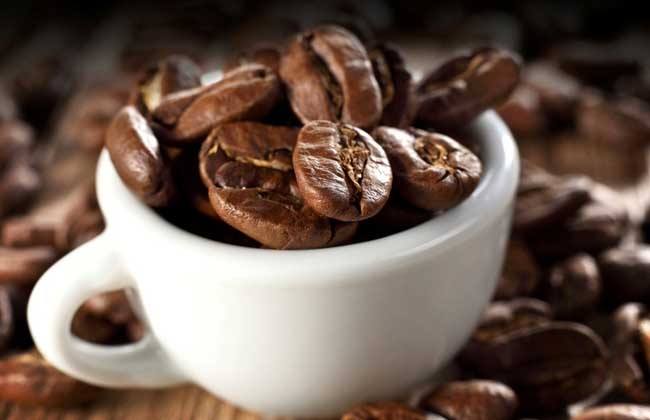
Brazilian coffee bean producing area, Brazilian coffee bean grade
Following Cafe Review (official Wechat account vdailycom) found that Brazilian Coffee, which opened a small shop in Fairview Cafe, had a low sour taste, matched with the sweet and bitter taste of coffee, and had a slight grassy aroma, with a slightly bitter taste in the fragrance, smooth taste and pleasant aftertaste. There are no outstanding advantages for Brazilian coffee.

Grading of raw coffee beans
At present, there are three main rating criteria for raw coffee beans, and different countries adopt different rating methods according to their own production conditions and national conditions (not all coffee producing countries adopt the same method). Let's introduce these three popular rating methods. One: the reason for the emergence of such a classification standard according to the altitude of the coffee producing area is mainly because of the high level.

Simple how to use Vietnamese coffee pot how to use Vietnamese coffee pot
Vietnamese coffee pot is probably what we know most about Vietnam, a neighboring country. Vietnam, once a French colony, began to grow coffee around 1860. The unique history has formed the unique flavor and connotation of Vietnamese coffee. Vietnamese coffee pot plays an important role in this, and it is also the most important coffee utensils for Vietnamese coffee.

Steps for the use of dripping coffee pot in Vietnam
Follow the caf é (Wechat official account vdailycom) and find that Vietnam Coffee, which opened a small shop of its own, is probably what we know most about Vietnam, a neighboring country. Vietnam, once a French colony, began to grow coffee around 1860. The unique history has formed the unique flavor and connotation of Vietnamese coffee, in which Vietnam drip coffee pot plays a role.

Kenya AB Komatina Coffee Bean Information hand-flushed Kenya Cranberry Cooking parameters
Professional coffee knowledge exchange more coffee bean information please follow the coffee workshop (Wechat official account cafe_style) Kenya Komatina cranberry washing area: Mathira Guchuko beans: Arabica SL28 SL34 planting altitude 1830-1920 meters above sea level planting soil red volcanic soil rainfall: about 1200MM cup test score 86.5. flavor description: cranberry, coke

Graded coffee raw bean treatment
At present, there are three main rating criteria for raw coffee beans, and different countries adopt different rating methods according to their own production conditions and national conditions (not all coffee producing countries adopt the same method). Let's introduce these three popular rating methods. One: the reason for the emergence of such a classification standard according to the altitude of the coffee producing area is mainly because of the high level.