
"Species"
21683 article(s) found

Three native species of coffee, Arabica, Robusta.
Coffee, we generally refer to the finished product: the coffee we drink, also refers to coffee beans. Coffee belongs to the evergreen shrub of the genus Coffee of Rubiaceae. Coffee has some medicinal effects, such as waking up the brain, strengthening the stomach, stopping bleeding, dissipating heat, strengthening the body, etc., hee hee, if anyone is blinded by love, have a cup of coffee to wake up! There are about 40 species of coffee plants, but they can produce commercially valuable

Yunnan coffee price list and pictures _ how about Yunnan coffee beans _ how much is a cup of Yunnan coffee
Professional coffee knowledge exchange more coffee bean information please follow the coffee workshop (Wechat official account cafe_style) Yunnan coffee bean small seed coffee [scientific name] small seed species is Coffea arabica L., medium grain species is Coffea canephora, large seed species is Coffea liberica family: Rubiaceae coffee genus [alias] small seed species also known as Arabian species, medium grain species also known as Gan

Comparison of the stories of Coffee Bean Variety producing areas in the World the flavor and taste characteristics of Blue Mountain Coffee in Colombia, Brazil
Coffee beans are the seeds of coffee fruit that are processed, roasted, ground and brewed by the barista before they become the coffee we drink. Just like drinking wine, you are drinking the grapes used in making wine, in the same way, when you drink coffee, what you are drinking is the taste of coffee beans. Both

High-quality and delicious Coffee Bean Flavor and Flavor characteristics of Ganzhuang Garden in Kahayang, Indonesia
People like to compare the robusta species to the Arabica species of coffee. In fact, the robusta species was originally a mutant of the Congolese species (scientific name Cofffea canephora), so it is the Congolese species that should be compared with the Arabica species. To this day, however, the name of the Robusta species is commonly used by the public, and it is regarded as the same species as the Congolese species in the world market.

The relationship between Yunnan small Coffee and Katim Coffee beans Why does Catimor Katim's hand flush taste bad?
Professional coffee knowledge exchange more coffee bean information please follow the coffee workshop (Wechat official account cafe_style) small-grain coffee [scientific name] small-grain species is Coffea arabica L., medium-grain species is Coffea canephora, large-grain species are Coffea liberica family: Rubiaceae coffee genus [alias] small-grained species also known as Arabian species, medium-grained species also known as Ganfla species, large-grained species

Yunnan boutique coffee single coffee Yunnan coffee cultivation
Tasting coffee beans must be excellent varieties, such as the original bourbon species, mocha species and Tippica species. The coffee beans produced by these trees have unique aroma and flavor, which are far from being compared with other tree species, but the relative yield is low. in recent years, in order to pursue the ability of disease and insect resistance and increase the yield, there have been many improved tree species, such as the high-yield rurial11 species in Kenya, but

Hamelon Coffee decaf Coffee introduction what are the characteristics of decaffeinated coffee
For more information on coffee beans, please follow Coffee Workshop (Wechat official account cafe_style) Cameroon Coffee, the first caffeinated coffee species seen in Central Africa (caffeine-free coffee species). In 2009, the International Society for species Exploration (The International Institute for Sp), University of Arizona, USA

Varieties of raw coffee beans
Coffee is the first tropical cash crop in terms of output, consumption and economic value among the three major beverages in the world. it is the second raw material after international trade relay oil, and it is also one of the largest tropical food raw materials in the world. The coffee variety garden covers an area of 3 mu, which mainly lies in the collection and preservation of coffee variety resources. the varieties are carried out on the basis of the observation of its botanical and biological characteristics.
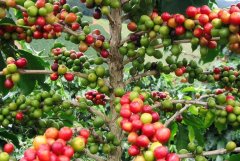
Classification of Coffee by Taste Taste Classification of Coffee in High-quality Coffee producing areas
Boutique coffee beans must be excellent varieties, such as the original bourbon species, mocha species and Tippica species. The coffee beans produced by these trees have unique aroma and flavor, which is far from that of other tree species, but the relative yield is low. in recent years, in order to pursue the ability of disease and insect resistance and increase the yield, there have been many improved tree species, such as the massive promotion of high-yield rurial11 species in Kenya.

Sulawesi boutique coffee beans
Boutique coffee beans must be excellent varieties, such as the original bourbon species, mocha species and Tippica species. The coffee beans produced by these trees have unique aroma and flavor, which is far from that of other tree species, but the relative yield is low. in recent years, in order to pursue the ability of disease and insect resistance and increase the yield, there have been many improved tree species, such as the massive promotion of high-yield rurial11 species in Kenya.
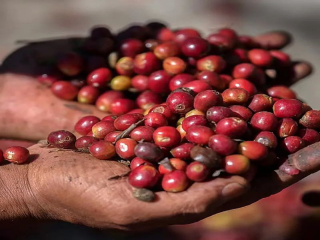
What is the Ethiopian local species? What does it have to do with Heirloom native species?
When we buy Ethiopian coffee beans, the name "Heirloom" is very common. It translates to "native species" or "family heirloom" in Chinese, which generally refers to mixed coffee varieties. But in the past two or three years, another term "Landr" has been marked on the packaging of some Essex beans.

What ingredients are raw coffee beans made of?
In raw coffee beans, moisture accounts for 9% to 13%, and moisture has little effect on the aroma of coffee beans. Later, I will introduce the content of various ingredients (calculated according to the state of dried raw beans). When the share of these ingredients changes, the flavor of coffee beans will also change greatly. The most abundant ingredient in polysaccharide raw beans is polysaccharides, accounting for 35% and 4%.
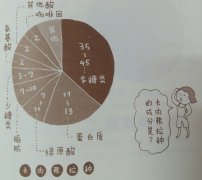
Figure out what ingredients raw coffee beans are made of.
In raw coffee beans, moisture accounts for 9% to 13%, and moisture has little effect on the aroma of coffee beans. Later, I will introduce the content of various ingredients (calculated according to the state of dried raw beans). When the share of these ingredients changes, the flavor of coffee beans will also change greatly. The most abundant ingredient in polysaccharide raw beans is polysaccharides, accounting for 35% and 4%.

What are the main types of coffee trees and where do most coffee trees grow?
The main species of coffee tree: Liberian species Liberian species or large seed species, native to Liberia in Africa, and Malaysia and a few other countries. It has a slightly shorter history than the other two coffee trees. The Liberian coffee tree is suitable for lowland cultivation. It has a tall and strong trunk, which is 18 meters high, large and tough leaves, and large fruits and coffee beans. Its seed coat clings to the kernel,
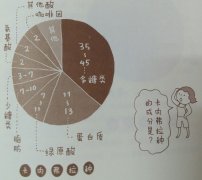
What ingredients are raw coffee beans made of?
What ingredients are raw coffee beans made of? In raw coffee beans, moisture accounts for 9% to 13%, and moisture has little effect on the aroma of coffee beans. Later, I will introduce the content of various ingredients (calculated according to the state of dried raw beans). When the share of these ingredients changes, the flavor of coffee beans will also change greatly. Content in polysaccharides raw beans

Variety Information and Flavor description of Iron pickup Coffee Bean
For the exchange of professional baristas, please follow the coffee workshop (Wechat official account cafe_style) [Typica] Tibica species closest to the original species. The bean shape is slightly longer, like an elongated egg, known as Arabigo or criollo in Central America. It has a clean citric acid taste, sweet aftertaste, low resistance to leaf rust, not easy to take care of, low seed setting of trees, and long harvest period.
The variety of coffee beans with a variety of raw beans.
Coffee is the first tropical economic crop in the world in terms of output, consumption and economic value. it is the second raw material product after international commercial relay oil, and it is also one of the largest tropical food raw materials in the world. Coffee Variety Garden covers an area of 3 mu, which mainly lies in the collection and retention of coffee variety capital, based on the observation of its botanical and biological characteristics.

Panamanian coffee boutique coffee black coffee
Boutique coffee beans must be excellent varieties, such as the original bourbon species, mocha species and Tippica species. The coffee beans produced by these trees have unique aroma and flavor, which is far from that of other tree species, but the relative yield is low. in recent years, in order to pursue the ability of disease and insect resistance and increase the yield, there have been many improved tree species, such as the massive promotion of high-yield rurial11 species in Kenya.
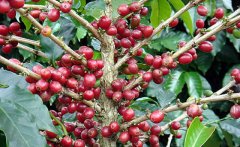
Papua New Guinea Coffee beans Fine Coffee
Boutique coffee beans must be excellent varieties, such as the original bourbon species, mocha species and Tippica species. The coffee beans produced by these trees have unique aroma and flavor, which is far from that of other tree species, but the relative yield is low. in recent years, in order to pursue the ability of disease and insect resistance and increase the yield, there have been many improved tree species, such as the massive promotion of high-yield rurial11 species in Kenya.

Coffee term: Arabica (coffee arabica)
Arabica species (coffee arabica): together with Robsta species and Leiberia species, they are called the three primary species of coffee. Native farming is Ethiopia. It has the best quality among the three original species. It is mainly planted in the highlands.