
"Sun"
27608 article(s) found

Sun Yega Chefen Wauka characteristic Sun Yega Snow Coffee Wauka Flavor
The beans are small, neat and round. Ethiopian sun beans are generally G3--G5, but the beans are G2, equal to the grade of washed beans. Although there are still a few defective beans, they are commendable compared to the sun beans of Harald and Sidamo. The 2015 sun Yega snow caffeine has appeared in the G1 grade, surpassing the G1 washing in terms of quality and sales. This bean is baked

Red wine sun-dried passion fruit mantenin coffee flavor taste description what is wine-scented sun mantenin?
Professional coffee knowledge exchange more coffee bean information please follow the coffee workshop (Wechat official account cafe_style) Red Wine Sun passionfruit Mantenin Origin: Indonesian North Sumatra Dijalan varieties: iron card, bourbon altitude: 1500-1500 meters raw beans treatment: red wine sun roasting degree: shallow-medium flavor description: strawberries, fruit wine, longan, yellow sugar,

Sun Yega Chefen Wauka characteristic Sun Yega Snow Coffee Wauka Flavor
The beans are small, neat and round. Ethiopian sun beans are generally G3--G5, but the beans are G2, equal to the grade of washed beans. Although there are still a few defective beans, they are commendable compared to the sun beans of Harald and Sidamo. The 2015 sun Yega snow caffeine has appeared in the G1 grade, surpassing the G1 washing in terms of quality and sales. This bean is baked

The flavor of sun-cured coffee what are the characteristics of sun-treated coffee? the taste of sun-treated coffee
Professional coffee knowledge exchange more information about coffee beans Please pay attention to the sun-treated coffee in the coffee workshop (Wechat official account cafe_style). During the sun or drying process, the coffee cherries dry and all the fruit is attached to the coffee beans. If done well, this should highlight the sweetness and make the wine round, although these coffees are unlikely to exceed the medium level of acidity. Luo

Introduction of pectin sun-cured coffee beans _ steps of sun-drying of coffee beans-reasons for the low price of sun-dried coffee beans
Professional coffee knowledge exchange more coffee bean information Please pay attention to the coffee workshop (Wechat official account cafe_style) Coffee bean sun treatment dry process sun treatment on the climate is very high, farmers will harvest the coffee fruit, direct sun drying, depending on the weather conditions for 23 weeks, and then use the sheller grinding to completely remove the pulp, screening and grading.

Brazil Coffee processing Diversified Coffee basic knowledge
Brazilian coffee farms choose sun, half-sun or water washing treatments according to the dry and humidity conditions of the climate to show the best regional flavor. Such a pluralistic approach is rare in the world. Before 1999 ⊙, rough tanning was almost always used in Brazil. This is the main culprit for Brazilian beans to be easily infected with the smell of dirt and rotten wood, because coffee fruits are exposed to the sun for two to three weeks.
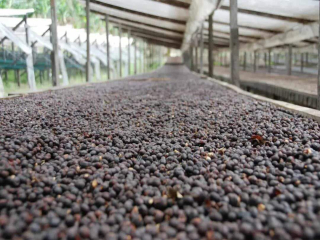
What are the steps of sun treatment? What are the characteristics of sun treatment? Basic knowledge of coffee flavor performance of sun treatment.
Whether a coffee bean tastes good or not depends on three places: growing environment, treatment process, and baking. What we are going to talk about today is its treatment process, which has always been an important part of coffee. As a process of shelling and taking beans, different treatment methods and quality will directly affect the final flavor of coffee. I'm coming next.

Coffee sun treatment-honey treatment coffee beans are washed in the sun
Coffee sun treatment-honey treated coffee beans are washed in the sun according to the time of sun exposure and the amount of pectin, and the amount of pectin and endocarp determines the time of sun exposure. Yellow honey has 25% endocarp, 50% red honey and 100% black honey. Therefore, from yellow honey to black honey, the drying time is longer, and the management requirements are more stringent. Honey treatment is a complex and expensive item.

What's the difference between half-sun, sun and water washing? How to deal with half-sun?
Professional coffee knowledge exchange more information about coffee beans Please follow the coffee workshop (Wechat official account cafe_style) what is the difference between half-sun, sun and water washing? How to deal with half-sun? The influence of coffee flavor, in addition to varieties, producing areas, planting methods, there is also an important process of coffee raw bean treatment. Different treatments will lead to different kinds of coffee.

Ipanema, Brazil Sweet Sun Beans
Coffee fruit is commonly processed in two ways, known as sun-dried beans and washed beans, and the beans of Ipanema Manor are called sweet sun-dried beans. It is said that their sun-dried beans are not only dried on the vine with the belt pulp, but also dried in the sun on the tree. It is also a relatively different sun-dried treatment, and the fruit is sweeter and more fragrant.

Sun-treated fine coffee
Coffee beans are processed in the following ways: sun (Natural); semi-sun (Semi-Natural or Pulped-Natural); honey processing (Honey processing) and washing (Washing). Water washing treatment means that immature and immature coffee fruits are screened out in a special way after harvesting.

Coffee sun treatment which kinds of coffee beans are suitable for sun treatment
A brief introduction to the treatment of raw coffee beans solarization is a traditional method of primary processing of coffee beans. at present, almost all coffee beans are treated by solarization in ancient coffee-growing countries such as Ethiopia and Yemen. Sun treatment will first identify sunken beans in the sink, that is, ripe or half-ripe beans are spread in the drying farm for natural drying. The specific time depends on the local climatic conditions
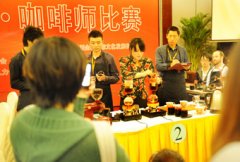
Coffee character: sun Quanxiu, champion of the barista contest
Sun Quanxiu's wonderful performance in the competition attracted a lot of spectators' coffee. As a foreign drink introduced into China from the West, it is widely welcomed in bustling Chinese cities. Today's coffee culture is not only the representative of Western culture, but also carried forward and sublimated in the hot land of China. Sun Quanxiu said: nowadays many Chinese people drink coffee, just like drinking tea.

Sun drying is the most traditional treatment, which is dried by natural sun after harvest.
Professional coffee knowledge exchange more coffee bean information please pay attention to the coffee workshop (Wechat official account cafe_style) sun treatment, also known as drying method, is the oldest method of raw bean treatment, look at the picture, this method is the simplest, the real sense is only three parts, the first step, after coffee beans are picked, pick out immature beans, the second step, directly in the open air to accept the explosion of the sun

The difference between sunburned and washed coffee beans is illustrated by the process of coffee solarization.
Coffee tanning process chart-the difference between sun-cured and washed coffee beans is very common in Brazil. The natural washing method is very similar to the water washing method, except that the natural washing method uses a high-pressure washing machine to remove the mucous membrane of the coffee surface, thus skipping the fermentation process. Several coffee and raw bean processing companies in Brazil and Colombia have patented this method and become

General knowledge of Fine Coffee beans Diversified ways of handling Brazilian Coffee
Brazilian coffee farms choose sun, half-sun or water washing treatments according to the dry and humidity conditions of the climate to show the best regional flavor. Such a pluralistic approach is rare in the world. Before 1999 ⊙, rough tanning was almost always used in Brazil. This is the main culprit for Brazilian beans to be easily infected with the smell of dirt and rotten wood, because coffee fruits are exposed to the sun for two to three weeks.
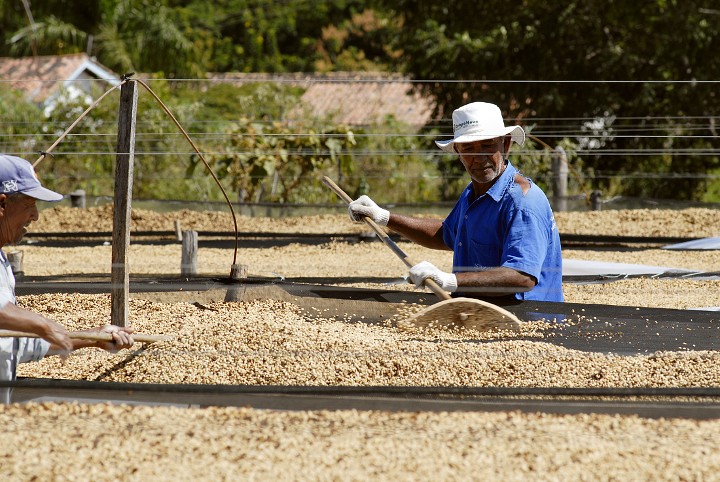
Half-sun treatment of coffee beans Brazilian coffee beans are treated by half-sun treatment.
As the early Brazilian coffee was all treated by traditional solarization, the overall quality of Brazilian coffee was unstable and could only wander in the middle and lower grade. In order to improve the quality of coffee in Brazil, the Brazilian government has invented the half-sun method and vigorously promoted it. At present, almost all the high-quality coffee beans in Brazil use the half-sun method to treat raw beans, which can be said to be a successful half-sun method.

Flavor characteristics of water-washed and sun-cured Yega Chuefei boutique coffee different from sun-treated coffee.
Today's protagonist is Yejiaxuefei, which is best described by the phrase "coffee entrance and flowers in full bloom", just as flowers promote the comfort of taste buds and olfactory cells in the nasal cavity. What's the difference in the taste of Yega Chuefei between washing and tanning? Distinguish between one and two different methods of processing raw beans: coffee beans after harvest must immediately enter the treatment process, otherwise they will begin to ferment.
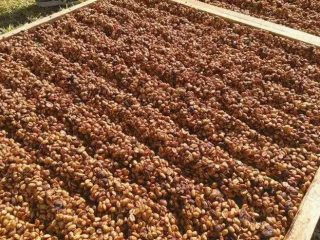
What's the relationship between honey treatment and semi-sun treatment? What is the reason for the invention of semi-solarization.
The first use of honey treatment in Costa Rica, El Salvador and other Central and South American countries, its invention inspired by Brazil's semi-sun method (peeling sun). Brazil's semi-solarization came into being because Brazil's green beans were treated mainly by traditional solarization, and its quality was better than Africa's elevated solarization at the same time.